Gold coatings act as high-performance functional layers essential for critical electronics and aerospace defense systems. They are primarily utilized to enhance electrical conductivity in micro-fabrication and to provide robust protection by reflecting electromagnetic radiation. You will find these specialized coatings on silicon wafers, artificial satellites, astronaut helmets, and electronic warfare aircraft.
While often associated with luxury, the industrial utility of gold coatings stems from their unique physics: exceptional electrical conductivity and the ability to reflect electromagnetic radiation. These properties make gold indispensable for mission-critical components in harsh environments like space and high-stakes defense systems.
Enhancing Electronic Performance
Application in Microfabrication
In the semiconductor industry, gold is frequently applied to silicon wafers.
Its primary role in this context is due to its excellent electrical conductivity. This ensures efficient electron flow and reliable performance within the microscopic circuits of the wafer.
Critical Protection via Reflection
Managing Heat and Radiation in Space
Gold is highly effective at reflecting electromagnetic radiation.
This property makes it the ideal protective coating for artificial satellites. The coating shields the satellite's delicate internal components from the intense radiation and thermal fluctuations found in orbit.
Safeguarding Human Operators
In high-risk environments, gold coatings are applied to infrared protective faceplates.
This is most visible on astronauts' helmets and the faceplates of thermal protection suits. The gold layer reflects harmful infrared radiation, protecting the wearer's vision and face from extreme heat and light.
Defense and Electronic Warfare
The reflective capabilities of gold extend to military aviation.
Electronic warfare planes utilize these coatings on specific surfaces. This application leverages gold's electromagnetic properties for protection or signal management during operations.
Understanding the Trade-offs
Cost vs. Performance
The most significant barrier to using gold coatings is material cost.
Because gold is expensive, it is generally reserved for applications where performance is critical and failure is not an option. For less critical consumer electronics, cheaper alternatives like copper are often preferred.
Mechanical Softness
While gold is chemically inert and does not corrode, it is physically a soft metal.
In coating applications subject to physical contact or abrasion, the gold layer can be susceptible to scratching or wear. This often necessitates careful handling or the application of additional protective layers.
Selecting Gold for High-Stakes Environments
When deciding if gold is the right coating for your engineering challenge, evaluate the criticality of the component against the budget.
- If your primary focus is reliability in electronics: Use gold on silicon wafers to ensure superior conductivity and long-term connection stability.
- If your primary focus is thermal or radiation shielding: Apply gold coatings to exterior panels or optical faceplates to reflect harmful electromagnetic energy in aerospace or military contexts.
Gold coatings provide a definitive solution when performance and protection outweigh the cost of materials.
Summary Table:
| Application Sector | Primary Component | Key Function of Gold Coating |
|---|---|---|
| Electronics | Silicon Wafers | Enhances electrical conductivity and circuit reliability |
| Aerospace | Satellites & Spacecraft | Reflects electromagnetic radiation and manages heat |
| Safety/Defense | Astronaut Helmets | Provides infrared protection and heat shielding |
| Military | Electronic Warfare Aircraft | Signal management and electromagnetic protection |
Elevate Your Mission-Critical Projects with KINTEK Precision
When performance is non-negotiable and failure is not an option, KINTEK provides the high-performance laboratory equipment and specialized consumables required for advanced material science. Whether you are developing next-generation semiconductors on silicon wafers or engineering radiation-resistant components for aerospace, our expertise supports your innovation.
From high-temperature vacuum furnaces and CVD systems for precision coating to essential ceramics and crucibles, KINTEK offers a comprehensive range of tools designed for high-stakes environments. Experience the KINTEK advantage in reliability and technical excellence.
Contact our specialist team today to discuss your specific coating and research needs!
Related Products
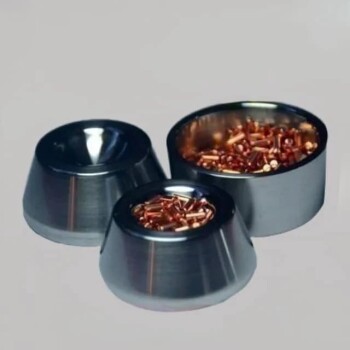
- Electron Beam Evaporation Coating Gold Plating Tungsten Molybdenum Crucible for Evaporation
- Custom CVD Diamond Coating for Lab Applications
- High Purity Gold Platinum Copper Iron Metal Sheets
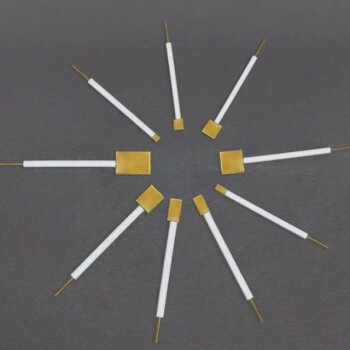
- Gold Electrochemical Sheet Electrode Gold Electrode
- Gold Disc Electrode
People Also Ask
- What is the container that holds the metal source material called in e-beam evaporation? Ensure Purity and Quality in Your Thin-Film Deposition
- What materials are used in electron beam evaporation? Master High-Purity Thin Film Deposition
- What is the process of e-beam coating? Achieve High-Purity, Precise Thin Films for Your Lab
- What is e-beam evaporation? Achieve High-Purity Thin Film Deposition for Your Lab
- What is the voltage of e-beam evaporation? Achieve Precise Thin-Film Deposition