Strict atmosphere management is critical for the Chemical Vapor Deposition (CVD) synthesis of silica/silicon carbide core-shell nanowires. Specifically, the process requires the introduction of Carbon Monoxide (CO) as a precursor gas within a high-temperature environment of approximately 1100°C. Success depends entirely on the precise regulation of gas flow rates and composition ratios to ensure the uniform growth of the outer shell.
The integrity of silica/silicon carbide nanowires relies on a controlled reaction environment using Carbon Monoxide at high thermal energy. Precise management of the gas composition dictates the uniformity of the amorphous silica shell, which is fundamental to the material's final wetting properties and biological activity.
Managing Precursors and Temperature
The Critical Role of Carbon Monoxide
To initiate the synthesis of the core-shell heterostructure, the reaction atmosphere must include Carbon Monoxide (CO).
This gas serves as the essential precursor within the CVD system. It is the chemical foundation for the growth of the nanowire structures.
Thermal Requirements
The atmosphere must be maintained at a high temperature to facilitate the reaction. The primary reference specifies a target temperature of around 1100°C.
At this thermal level, the precursor gas possesses the necessary energy to react and deposit effectively onto the substrate.
Achieving Structural Uniformity
Precision in Gas Flow and Composition
You must maintain strict control over both gas flow rates and composition ratios.
Inconsistencies in the volume or balance of the gas mixture will disrupt the deposition process. This control is the primary variable for ensuring the quality of the synthesis.
Forming the Amorphous Shell
The objective of this precise atmospheric control is the formation of an amorphous silica shell.
This shell must grow continuously and uniformly around the silicon carbide nanowire core. The atmosphere directly dictates whether this physical structure forms correctly.
Common Pitfalls to Avoid
The Risk of Discontinuous Growth
If the reaction atmosphere fluctuates, particularly regarding gas flow or composition, the growth of the silica shell will be compromised.
A lack of precision results in a non-uniform or discontinuous shell. This structural flaw breaks the physical basis required for the material's intended application.
Impact on Functional Properties
The core-shell structure is not merely aesthetic; it provides specific wetting properties and biological activity.
Failure to maintain the 1100°C CO environment results in a material that lacks these specific functional characteristics.
Making the Right Choice for Your Goal
To ensure successful synthesis, align your process controls with your specific material requirements:
- If your primary focus is structural integrity: Prioritize the precise calibration of gas flow rates and composition ratios to ensure the silica shell is continuous and uniform.
- If your primary focus is functional application: Maintain the reaction strictly at 1100°C with Carbon Monoxide to guarantee the material develops the necessary wetting properties and biological activity.
Mastering the CVD atmosphere is the defining factor in transitioning from raw precursors to bioactive, functional nanowires.
Summary Table:
| Requirement Category | Specification / Detail | Impact on Nanowire Synthesis |
|---|---|---|
| Precursor Gas | Carbon Monoxide (CO) | Forms the chemical foundation for shell growth |
| Temperature | Approximately 1100°C | Provides thermal energy for reaction/deposition |
| Atmosphere Control | Precise gas flow rates & composition | Ensures uniform growth of the amorphous shell |
| Target Structure | Amorphous Silica Shell | Determines wetting and biological properties |
Elevate Your Nanomaterial Synthesis with KINTEK Precision
Achieving the perfect core-shell heterostructure requires uncompromising control over your thermal and chemical environment. KINTEK specializes in high-performance laboratory solutions designed for advanced CVD processes. Whether you need precise high-temperature furnaces (CVD, PECVD, or Vacuum), specialized gas control systems, or durable ceramic crucibles, our equipment ensures the stability required for 1100°C Carbon Monoxide reactions.
Don't let atmospheric fluctuations compromise your research. Partner with KINTEK for reliable crushing and milling systems, high-pressure reactors, and specialized laboratory consumables that empower your material science breakthroughs.
Ready to optimize your nanowire production? Contact our technical experts today to find the perfect equipment configuration for your lab!
References
- Benedetta Ghezzi, Simone Lumetti. SiO2/SiC Nanowire Surfaces as a Candidate Biomaterial for Bone Regeneration. DOI: 10.3390/cryst13081280
This article is also based on technical information from Kintek Solution Knowledge Base .
Related Products
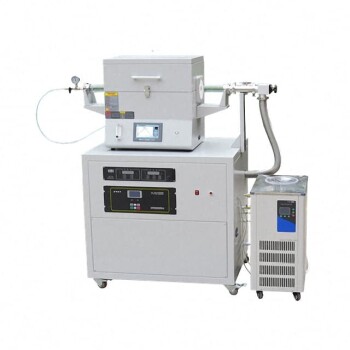
- Chemical Vapor Deposition CVD Equipment System Chamber Slide PECVD Tube Furnace with Liquid Gasifier PECVD Machine
- Customer Made Versatile CVD Tube Furnace Chemical Vapor Deposition Chamber System Equipment
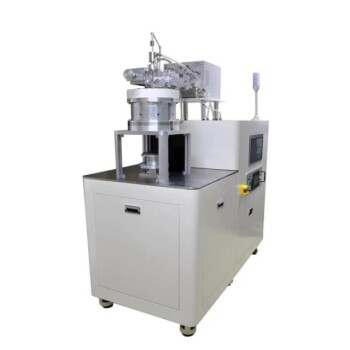
- HFCVD Machine System Equipment for Drawing Die Nano-Diamond Coating
- Split Chamber CVD Tube Furnace with Vacuum Station Chemical Vapor Deposition System Equipment Machine
- Multi Heating Zones CVD Tube Furnace Machine Chemical Vapor Deposition Chamber System Equipment
People Also Ask
- What are the advantages of chemical vapor deposition? Achieve Superior Thin Films for Your Lab
- What types of substrates are used in CVD to facilitate graphene films? Optimize Graphene Growth with the Right Catalyst
- What is the chemical vapor deposition growth process? Build Superior Thin Films from the Atom Up
- How expensive is chemical vapor deposition? Understanding the True Cost of High-Performance Coating
- Why is Chemical Vapor Deposition (CVD) equipment uniquely suited for constructing hierarchical superhydrophobic structures?