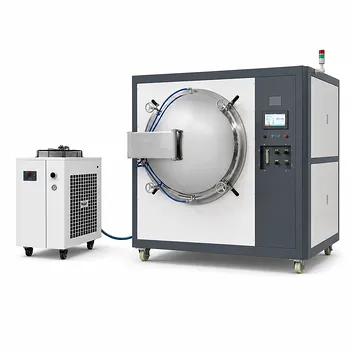
High-frequency induction heating is the premier choice for fast pyrolysis because it delivers extreme heating rates and unmatched thermal precision.
By enabling samples to reach target temperatures, such as 800°C, in a matter of seconds, these furnaces accurately simulate the rapid pyrolysis behavior found in industrial gasifiers. This speed produces initial char samples with superior pore structures and significantly higher reactivity compared to those created via standard heating methods.
The core benefit of high-frequency induction heating lies in its ability to bridge the gap between laboratory research and industrial reality. By providing rapid, non-contact thermal energy, it creates a high-quality char with optimized physical properties while maintaining a clean and highly efficient production environment.
Enhancing Char Quality through Rapid Thermal Processing
Simulating Industrial Fast Pyrolysis Conditions
The defining feature of high-frequency induction is its ability to achieve extremely high heating rates. This is critical for char production because it mimics the near-instantaneous thermal shocks that coal and sludge experience in large-scale industrial gasifiers.
Superior Pore Structure and Reactivity
Because the heating is so rapid, the volatiles within the material are released more aggressively. This process results in char with a more developed pore structure, which directly translates to higher chemical reactivity in downstream applications.
Material Homogeneity via Electromagnetic Stirring
The induction process generates eddy currents within the material, which can cause an automatic stirring effect. This ensures that the thermal profile and the resulting chemical composition are consistent throughout the entire batch.
Operational Advantages and Process Control
Non-Contact Heating and Contamination Control
Induction is a non-contact process, meaning the heat is generated within the sample itself rather than being transferred from a heating element. This allows for heating in a vacuum or specific atmospheric environments, effectively reducing the risk of contamination.
Precision Temperature and Atmosphere Management
These furnaces offer a wide temperature adjustment range and high precision, which is essential for driving specific high-temperature chemical reactions. Operators can maintain stable ultra-high temperature platforms required for complex silica or silicon carbide interactions.
Efficiency and Environmental Impact
Induction furnaces are significantly cleaner and more efficient than combustion-based methods because they do not require arc or combustion gases. This results in a faster operation with fewer pollutants like dust, while also preventing the loss of valuable alloying elements.
Understanding the Trade-offs
Requirement for Electrical Conductivity
The primary limitation is that induction heating requires the target material to be electrically conductive. For non-conductive biomass or waste, a secondary "susceptor" (like a graphite crucible) must be used to transfer the heat, which adds a layer of complexity to the furnace design.
Initial Capital Investment and Complexity
High-frequency systems involve sophisticated power electronics and specialized water-cooling systems for the induction coils. While operational costs are lower due to efficiency, the initial setup and installation require higher expertise and more significant upfront capital than simple resistive furnaces.
How to Apply This to Your Project
When choosing a heating method for char production, your specific research or production goals should dictate the technology.
- If your primary focus is mimicking industrial gasification: Utilize high-frequency induction to achieve the rapid heating rates (800°C+) necessary to produce char with high reactivity and representative pore structures.
- If your primary focus is high-purity or specialized atmospheres: Leverage the non-contact nature of induction heating to process materials in a vacuum or inert gas environment to eliminate oxidation and external contaminants.
- If your primary focus is operational throughput and consistency: Take advantage of the fast melting cycles and automatic electromagnetic stirring to ensure a homogeneous product and rapid batch turnover.
By integrating high-frequency induction heating, you move beyond simple thermal decomposition into a realm of precise, industrial-grade material engineering.
Summary Table:
| Key Feature | Benefit for Char Production |
|---|---|
| Rapid Heating Rates | Mimics industrial gasifiers; creates highly reactive char with superior pore structure. |
| Non-Contact Heating | Minimizes contamination; ideal for high-purity processing in vacuum or inert gas. |
| Electromagnetic Stirring | Ensures chemical and thermal homogeneity throughout the material batch. |
| High Thermal Precision | Maintains stable ultra-high temperatures for specialized chemical reactions. |
| Clean & Efficient | Reduced environmental impact and faster operation compared to combustion methods. |
Elevate Your Pyrolysis Research with KINTEK
Achieve industrial-grade precision in your laboratory with KINTEK’s high-frequency induction melting systems. Whether you are producing fast pyrolysis char or engineering advanced materials, our equipment delivers the rapid heating rates and atmospheric control necessary for superior results.
Beyond our specialized induction furnaces, KINTEK provides a comprehensive range of laboratory solutions, including:
- High-Temperature Furnaces: Muffle, tube, vacuum, and atmosphere-controlled models.
- Processing Equipment: Precision crushing and milling systems, hydraulic presses, and sieving tools.
- Advanced Reactors: High-temperature high-pressure reactors and autoclaves.
- Essential Consumables: High-purity ceramics, PTFE products, and crucibles designed for induction susceptors.
Ready to bridge the gap between lab research and industrial reality? Contact KINTEK today to discuss your specific application and find the perfect thermal solution for your project.
References
- Xinsha Zhang, Guangsuo Yu. Structural characterization of char during co-gasification from torrefied sludge and Yangchangwan bituminous coal. DOI: 10.1007/s40789-023-00638-w
This article is also based on technical information from Kintek Solution Knowledge Base .
Related Products
- 600T Vacuum Induction Hot Press Furnace for Heat Treat and Sintering
- 1700℃ Controlled Atmosphere Furnace Nitrogen Inert Atmosphere Furnace
- 1400℃ Controlled Atmosphere Furnace with Nitrogen and Inert Atmosphere
- Vacuum Heat Treat and Pressure Sintering Furnace for High Temperature Applications
- Lab-Scale Vacuum Induction Melting Furnace
People Also Ask
- What role does an induction vacuum hot pressing furnace play in sintering? Achieve 98% Density in Carbide Blocks
- What advantages does a vacuum hot press furnace provide for LSLBO ceramic electrolytes? Achieve 94% Relative Density
- What role does a Vacuum Hot Press (VHP) furnace play in the densification of austenitic stainless steel 316 composites?
- What are the advantages of a vacuum hot press furnace for W-50%Cu? Achieve 99.6% Density at Lower Temperatures
- What role does mechanical pressure play during the vacuum diffusion bonding of tungsten and copper? Keys to Solid Bonding