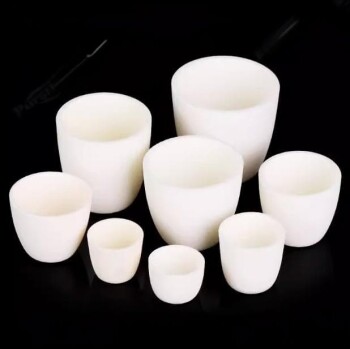
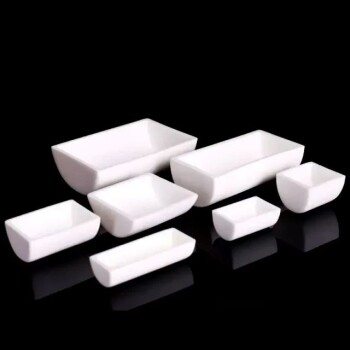
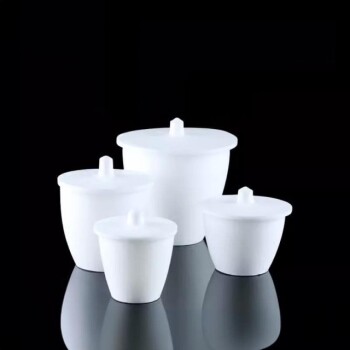
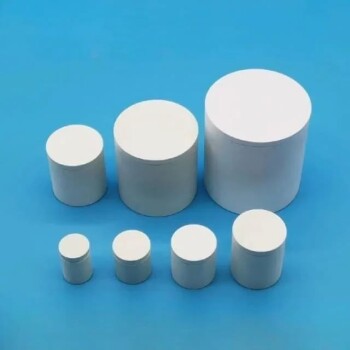
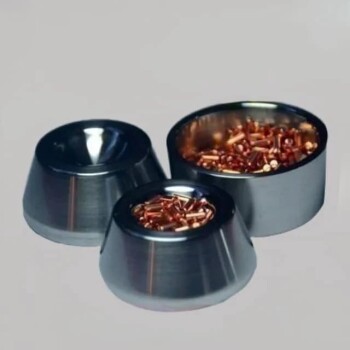
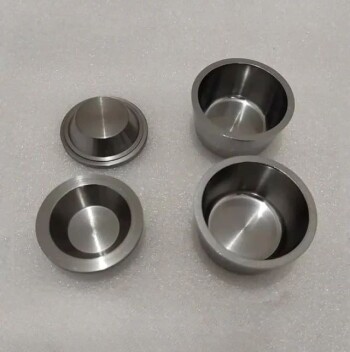
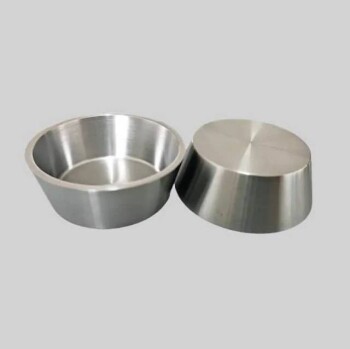
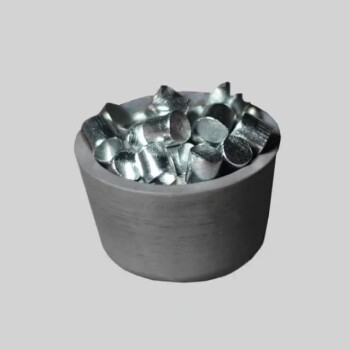
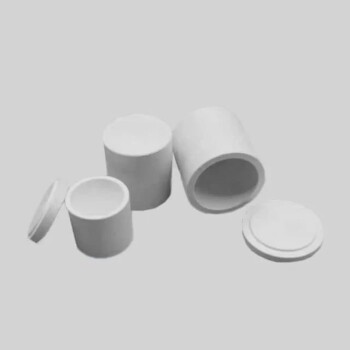
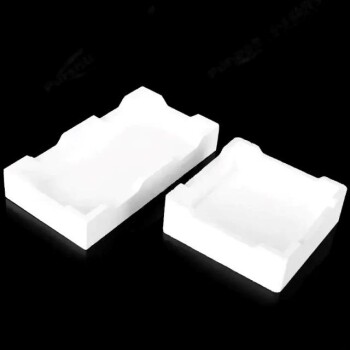
Ceramic crucibles are the standard for sample containment in hydrothermal oxidation experiments because they provide a chemically neutral and thermally stable environment. By offering superior inertness, they prevent the container from reacting with aluminum particles, water vapor, or the hydrogen generated during the process. This isolation is the prerequisite for obtaining accurate data on reaction kinetics and conversion rates.
The core value of using ceramic crucibles lies in experimental isolation: they ensure that observed chemical changes and mass variations are caused solely by the intended reaction, eliminating the hardware itself as a variable.
Preserving Reaction Integrity
Superior Chemical Inertness
In hydrothermal environments, reactants such as aluminum are subjected to high pressure and heat. Ceramic crucibles prevent these aggressive reactants from interacting with the container wall.
Furthermore, they do not react with the water vapor or hydrogen produced during the experiment. This prevents the introduction of impurity phases that could compromise the chemical composition of the final product.
High-Temperature Stability
Hydrothermal oxidation and subsequent calcination often require extreme thermal conditions. High-purity ceramic crucibles, such as those made of alumina, maintain their structural integrity at temperatures exceeding 1000°C to 1100°C.
Unlike metal containers which might soften or oxidize, ceramics remain stable. This ensures the container does not warp or degrade, which is essential for maintaining a consistent reaction volume.
Ensuring Data Precision
Enabling Accurate Mass Measurement
Determining the conversion rate of a reaction requires precise mass measurement before and after the experiment. Ceramic crucibles allow for effective physical separation, enabling researchers to weigh samples in isolation.
Because the crucible itself does not gain or lose mass via chemical reaction, any measured weight change can be attributed solely to the oxidation of the sample or the spallation of oxide scales. This guarantees the gravimetric data reflects the actual experimental outcome.
Preventing Cross-Contamination
When testing multiple samples or complex raw materials containing lanthanides or alkaline earth metals, isolation is critical. Ceramic crucibles provide a physical barrier that prevents samples from mixing or influencing one another.
This separation ensures that the synthesized products maintain an accurate stoichiometric ratio. It allows researchers to validate predictive models without the noise of cross-sample contamination.
Critical Operational Considerations
The Requirement for High Purity
While ceramic material is generally inert, the standard of "inertness" relies heavily on the purity of the crucible. To achieve the benefits listed above, researchers typically must use high-purity alumina.
Using lower-grade ceramics carries a risk of trace elements reacting with the specimen at temperatures near 1100°C. Therefore, the material quality of the crucible is a determining factor in preventing the leaching of impurities into the sample.
Making the Right Choice for Your Goal
Selecting the appropriate container is essential for minimizing experimental error.
- If your primary focus is determining conversion rates: Rely on high-purity ceramic crucibles to ensure that gravimetric weight changes are derived exclusively from the sample's oxidation.
- If your primary focus is synthesizing high-conductivity products: Use ceramic containers to prevent reaction with alkaline earth metals, ensuring the final product remains free of impurity phases.
By standardizing on ceramic crucibles, you effectively remove container interference from your experimental equation.
Summary Table:
| Feature | Benefit in Hydrothermal Oxidation | Impact on Experimental Results |
|---|---|---|
| Chemical Inertness | Prevents reactions with reactants, water vapor, and hydrogen | Eliminates impurity phases and ensures stoichiometric accuracy |
| Thermal Stability | Maintains structural integrity up to 1100°C+ | Prevents container warping and ensures consistent reaction volume |
| Gravimetric Precision | No mass loss or gain from the container itself | Allows for accurate measurement of sample oxidation and conversion rates |
| Isolation/Purity | Prevents cross-contamination and leaching of trace elements | Ensures high-purity final products and valid predictive models |
Elevate Your Material Research with KINTEK Precision
Don't let container interference compromise your critical data. KINTEK specializes in high-performance laboratory equipment and consumables designed for the most demanding hydrothermal and high-pressure environments.
Whether you require high-purity ceramic crucibles, high-temperature high-pressure reactors, or specialized autoclaves, our solutions are engineered to provide the chemical inertness and thermal stability your research demands. From high-purity alumina to custom PTFE products and advanced cooling solutions, KINTEK empowers researchers to achieve repeatable, precise results.
Ready to optimize your experimental setup? Contact our technical experts today to find the perfect consumables and equipment for your laboratory's needs.
References
- Grayr N. Ambaryan, Mikhail S. Vlaskin. Hydrothermal Oxidation of Coarse Aluminum Granules with Hydrogen and Aluminum Hydroxide Production: The Influence of Aluminum Purity. DOI: 10.3390/app13137793
This article is also based on technical information from Kintek Solution Knowledge Base .
Related Products
- Engineering Advanced Fine Ceramics Alumina Crucibles (Al2O3) for Thermal Analysis TGA DTA
- Arc-Shaped Alumina Ceramic Crucible High Temperature Resistant for Engineering Advanced Fine Ceramics
- Engineering Advanced Fine Alumina Al2O3 Ceramic Crucible for Laboratory Muffle Furnace
- Alumina Al2O3 Ceramic Crucible Semicircle Boat with Lid for Engineering Advanced Fine Ceramics
- Engineering Advanced Fine Ceramics Alumina Al2O3 Crucible With Lid Cylindrical Laboratory Crucible
People Also Ask
- Why Use Alumina Crucibles for TGA of Bicyclic Carbonates? Ensure Data Purity & Chemical Inertness
- Why are alumina crucibles and mother powder essential for LATP sintering? Optimize Your Solid Electrolyte Performance
- Why are high-purity alumina crucibles used for liquid lead corrosion experiments? Ensure Data Accuracy at 550°C
- What is the primary purpose of using alumina crucibles for LLTO ceramics? Optimize Your High-Temperature Sintering
- Why Use Alumina Crucibles & Powder Burial for NaSICON? Ensure Phase Purity and Prevent Elemental Volatilization