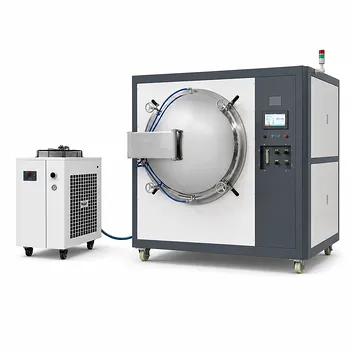
The core advantage of using a Spark Plasma Sintering (SPS) furnace for Ti-Nb-Zr-O alloys lies in its ability to achieve rapid densification without compromising microstructural integrity. By utilizing the synchronized action of pulsed current direct heating and axial pressure, the SPS process attains temperatures between 1300°C and 1500°C very quickly. This significantly shortens sintering cycles, ensuring the material becomes dense and uniform before grain growth can degrade its mechanical properties.
The Core Takeaway The SPS furnace solves the traditional trade-off between densification and microstructural control. By heating rapidly under pressure, it locks in a fine-grained structure that delivers the specific mechanical balance—low elastic modulus and high strength—required for successful orthopedic implants.
The Mechanism of Rapid Consolidation
To understand why SPS is superior for this specific alloy, we must look at how it generates heat and applies force compared to conventional methods.
Synchronized Heating and Pressure
The SPS furnace does not rely on external heating elements to slowly warm the material. Instead, it employs pulsed electric current for direct heating.
Simultaneously, it applies axial pressure to the material. This synchronized action accelerates the consolidation of the powder, allowing for efficient processing that traditional furnaces cannot match.
High-Efficiency Densification
This dual-action approach results in exceptionally high heating efficiency.
The furnace can rapidly reach the critical sintering window of 1300°C to 1500°C. This speed is vital because it minimizes the time the material spends at high temperatures, which is the primary cause of structural degradation.
Optimizing Material Properties for Implants
The deep need in creating Ti-Nb-Zr-O scaffolds is producing a material that is biologically compatible and mechanically similar to human bone. SPS specifically addresses these requirements.
Inhibiting Grain Growth
The most critical advantage of the shortened sintering cycle is the effective inhibition of grain growth.
In standard processing, long heating times allow grains to merge and grow, which weakens the metal. SPS heats and cools so fast that the grains remain fine, preserving the material's integrity. Specifically, it prevents the abnormal growth of the beta phase, which is crucial for the alloy's performance.
Ensuring Chemical Uniformity
Titanium alloys often contain refractory elements, such as Niobium (Nb), which are difficult to melt and mix evenly.
The SPS process ensures chemical uniformity throughout the scaffold. The combination of high pressure and direct current facilitates the homogenization of these refractory elements, preventing weak spots or chemical segregation in the final implant.
Resulting Mechanical Advantages
The process parameters described above directly translate into superior mechanical characteristics necessary for medical applications.
Ideally Balanced Microstructure
The fine-grained alloy structure produced by SPS is characterized by a unique combination of physical properties.
Most notably, it achieves a low elastic modulus. This is essential for orthopedic implants to minimize "stress shielding," a phenomenon where an implant is too stiff and causes the surrounding bone to degrade.
High Hardness and Strength
Despite the low modulus, the material retains exceptional durability.
The fine grain size contributes to high hardness and high strength, with values often exceeding 900 MPa. This ensures the implant is robust enough to bear significant structural loads without failing.
Understanding the Process Variables
While SPS offers distinct advantages, it requires precise control over specific variables to be effective.
Temperature Sensitivity
The benefits of SPS are strictly tied to the 1300°C to 1500°C temperature range. Deviating from this window can compromise the densification kinetics or lead to the very grain growth the process is designed to prevent.
The Necessity of Synchronization
The success of the process depends entirely on the synchronized action of the pulsed current and the axial pressure. Without the simultaneous application of pressure during the rapid heating phase, the efficient densification and resulting high strength cannot be achieved.
Making the Right Choice for Your Goal
When evaluating the use of an SPS furnace for titanium alloy scaffolds, consider your primary engineering objectives.
- If your primary focus is Production Efficiency: The SPS furnace offers significantly shortened sintering cycles due to rapid heating rates, maximizing throughput compared to conventional methods.
- If your primary focus is Implant Longevity: The process provides a low elastic modulus combined with strength >900 MPa, matching the mechanical properties of human bone to prevent implant failure.
The Spark Plasma Sintering furnace is not just a heating tool; it is a microstructure control system that creates safer, stronger, and more compatible biomedical implants.
Summary Table:
| Feature | Advantage of SPS Furnace | Impact on Ti-Nb-Zr-O Scaffolds |
|---|---|---|
| Heating Method | Pulsed Direct Current Heating | Rapid heating & shortened sintering cycles |
| Consolidation | Synchronized Axial Pressure | High-efficiency densification at 1300°C-1500°C |
| Grain Control | Minimal Time at Temperature | Inhibits grain growth; preserves fine microstructure |
| Composition | Enhanced Homogenization | Ensures chemical uniformity of refractory elements (Nb) |
| Mechanicals | Microstructure Control | Low elastic modulus & high strength (>900 MPa) |
Elevate Your Material Research with KINTEK SPS Technology
Precision is the foundation of biomedical innovation. KINTEK specializes in advanced laboratory equipment, providing the cutting-edge Spark Plasma Sintering (SPS) furnaces and high-temperature systems needed to develop next-generation Ti-Nb-Zr-O scaffolds.
Whether you are focusing on dental implants, orthopedic research, or advanced metallurgy, our comprehensive range of high-temperature furnaces, crushing systems, and hydraulic presses ensures your materials meet the highest standards of strength and biocompatibility.
Ready to achieve superior densification and microstructure control? Contact our experts today to find the perfect sintering solution for your lab!
References
- Katarina Rajković, Sanja Jeremić. Fatty acids profiles of Juglans nigra l. leaf. DOI: 10.21175/rad.abstr.book.2023.7.1
This article is also based on technical information from Kintek Solution Knowledge Base .
Related Products
- Spark Plasma Sintering Furnace SPS Furnace
- Vacuum Heat Treat and Pressure Sintering Furnace for High Temperature Applications
- Small Vacuum Heat Treat and Tungsten Wire Sintering Furnace
- Vacuum Heat Treat and Sintering Furnace with 9MPa Air Pressure
- Dental Porcelain Zirconia Sintering Ceramic Vacuum Press Furnace
People Also Ask
- What is SPS sintering method? A Guide to High-Speed, High-Performance Material Fabrication
- Why are Spark Plasma Sintering (SPS) furnaces or hot presses utilized in the preparation of Li3PS4 solid electrolytes?
- What is the difference between spark plasma sintering and flash sintering? A Guide to Advanced Sintering Methods
- What technical advantages does a Spark Plasma Sintering (SPS) furnace offer for LZP ceramics? Enhance Ionic Conductivity
- What is the theory of spark plasma sintering? A Guide to Rapid, Low-Temperature Densification