Knowledge What are the critical performance requirements for hot pressing molds? Ensure Precision in Magnesium Alloy Processing
Author avatar

Tech Team · Kintek Solution

Updated 1 day ago

What are the critical performance requirements for hot pressing molds? Ensure Precision in Magnesium Alloy Processing


The success of hot pressing magnesium-based alloys hinges on the mold's ability to withstand a specific combination of physical and chemical stresses. To function correctly, the mold must possess exceptional compressive strength to handle pressures up to 1.20 GPa and high-temperature mechanical stability to operate effectively at 453 K. Furthermore, the mold material must remain chemically inert when in contact with magnesium powder to prevent contamination and ensure successful demolding.

Hot pressing molds for magnesium alloys require a dual-defense strategy: physical resilience against gigapascal-level pressures to maintain structural integrity, and chemical neutrality to prevent the reactive magnesium powder from bonding with or contaminating the mold surface.

Ensuring Structural Integrity Under Load

Withstanding Extreme Compressive Forces

The primary mechanical requirement is exceptional compressive strength.

The mold must sustain immense pressures—specifically around 1.20 GPa—without yielding. If the material lacks this strength, the mold will deform, leading to geometric inaccuracies in the final sample or catastrophic tool failure.

Stability at Elevated Temperatures

Compressive strength alone is insufficient if the material weakens under heat.

The mold must maintain its mechanical stability at processing temperatures of 453 K. Materials that soften or lose rigidity at this thermal threshold will compromise the pressure application, resulting in inconsistent densification of the alloy.

Preventing Chemical Interactions

The Necessity of Chemical Inertness

Magnesium-based alloy powders can be highly reactive at elevated temperatures.

Therefore, the mold material must be chemically inert relative to the magnesium alloy. This prevents the mold walls from reacting with the powder during the sintering or pressing phase.

Avoiding Interfacial Reactions

When a mold lacks chemical inertness, interfacial reactions occur between the tool and the workpiece.

These reactions lead to two critical failures: contamination of the alloy sample and significant difficulties in demolding. A reacted interface can cause the sample to fuse to the mold, damaging both the part and the tooling during extraction.

Common Pitfalls to Avoid

Overemphasizing Strength Over Chemistry

A common mistake is selecting a mold material solely based on its ability to survive 1.20 GPa of pressure.

If the material is strong but chemically reactive with magnesium, the process will still fail due to sample contamination. Mechanical survivability does not guarantee a usable final product.

Neglecting Thermal Stability

It is equally risky to choose materials that are strong at room temperature but untested at 453 K.

Material properties often degrade non-linearly with heat. Using a mold that cannot maintain its stability specifically at the processing temperature will lead to gradual deformation and reduced mold life.

Making the Right Choice for Your Goal

To ensure the production of high-quality magnesium alloy components, evaluate your mold materials against these specific criteria:

  • If your primary focus is dimensional accuracy: Prioritize materials with verified compressive strength exceeding 1.20 GPa and thermal stability at 453 K to prevent deformation.
  • If your primary focus is sample purity and process efficiency: Select mold materials that are chemically inert to magnesium to eliminate surface contamination and prevent the part from sticking to the die.

Select a mold material that balances extreme physical toughness with absolute chemical neutrality.

Summary Table:

Requirement Specification / Value Impact on Performance
Compressive Strength ≥ 1.20 GPa Prevents mold deformation and ensures dimensional accuracy
Thermal Stability Effective at 453 K Maintains structural integrity and rigid pressure application
Chemical Property Inertness to Magnesium Prevents contamination and ensures successful demolding
Process Focus Mechanical + Chemical Combines physical toughness with zero interfacial reactions

Elevate Your Advanced Material Research with KINTEK

Precision in magnesium alloy processing starts with the right equipment. KINTEK specializes in high-performance laboratory solutions, providing the hydraulic presses (pellet, hot, isostatic) and high-temperature furnaces needed to meet the rigorous demands of 1.20 GPa pressures and 453 K thermal thresholds.

Our expertise extends to a comprehensive range of crushing systems, vacuum furnaces, and specialized consumables like ceramics and crucibles, ensuring your samples remain pure and your processes efficient. Whether you are developing magnesium-based alloys or exploring battery research, KINTEK delivers the reliability and technical excellence your lab requires.

Ready to optimize your hot pressing workflow? Contact our technical experts today to find the perfect mold and press configuration for your specific application.

Related Products

People Also Ask

Related Products

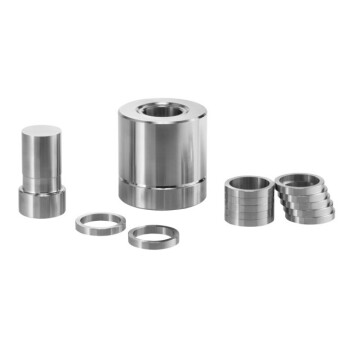
Cylindrical Lab Electric Heating Press Mold for Laboratory Applications

Cylindrical Lab Electric Heating Press Mold for Laboratory Applications

Efficiently prepare samples with Cylindrical Lab Electric Heating Press Mold. Fast heating, high temp & easy operation. Custom sizes available. Perfect for battery, ceramic & biochemical research.

Special Shape Press Mold for Lab

Special Shape Press Mold for Lab

Discover high-pressure special shape press molds for diverse applications, from ceramics to automotive parts. Ideal for precise, efficient molding of various shapes and sizes.

Double Plate Heating Press Mold for Lab

Double Plate Heating Press Mold for Lab

Discover precision in heating with our Double Plate Heating Mold, featuring high-quality steel and uniform temperature control for efficient lab processes. Ideal for various thermal applications.

Anti-Cracking Press Mold for Lab Use

Anti-Cracking Press Mold for Lab Use

The anti-cracking press mold is a specialized equipment designed for molding various shapes and sizes of film using high pressure and electric heating.

Assemble Square Lab Press Mold for Laboratory Applications

Assemble Square Lab Press Mold for Laboratory Applications

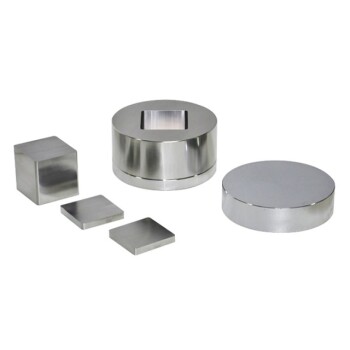
Achieve perfect sample preparation with Assemble Square Lab Press Mold. Quick disassembly eliminates sample deformation. Perfect for battery, cement, ceramics, and more. Customizable sizes available.

Ball Press Mold for Lab

Ball Press Mold for Lab

Explore versatile Hydraulic Hot Press molds for precise compression molding. Ideal for creating various shapes and sizes with uniform stability.

Square Bidirectional Pressure Mold for Lab Use

Square Bidirectional Pressure Mold for Lab Use

Discover precision in molding with our Square Bidirectional Pressure Mold. Ideal for creating diverse shapes and sizes, from squares to hexagons, under high pressure and uniform heating. Perfect for advanced material processing.

Round Bidirectional Press Mold for Lab

Round Bidirectional Press Mold for Lab

The round bidirectional press mold is a specialized tool used in high-pressure molding processes, particularly for creating intricate shapes from metal powders.

Polygon Press Mold for Lab

Polygon Press Mold for Lab

Discover precision polygon press molds for sintering. Ideal for pentagon-shaped parts, our molds ensure uniform pressure and stability. Perfect for repeatable, high-quality production.

Manual High Temperature Heated Hydraulic Press Machine with Heated Plates for Lab

Manual High Temperature Heated Hydraulic Press Machine with Heated Plates for Lab

The High Temperature Hot Press is a machine specifically designed for pressing, sintering and processing materials in a high temperature environment. It is capable of operating in the range of hundreds of degrees Celsius to thousands of degrees Celsius for a variety of high temperature process requirements.

Assemble Lab Cylindrical Press Mold

Assemble Lab Cylindrical Press Mold

Get reliable and precise molding with Assemble Lab Cylindrical Press Mold. Perfect for ultra-fine powder or delicate samples, widely used in material research and development.

Square Lab Press Mold for Laboratory Applications

Square Lab Press Mold for Laboratory Applications

Create uniform samples easily with Square Lab Press Mold - available in various sizes. Ideal for battery, cement, ceramics, and more. Custom sizes available.

Automatic High Temperature Heated Hydraulic Press Machine with Heated Plates for Lab

Automatic High Temperature Heated Hydraulic Press Machine with Heated Plates for Lab

The High Temperature Hot Press is a machine specifically designed for pressing, sintering and processing materials in a high temperature environment. It is capable of operating in the range of hundreds of degrees Celsius to thousands of degrees Celsius for a variety of high temperature process requirements.

No Demolding Lab Infrared Press Mold for Laboratory Applications

No Demolding Lab Infrared Press Mold for Laboratory Applications

Effortlessly test your samples with no demolding required using our lab infrared press mold. Enjoy high transmittance and customizable sizes for your convenience.

Cylindrical Press Mold with Scale for Lab

Cylindrical Press Mold with Scale for Lab

Discover precision with our Cylindrical Press Mold. Ideal for high-pressure applications, it molds various shapes and sizes, ensuring stability and uniformity. Perfect for lab use.

Cylindrical Press Mold for Lab Applications

Cylindrical Press Mold for Lab Applications

Efficiently form and test most samples with Cylindrical Press Molds in a range of sizes. Made of Japanese high-speed steel, with long service life and customizable sizes.

Carbide Lab Press Mold for Laboratory Applications

Carbide Lab Press Mold for Laboratory Applications

Form ultra-hard samples with Carbide Lab Press Mold. Made of Japanese high-speed steel, it has a long service life. Custom sizes available.

XRF & KBR plastic ring lab Powder Pellet Pressing Mold for FTIR

XRF & KBR plastic ring lab Powder Pellet Pressing Mold for FTIR

Get precise XRF samples with our plastic ring lab powder pellet pressing mold. Fast tableting speed and customizable sizes for perfect molding every time.

XRF Boric Acid Lab Powder Pellet Pressing Mold for Laboratory Use

XRF Boric Acid Lab Powder Pellet Pressing Mold for Laboratory Use

Get accurate results with our XRF Boric Acid lab Powder Pellet Pressing Mold. Perfect for preparing samples for X-ray fluorescence spectrometry. Custom sizes available.

Multi-Punch Rotary Tablet Press Mold Ring for Rotating Oval and Square Molds

Multi-Punch Rotary Tablet Press Mold Ring for Rotating Oval and Square Molds

The multi-punch rotary tablet press mold stands as a pivotal component in pharmaceutical and manufacturing industries, revolutionizing the process of tablet production. This intricate mold system comprises multiple punches and dies arranged in a circular fashion, facilitating rapid and efficient tablet formation.


Leave Your Message