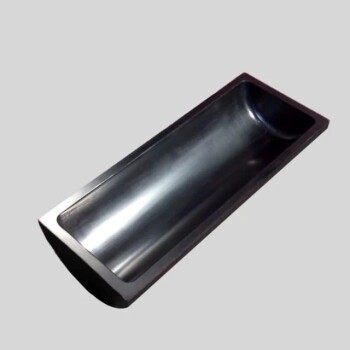
The primary design advantage of Self-propagating High-temperature Synthesis (SHS) reactors is their drastic reduction in complexity and size compared to traditional industrial furnaces. By relying on internal chemical reactions to generate heat rather than external sources, SHS reactors eliminate the need for bulky heating elements, extensive thermal insulation, and intricate temperature control systems.
Core Takeaway: SHS reactors replace the heavy infrastructure of external heating with the chemical potential energy of the reactants themselves, resulting in a compact, highly efficient vessel that requires significantly less space and supporting equipment than conventional furnaces.
The Architecture of Simplicity
The fundamental difference in SHS design stems from how heat is sourced. Traditional furnaces are designed around the heating mechanism; SHS reactors are designed around the reaction.
Elimination of External Heating Elements
Traditional industrial furnaces rely on large resistance heaters, induction coils, or gas burners to drive temperature.
SHS reactors do not require these components. The heat is generated internally by the reacting powders. This removes the bulk of the mechanical and electrical infrastructure typically required to power a furnace.
Reduction of Thermal Insulation
Because standard furnaces must maintain high temperatures across a large volume for extended periods, they require complex, thick layers of thermal insulation.
In SHS, the heat is localized and transient. This allows for a much simpler reactor shell without the heavy insulation layers mandated by conventional designs.
Simplified Control Instrumentation
Traditional sintering requires precise management of temperature profiles using expensive feedback loops and sensors.
SHS reactors function without high-precision temperature control systems. The reaction is self-sustaining; once initiated, the chemistry dictates the thermal profile, reducing the need for complex electronic oversight.
Efficiency and Scalability
The compact nature of SHS equipment translates directly into operational flexibility and spatial efficiency.
Superior Space Efficiency
The absence of heaters and heavy insulation results in a significantly smaller physical footprint.
An SHS reactor can be installed in facilities where space is constrained, whereas a traditional furnace with equivalent output capacity would likely require a dedicated facility floor.
Production Flexibility
Large industrial furnaces are often designed for continuous, steady-state operation and are difficult to cycle on and off.
SHS reactors excel in smaller-scale operations. Their compact design allows for greater production flexibility, making them ideal for batch processing or environments where production needs fluctuate rapidly.
Understanding the Trade-offs
While the simplicity of SHS is a major design advantage, it requires a shift in how process control is managed.
Chemical Control vs. Mechanical Control
The design benefit of removing "high-precision temperature control systems" implies a reliance on the raw materials.
In a traditional furnace, you adjust a dial to change the temperature. In an SHS reactor, control is engineered into the powder mixture itself. If the reaction parameters need changing, the reactant composition must be adjusted, as there is no external heating element to modulate the process mid-cycle.
Making the Right Choice for Your Goal
When deciding between an SHS reactor and a traditional furnace, consider your constraints regarding space, infrastructure, and energy.
- If your primary focus is Space Efficiency: Choose SHS reactors for their compact footprint, as they eliminate bulky heaters and insulation layers.
- If your primary focus is Capital Expenditure: Choose SHS for its simpler equipment design, which avoids the cost of high-precision control systems and complex thermal management.
- If your primary focus is Energy Consumption: Choose SHS to leverage the exothermic nature of the process, reducing the external energy required to sustain high temperatures.
Ultimately, SHS reactors offer a streamlined, low-infrastructure alternative that trades mechanical complexity for chemical efficiency.
Summary Table:
| Feature | Traditional Industrial Furnaces | SHS Reactors |
|---|---|---|
| Heat Source | External (Resistance/Induction/Gas) | Internal (Exothermic Chemical Reaction) |
| Heating Elements | Bulky, high-maintenance coils/burners | None required |
| Insulation | Thick, multi-layer thermal barriers | Simple, compact reactor shell |
| Control Systems | High-precision electronic feedback | Engineered via material composition |
| Footprint | Large, often requiring dedicated floors | Small, space-efficient design |
| Energy Need | High continuous power input | Minimal initiation energy only |
Revolutionize Your Material Synthesis with KINTEK
Maximize your laboratory efficiency and reduce infrastructure overhead with KINTEK’s advanced thermal processing solutions. Whether you are exploring Self-propagating High-temperature Synthesis (SHS) or require high-precision muffle, vacuum, or tube furnaces, our team provides the expertise and equipment tailored to your specific research goals.
Why Choose KINTEK?
- Comprehensive Range: From high-temperature high-pressure reactors and autoclaves to precision crushing and milling systems.
- Specialized Expertise: Supporting battery research, dental ceramics, and advanced material synthesis with industry-leading consumables like PTFE and specialized crucibles.
- Customized Solutions: We help you select the right equipment—balancing space efficiency, energy consumption, and process control.
Ready to upgrade your facility with compact, high-performance technology? Contact our specialists today to find your perfect reactor solution.
References
- Zinnur T. Zagretdinov, L. R. Kharisov. Getting Aluminum Bronze Castings with SHS-Cast. DOI: 10.29042/2019-5191-5196
This article is also based on technical information from Kintek Solution Knowledge Base .
Related Products
- Customizable Laboratory High Temperature High Pressure Reactors for Diverse Scientific Applications
- High Pressure Laboratory Autoclave Reactor for Hydrothermal Synthesis
- Mini SS High Pressure Autoclave Reactor for Laboratory Use
- High Temperature Constant Temperature Heating Circulator Water Bath Chiller Circulator for Reaction Bath
- Customer Made Versatile CVD Tube Furnace Chemical Vapor Deposition Chamber System Equipment
People Also Ask
- How do high-pressure and high-temperature reactors ensure the effective treatment of lignocellulosic wastewater in WAO?
- What equipment is required for high-pressure high-temperature reactions? Master Extreme Chemistry Safely
- How do you control high pressure in a reactor? A Guide to Safe & Stable Operation
- How does initial oxygen pressure affect the wet oxidation of pharmaceutical sludge? Master Your Oxidation Depth
- Why is argon better than nitrogen for inert atmosphere? Ensure Absolute Reactivity & Stability