The specific type of plasma used in PECVD is defined by the power source employed to generate the discharge. The three primary categories are Direct Current (DC) plasma, Alternating Current (AC) plasma—most commonly Radio Frequency (RF)—and Microwave (MW) plasma.
Core Insight: The choice of plasma source fundamentally dictates how energy is delivered to the gas molecules. While all PECVD methods aim to lower deposition temperatures by substituting thermal energy with electrical energy, the frequency of the power source controls the ionization density and the specific applications, such as selective growth or specific film materials.
Classification by Power Source
The primary distinction between PECVD systems lies in the frequency of the electrical discharge used to ionize the precursor gases.
Direct Current (DC) Plasma
This method utilizes a DC electrical discharge to energize the system.
The continuous flow of current directly breaks down and ionizes the reacting gases within the chamber. This provides the fundamental energy required to initiate the chemical vapor deposition process without relying solely on heat.
Alternating Current (AC) and RF Plasma
In AC plasma, the discharge is time-varying, meaning the plasma is repeatedly initiated and extinguished in cycles to decompose and ionize gases.
Radio Frequency (RF) plasma is the most frequently utilized form of AC plasma in these systems. It is particularly effective for depositing specific materials, such as Silicon Carbide (SiC) films, where precise control over the film properties is required.
Microwave (MW) Plasma
Microwave plasma (MW-CVD) operates at much higher frequencies than RF or DC systems.
In this method, microwaves cause electrons to oscillate rapidly, leading to collisions with gaseous atoms and molecules. This process creates significant ionization, resulting in a high-density plasma.
This high level of ionization allows for substrate-specific selective growth. It is notably used for advanced applications like growing vertically oriented carbon nanotube arrays.
The Mechanism Behind the Method
To understand why different power sources are used, it is necessary to understand the "Deep Need" of PECVD: decoupling temperature from chemical reactivity.
Cold Plasma Generation
PECVD utilizes "cold plasma," where the electrons are highly energetic, but the bulk gas remains relatively cool.
This allows the system to maintain low deposition temperatures (often below 300°C) while still achieving high reaction rates.
Kinetic Activation
Instead of using heat to break chemical bonds, the system uses inelastic collisions.
The power source (DC, RF, or MW) accelerates electrons, which collide with gas molecules to create highly reactive species like excited neutrals and free radicals. These reactive species form solid films on the substrate surface through complex plasma chemical reactions.
Understanding the Trade-offs
While PECVD offers superior flexibility compared to thermal CVD, the choice of plasma source introduces specific operational considerations.
Selectivity vs. Generality
Not all plasma sources are equally adept at all tasks.
Microwave plasma offers high ionization and selectivity (e.g., for nanotubes), but this intensity may not be necessary for simpler, planar coatings. Conversely, RF plasma is a workhorse for standard semiconductor films but functions differently in terms of ion bombardment energy.
Thermal Constraints
Although the gas temperature is low, the substrate temperature still plays a role.
The film formation is a combination of plasma reactions and surface thermochemical reactions. Therefore, even with the right plasma source, the substrate must be maintained at a specific low pressure and temperature to ensure the film adheres and densifies correctly.
Making the Right Choice for Your Goal
Selecting the correct PECVD plasma type depends heavily on the material you intend to deposit and the structure you need to build.
- If your primary focus is depositing Silicon Carbide (SiC) films: Utilize RF (AC) Plasma, as it is the standard frequency used for these semiconductor materials.
- If your primary focus is high selectivity or Carbon Nanotubes: Choose Microwave (MW) Plasma, as the electron oscillation creates the significant ionization required for vertically oriented growth.
- If your primary focus is basic ionization: DC Plasma provides the fundamental electrical discharge needed to break down reacting gases.
Ultimately, the power source you select determines the ionization efficiency and the architectural possibilities of your thin film.
Summary Table:
| Plasma Type | Power Source | Key Mechanism | Typical Applications |
|---|---|---|---|
| DC Plasma | Direct Current | Continuous electrical discharge | Fundamental gas ionization |
| RF Plasma | Radio Frequency (AC) | Time-varying cycles (13.56 MHz) | Silicon Carbide (SiC) & semiconductor films |
| MW Plasma | Microwave | High-frequency electron oscillation | Carbon nanotubes & selective growth |
Elevate Your Thin Film Research with KINTEK Precision
Are you looking to optimize your PECVD process or need high-performance equipment for advanced material growth? KINTEK specializes in cutting-edge laboratory solutions, providing the high-temperature furnaces and specialized systems required for precise film deposition. From CVD, PECVD, and MPCVD systems to high-pressure reactors and battery research tools, our expertise ensures your lab achieves superior results with unmatched reliability.
Unlock the full potential of your lab's research—Contact KINTEK today for a consultation!
Related Products
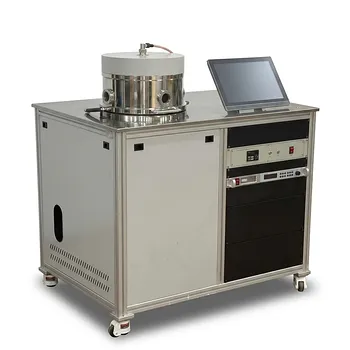
- RF PECVD System Radio Frequency Plasma-Enhanced Chemical Vapor Deposition RF PECVD
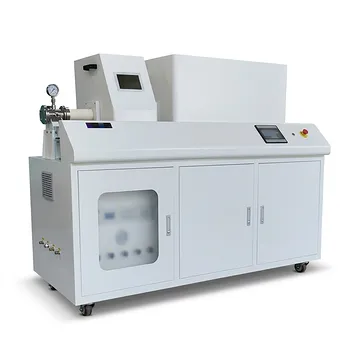
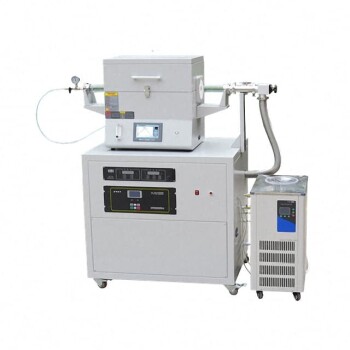
- Chemical Vapor Deposition CVD Equipment System Chamber Slide PECVD Tube Furnace with Liquid Gasifier PECVD Machine
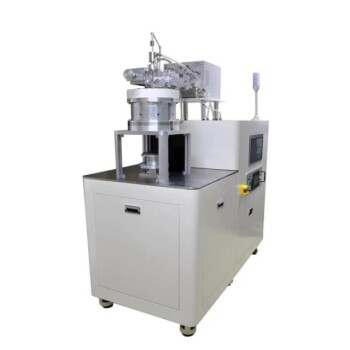
- Inclined Rotary Plasma Enhanced Chemical Vapor Deposition PECVD Equipment Tube Furnace Machine
- Inclined Rotary Plasma Enhanced Chemical Vapor Deposition PECVD Equipment Tube Furnace Machine
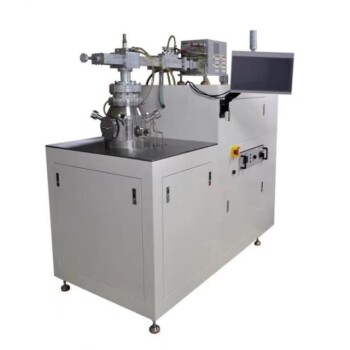
- Microwave Plasma Chemical Vapor Deposition MPCVD Machine System Reactor for Lab and Diamond Growth
People Also Ask
- What is plasma enhanced chemical vapour deposition PECVD used for? Enable Low-Temp Thin Films for Electronics & Solar
- What is the role of RF-PECVD in VFG preparation? Mastering Vertical Growth and Surface Functionality
- What is an example of PECVD? RF-PECVD for High-Quality Thin Film Deposition
- What is plasma enhanced chemical Vapour deposition process used for fabrication of? A Guide to Low-Temperature Thin Films
- What is plasma chemical vapor deposition? A Low-Temperature Thin Film Coating Solution