Knowledge What are the factors affecting the efficiency of ball mill grinding? Optimize Your Milling Process for Peak Performance
Author avatar

Tech Team · Kintek Solution

Updated 1 week ago

What are the factors affecting the efficiency of ball mill grinding? Optimize Your Milling Process for Peak Performance


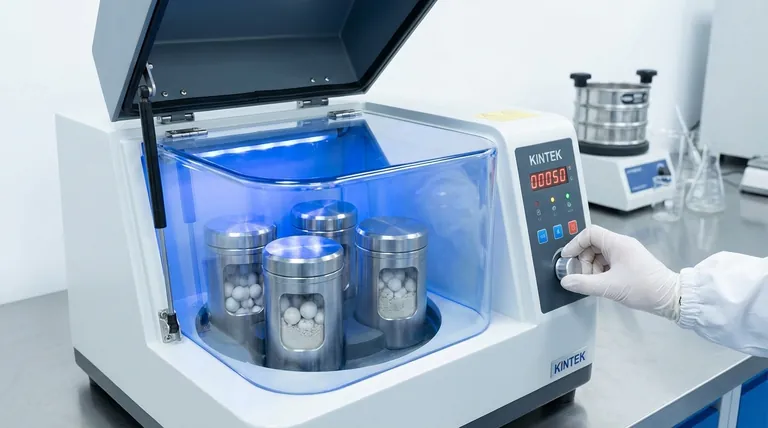
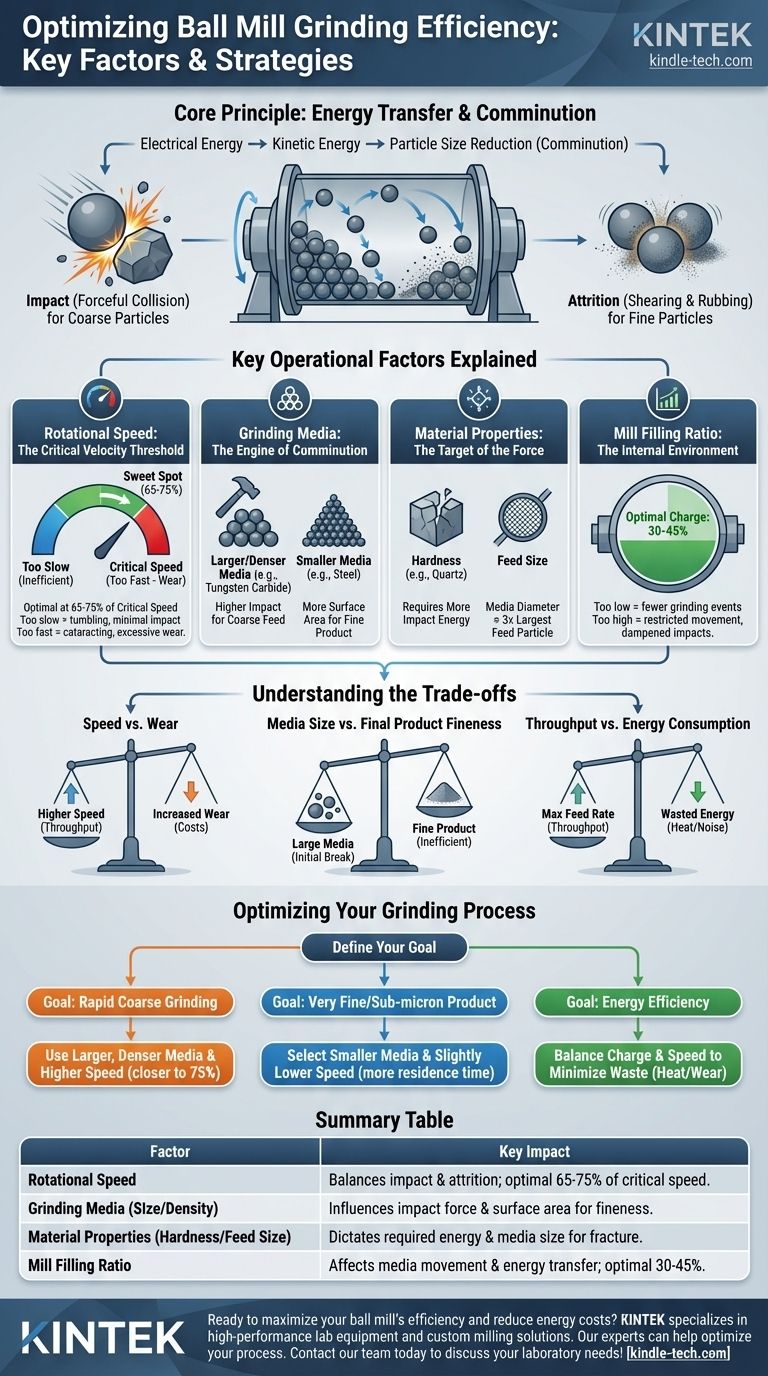
The efficiency of a ball mill is not determined by a single setting, but by the precise interplay of several critical operational factors. These key variables include the mill's rotational speed, the characteristics of the grinding media (size and density), the properties of the material being processed, and the volume ratio of media to material within the mill chamber.

Grinding efficiency is fundamentally a balancing act. The goal is to maximize the energy transferred from the grinding media to the material, which requires optimizing mill speed to achieve the right impact-attrition balance while ensuring the media and material properties are correctly matched.
What are the factors affecting the efficiency of ball mill grinding? Optimize Your Milling Process for Peak Performance

The Core Principle: Energy Transfer and Comminution

The entire purpose of a ball mill is to reduce the size of particles, a process known as comminution. This is achieved by converting electrical energy from a motor into kinetic energy within the mill.

From Rotation to Fracture

As the mill drum rotates, it lifts the grinding media (balls). This action imparts potential energy to the media. As the media reaches a certain height, it falls and cascades, converting that potential energy into the kinetic energy needed to crush and grind the target material.

Two Modes of Grinding

The energy transfer happens through two primary mechanisms.

  • Impact: The forceful collision of falling balls against the material, which is effective for breaking down larger, coarse particles.
  • Attrition: The shearing and rubbing action that occurs as balls tumble over one another, which is essential for grinding particles down to a very fine or even sub-micron size.

Key Operational Factors Explained

Optimizing the balance between impact and attrition requires careful control over several variables. Each factor directly influences how effectively energy is used to achieve the desired particle size.

Rotational Speed: The Critical Velocity Threshold

The speed of the mill is arguably the most critical factor. It is often discussed in relation to its "critical speed"—the theoretical speed at which the grinding media would centrifuge and cling to the mill's inner wall, halting all grinding action.

Operating at 65-75% of the critical speed is typically the sweet spot.

  • Too slow: The media tumbles at the bottom of the mill, leading to inefficient, attrition-dominant grinding with minimal impact.
  • Too fast: The media is thrown in a high arc, causing excessive wear on the mill liners with less effective grinding.

Grinding Media: The Engine of Comminution

The balls are the instruments of size reduction. Their characteristics must be matched to the task.

  • Media Size: Larger media delivers higher impact force, ideal for breaking down coarse feed material. Smaller media provides a greater surface area and more contact points, promoting the attrition necessary for producing a fine product.
  • Media Density: Denser media (like tungsten carbide or zirconia) transfers more energy upon impact than lighter media (like steel or alumina). This is crucial for grinding very hard materials.

Material Properties: The Target of the Force

The material being ground dictates the required approach.

  • Hardness: Harder materials require more impact energy to fracture. This often means using denser grinding media or operating at a higher speed.
  • Feed Size: The initial particle size of the feed material must be small enough for the chosen grinding media to effectively "nip" and break it. A common rule is that the media diameter should be roughly three times the size of the largest feed particles.

Mill Filling Ratio: The Internal Environment

The charge volume, or the percentage of the mill's internal volume filled with grinding media, is critical. A typical charge is between 30% and 45% of the mill volume.

  • Too low: A low charge reduces the number of grinding events, decreasing efficiency and throughput.
  • Too high: An overfilled mill restricts the movement of the media, dampening the cascading action and reducing the energy of impacts.

Understanding the Trade-offs

Pursuing one performance metric often comes at the expense of another. Recognizing these trade-offs is essential for practical optimization.

Speed vs. Wear

Increasing rotational speed can boost throughput, but it also dramatically accelerates the wear on both the grinding media and the mill's internal liners. This increases operational costs, maintenance downtime, and the risk of product contamination from worn components.

Media Size vs. Final Product Fineness

Using large media is highly effective for the initial breakdown of coarse material. However, it is an inefficient tool for producing very fine or sub-micron particles, as the large balls cannot effectively act on tiny particles. Achieving such fineness requires switching to smaller media.

Throughput vs. Energy Consumption

Maximizing the feed rate to increase throughput can lead to inefficient grinding if the mill cannot transfer energy effectively to the increased volume of material. This results in energy being wasted as heat and noise rather than being used for particle size reduction, driving up energy costs per unit of product.

Optimizing Your Grinding Process

Your ideal settings are dictated entirely by your end goal. The key is to align every operational factor with the desired outcome.

  • If your primary focus is rapid coarse grinding: Use larger, denser grinding media and operate closer to the upper end of the optimal speed range (e.g., 75% of critical speed) to maximize impact forces.
  • If your primary focus is achieving a very fine or sub-micron product: Select smaller grinding media to increase surface area contact and promote attrition, often at a slightly lower speed to ensure sufficient residence time.
  • If your primary focus is energy efficiency: Carefully balance the mill charge and rotational speed to find the point where energy is directed into particle fracture, not wasted as excess heat or mechanical wear.

Ultimately, mastering ball mill efficiency comes from systematically tuning these variables to align with your specific material and desired particle size.

Summary Table:

Factor Key Impact on Grinding Efficiency
Rotational Speed Determines the balance between impact & attrition; optimal at 65-75% of critical speed.
Grinding Media (Size/Density) Influences impact force and surface area for fine grinding.
Material Properties (Hardness/Feed Size) Dictates the required energy and media size for effective fracture.
Mill Filling Ratio Affects media movement and energy transfer; optimal between 30-45% of mill volume.

Ready to maximize your ball mill's efficiency and reduce energy costs? KINTEK specializes in high-performance lab equipment and consumables, including grinding media and milling solutions tailored to your specific material and particle size goals. Our experts can help you optimize your process for superior results. Contact our team today to discuss your laboratory needs!

Visual Guide
What are the factors affecting the efficiency of ball mill grinding? Optimize Your Milling Process for Peak Performance Visual Guide

Related Products

People Also Ask

Related Products

High Energy Planetary Ball Mill Machine for Laboratory Horizontal Tank Type

High Energy Planetary Ball Mill Machine for Laboratory Horizontal Tank Type

The KT-P2000H uses a unique Y-axis planetary trajectory, and utilizes the collision, friction and gravity between the sample and the grinding ball.

Mini Planetary Ball Mill Machine for Laboratory Milling

Mini Planetary Ball Mill Machine for Laboratory Milling

Discover the KT-P400 desktop planetary ball mill, ideal for grinding and mixing small samples in the lab. Enjoy stable performance, long service life, and practicality. Functions include timing and overload protection.

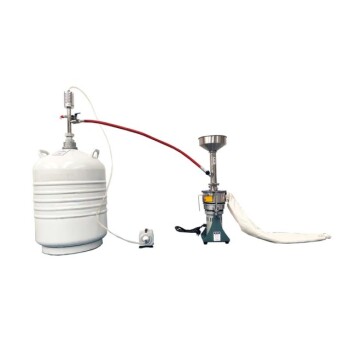
Liquid Nitrogen Cryogenic Grinder Mill Cryomill Airflow Ultrafine Pulverizer

Liquid Nitrogen Cryogenic Grinder Mill Cryomill Airflow Ultrafine Pulverizer

Discover the Liquid Nitrogen Cryogenic Grinding Machine, perfect for lab use, ultra-fine pulverization, and preserving material properties. Ideal for pharmaceuticals, cosmetics, and more.

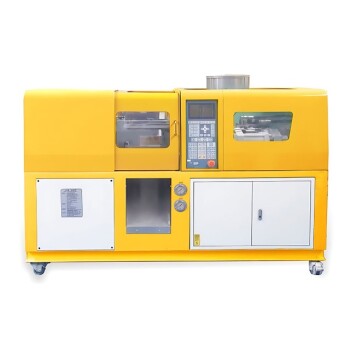
Small Injection Molding Machine for Lab Use

Small Injection Molding Machine for Lab Use

The small injection molding machinehas fast and stable movements; good controllability and repeatability, super energy saving; the product can be automatically dropped and formed; the machine body is low, convenient for feeding, easy to maintain, and no height restrictions on the installation site.

Manual Heated Hydraulic Press Machine with Heated Plates for Laboratory Hot Press

Manual Heated Hydraulic Press Machine with Heated Plates for Laboratory Hot Press

The Manual Heat Press is a versatile piece of equipment suitable for a variety of applications, operated by a manual hydraulic system that applies controlled pressure and heat to the material placed on the piston.

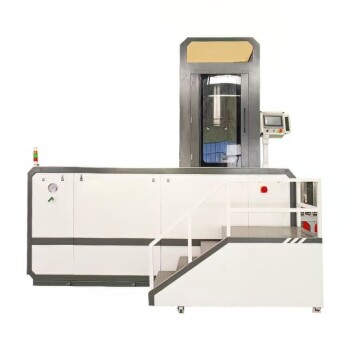
Warm Isostatic Press WIP Workstation 300Mpa for High Pressure Applications

Warm Isostatic Press WIP Workstation 300Mpa for High Pressure Applications

Discover Warm Isostatic Pressing (WIP) - A cutting-edge technology that enables uniform pressure to shape and press powdered products at a precise temperature. Ideal for complex parts and components in manufacturing.

Automatic Heated Hydraulic Press Machine with Heated Plates for Laboratory Hot Press 25T 30T 50T

Automatic Heated Hydraulic Press Machine with Heated Plates for Laboratory Hot Press 25T 30T 50T

Efficiently prepare your samples with our Automatic Heated Lab Press. With a pressure range up to 50T and precise control, it's perfect for various industries.

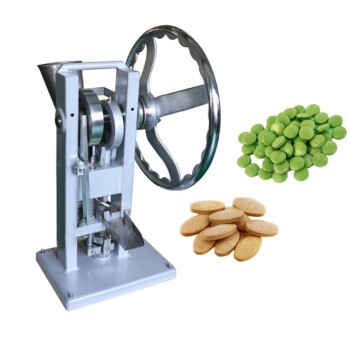
Single Punch Manual Tablet Press Machine TDP Tablet Punching Machine

Single Punch Manual Tablet Press Machine TDP Tablet Punching Machine

Single punch manual tablet punching machine can press various granular, crystal or powdery raw materials with good fluidity into disc-shaped, cylindrical, spherical, convex, concave and other various geometric shapes (such as square, triangle, ellipse, capsule shape, etc.), and can also press products with text and patterns.

Inclined Rotary Plasma Enhanced Chemical Vapor Deposition PECVD Equipment Tube Furnace Machine

Inclined Rotary Plasma Enhanced Chemical Vapor Deposition PECVD Equipment Tube Furnace Machine

Introducing our inclined rotary PECVD furnace for precise thin film deposition. Enjoy automatic matching source, PID programmable temperature control, and high accuracy MFC mass flowmeter control. Built-in safety features for peace of mind.

12 Inch 24 Inch High Precision Automatic Diamond Wire Cutting Machine Laboratory Saw Precision Wire EDM Cutting Machine

12 Inch 24 Inch High Precision Automatic Diamond Wire Cutting Machine Laboratory Saw Precision Wire EDM Cutting Machine

The high precision automatic diamond wire cutting machine is a versatile cutting tool that uses a diamond wire to cut through a wide range of materials, including conductive and non-conductive materials, ceramics, glass, rocks, gems, jade, meteorites, monocrystalline silicon, silicon carbide, polycrystalline silicon, refractory bricks, epoxy boards, and ferrite bodies. It is especially suitable for cutting various brittle crystals with high hardness, high value, and easy to break.

High Precision Diamond Wire Cutting Machine Laboratory Saw Precision Wire EDM Cutting Machine

High Precision Diamond Wire Cutting Machine Laboratory Saw Precision Wire EDM Cutting Machine

The high precision diamond wire cutting machine is a versatile and precise cutting tool designed specifically for material researchers. It utilizes a continuous diamond wire cutting mechanism, enabling precise cutting of brittle materials such as ceramics, crystals, glass, metals, rocks, and various other materials.

Single Punch Tablet Press Machine and Mass Production Rotary Tablet Punching Machine for TDP

Single Punch Tablet Press Machine and Mass Production Rotary Tablet Punching Machine for TDP

Rotary tablet punching machine is an automatic rotating and continuous tableting machine. It is mainly used for tablet manufacturing in the pharmaceutical industry, and is also suitable for industrial sectors such as food, chemicals, batteries, electronics, ceramics, etc. to compress granular raw materials into tablets.

Double Plate Heating Press Mold for Lab

Double Plate Heating Press Mold for Lab

Discover precision in heating with our Double Plate Heating Mold, featuring high-quality steel and uniform temperature control for efficient lab processes. Ideal for various thermal applications.

Lab Plastic PVC Calender Stretch Film Casting Machine for Film Testing

Lab Plastic PVC Calender Stretch Film Casting Machine for Film Testing

The cast film machine is designed for the molding of polymer cast film products and has multiple processing functions such as casting, extrusion, stretching, and compounding.

Single Punch Electric Tablet Press Machine Laboratory Powder Tablet Punching TDP Tablet Press

Single Punch Electric Tablet Press Machine Laboratory Powder Tablet Punching TDP Tablet Press

The single-punch electric tablet press is a laboratory-scale tablet press suitable for corporate laboratories in pharmaceutical, chemical, food, metallurgical and other industries.

Metallographic Specimen Mounting Machine for Laboratory Materials and Analysis

Metallographic Specimen Mounting Machine for Laboratory Materials and Analysis

Precision metallographic mounting machines for labs—automated, versatile, and efficient. Ideal for sample prep in research and quality control. Contact KINTEK today!

Laboratory Vibratory Sieve Shaker Machine for Dry and Wet Three-Dimensional Sieving

Laboratory Vibratory Sieve Shaker Machine for Dry and Wet Three-Dimensional Sieving

KT-VD200 can be used for sieving tasks of dry and wet samples in the laboratory. The screening quality is 20g-3kg. The product is designed with a unique mechanical structure and an electromagnetic vibrating body with a vibration frequency of 3000 times per minute.

Desktop Fast Laboratory Autoclave Sterilizer 35L 50L 90L for Lab Use

Desktop Fast Laboratory Autoclave Sterilizer 35L 50L 90L for Lab Use

The desktop fast steam sterilizer is a compact and reliable device used for rapid sterilization of medical, pharmaceutical, and research items. It efficiently sterilizes surgical instruments, glassware, medicines, and resistant materials, making it suitable for various applications.

Lab Blown Film Extrusion Three Layer Co-Extrusion Film Blowing Machine

Lab Blown Film Extrusion Three Layer Co-Extrusion Film Blowing Machine

Lab blown film extrusion is mainly used to detect the feasibility of film blowing of polymer materials and the colloid condition in the materials, as well as the dispersion of colored dispersions, controlled mixtures, and extrudates;

Single Punch Electric Tablet Press Machine TDP Tablet Punching Machine

Single Punch Electric Tablet Press Machine TDP Tablet Punching Machine

The electric tablet punching machine is a laboratory equipment designed for pressing various granular and powdery raw materials into discs and other geometric shapes. It is commonly used in pharmaceutical, healthcare products, food, and other industries for small batch production and processing. The machine is compact, lightweight, and easy to operate, making it suitable for use in clinics, schools, laboratories, and research units.


Leave Your Message