Knowledge What are the functions of alumina or zirconia crucibles during the high-temperature sintering? Key Roles for Electrolytes
Author avatar

Tech Team · Kintek Solution

Updated 2 days ago

What are the functions of alumina or zirconia crucibles during the high-temperature sintering? Key Roles for Electrolytes


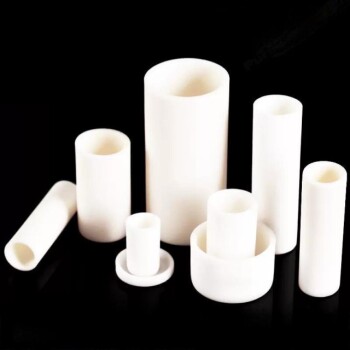
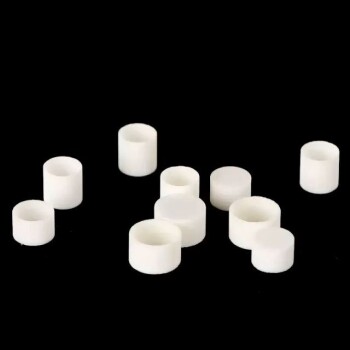
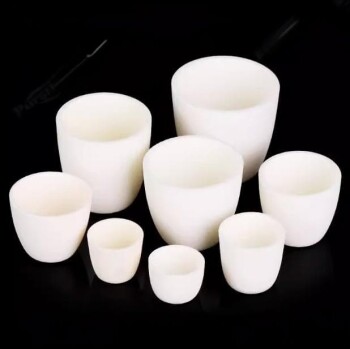
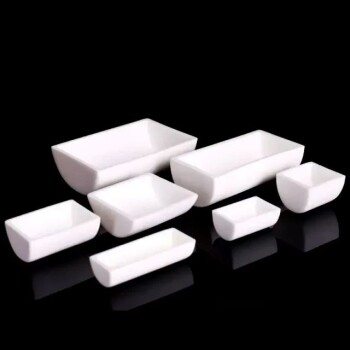
The primary functions of alumina and zirconia crucibles during high-temperature sintering are to provide high thermal stability and chemical inertness. These vessels serve as physical barriers that hold precursor powders or pressed green bodies, isolating them from the furnace environment. Their use is essential to prevent reactions with the furnace lining and to eliminate leakage of molten substances, ensuring the final material retains its intended composition.

Core Takeaway Alumina and zirconia crucibles act as a "quarantine zone" within the furnace, shielding reactive solid electrolytes from contamination while withstanding extreme thermal shock. Their selection is critical for maintaining the purity and accurate stoichiometry of the final ceramic product.

The Mechanics of Material Protection

Ensuring Chemical Stability

Solid electrolyte materials, particularly lithium-based ceramics like LLZTO, are often highly reactive at elevated temperatures.

Alumina and zirconia are specifically selected for their superior chemical stability in these harsh environments.

They prevent the container itself from reacting with the aggressive ceramic precursors, which is vital for maintaining the accurate stoichiometry of the synthesized powder.

Preserving Material Purity

Any chemical interaction between a sample and its container introduces unwanted foreign elements.

By serving as a chemically inert container, these crucibles prevent the solid electrolyte from becoming contaminated by impurities from the vessel walls.

This isolation ensures that the heat-treated powder maintains its structural integrity and intended chemical makeup.

Thermal Management Roles

Withstanding Thermal Shock

Sintering processes often involve rapid heating and cooling cycles that create immense stress.

Alumina and zirconia crucibles possess excellent thermal shock resistance, allowing them to endure these temperature fluctuations without cracking or shattering.

Preventing Physical Leakage

At sintering temperatures, certain phases of the electrolyte material may become molten or semi-molten.

The crucible functions as a secure vessel, effectively preventing these molten substances from leaking out and damaging the furnace lining.

This containment protects both the valuable sample and the expensive furnace equipment.

Understanding the Trade-offs

The Necessity of Isolation Layers

While alumina and zirconia are highly stable, they are not universally immune to interaction with every material.

In specific scenarios, such as the sintering of LATP, direct contact can still lead to adhesion or minor chemical reactions.

To mitigate this, a sacrificial powder is sometimes placed between the green body and the crucible to act as an additional isolation layer, ensuring the ceramic pellet does not stick to the container.

Material-Specific Reactivity

High-purity crucibles are necessary, but they must be matched to the specific reactivity of the electrolyte.

For example, when treating NMC powders, high-purity alumina is required to maintain the amorphous coating structure.

Using a crucible with lower purity or incorrect chemical resistance can lead to a loss of stoichiometry, particularly in volatile lithium-based compounds.

Making the Right Choice for Your Goal

Selecting the correct crucible is about balancing thermal endurance with chemical compatibility.

  • If your primary focus is High Purity: Prioritize high-purity alumina or zirconia to ensure an inert environment that prevents foreign impurities from altering the electrolyte's composition.
  • If your primary focus is Stoichiometric Control: Ensure the crucible material is chemically stable enough to prevent reactions with reactive elements (like Lithium) that could alter the chemical balance of the final powder.
  • If your primary focus is Physical Integrity: Use these crucibles to prevent molten leakage and consider using sacrificial powder layers to avoid adhesion between the sample and the vessel.

The crucible is not merely a holder; it is an active component in preserving the chemical identity of your solid electrolyte.

Summary Table:

Feature Alumina Crucible Zirconia Crucible
Chemical Stability High (ideal for most ceramics) Superior (ideal for highly reactive materials)
Thermal Shock Resistance Moderate to High Excellent
Max Operating Temp Up to 1800°C Up to 2400°C
Primary Function Contamination prevention High-temp stability & containment
Best Use Case LLZTO, NMC Powders Extreme temperature & corrosive samples

Elevate Your Materials Research with KINTEK Precision Solutions

Maintaining the precise stoichiometry and purity of your solid electrolytes is critical for high-performance battery research. KINTEK specializes in providing the laboratory equipment and high-purity consumables you need to succeed.

Our extensive portfolio includes:

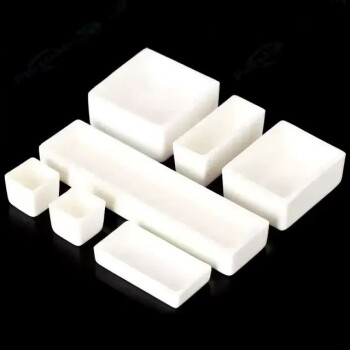
  • High-Purity Ceramics: Alumina and zirconia crucibles, PTFE products, and specialized ceramics for contamination-free sintering.
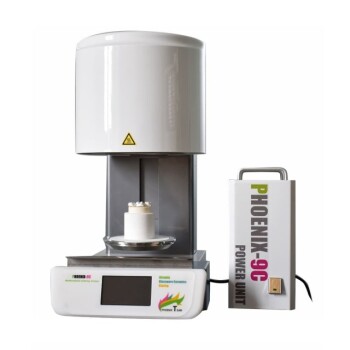
  • Thermal Processing: A comprehensive range of high-temperature furnaces, including muffle, tube, vacuum, and atmosphere furnaces tailored for solid electrolyte synthesis.
  • Sample Preparation: Crushing and milling systems, hydraulic pellet presses (manual, hot, isostatic), and sieving equipment.
  • Advanced Solutions: High-temperature high-pressure reactors, autoclaves, and specialized electrolytic cells for battery testing.

Don't let contamination compromise your results. Contact KINTEK today to find the perfect crucible or furnace for your specific sintering requirements. Contact us now to discuss your project!

Related Products

People Also Ask

Related Products

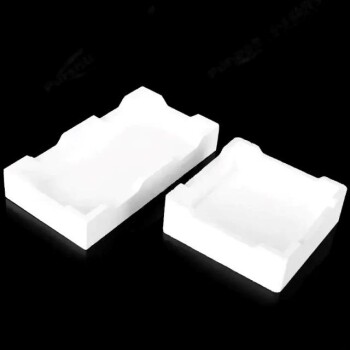
Alumina Al2O3 Ceramic Crucible Semicircle Boat with Lid for Engineering Advanced Fine Ceramics

Alumina Al2O3 Ceramic Crucible Semicircle Boat with Lid for Engineering Advanced Fine Ceramics

Crucibles are containers widely used for melting and processing various materials, and semicircular boat-shaped crucibles are suitable for special smelting and processing requirements. Their types and uses vary by material and shape.

Arc-Shaped Alumina Ceramic Crucible High Temperature Resistant for Engineering Advanced Fine Ceramics

Arc-Shaped Alumina Ceramic Crucible High Temperature Resistant for Engineering Advanced Fine Ceramics

In the journey of scientific exploration and industrial production, every detail is crucial. Our arc-shaped alumina ceramic crucibles, with their excellent high temperature resistance and stable chemical properties, have become a powerful assistant in laboratories and industrial fields. They are made of high-purity alumina materials and manufactured through precision processes to ensure excellent performance in extreme environments.

Engineering Advanced Fine Ceramics Alumina Crucibles (Al2O3) for Thermal Analysis TGA DTA

Engineering Advanced Fine Ceramics Alumina Crucibles (Al2O3) for Thermal Analysis TGA DTA

TGA/DTA thermal analysis vessels are made of aluminum oxide (corundum or aluminum oxide). It can withstand high temperature and is suitable for analyzing materials that require high temperature testing.

Engineering Advanced Fine Alumina Al2O3 Ceramic Crucible for Laboratory Muffle Furnace

Engineering Advanced Fine Alumina Al2O3 Ceramic Crucible for Laboratory Muffle Furnace

Alumina ceramic crucibles are used in some materials and metal melting tools, and flat-bottomed crucibles are suitable for melting and processing larger batches of materials with better stability and uniformity.

Electron Beam Evaporation Coating Tungsten Crucible and Molybdenum Crucible for High Temperature Applications

Electron Beam Evaporation Coating Tungsten Crucible and Molybdenum Crucible for High Temperature Applications

Tungsten and molybdenum crucibles are commonly used in electron beam evaporation processes due to their excellent thermal and mechanical properties.

Precision Machined Yttrium Stabilized Zirconia Ceramic Rod for Engineering Advanced Fine Ceramics

Precision Machined Yttrium Stabilized Zirconia Ceramic Rod for Engineering Advanced Fine Ceramics

Zirconia ceramic rods are prepared by isostatic pressing, and a uniform, dense and smooth ceramic layer and transition layer are formed at high temperature and high speed.

Evaporation Crucible for Organic Matter

Evaporation Crucible for Organic Matter

An evaporation crucible for organic matter, referred to as an evaporation crucible, is a container for evaporating organic solvents in a laboratory environment.

Electron Beam Evaporation Coating Gold Plating Tungsten Molybdenum Crucible for Evaporation

Electron Beam Evaporation Coating Gold Plating Tungsten Molybdenum Crucible for Evaporation

These crucibles act as containers for the gold material evaporated by the electron evaporation beam while precisely directing the electron beam for precise deposition.

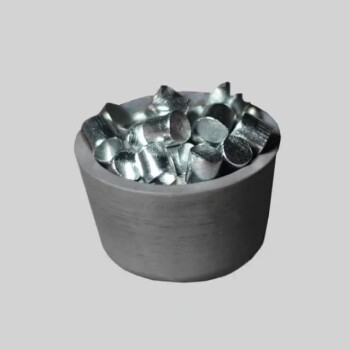
Boron Nitride (BN) Crucible for Phosphorous Powder Sintered

Boron Nitride (BN) Crucible for Phosphorous Powder Sintered

Phosphorus powder sintered boron nitride (BN) crucible has a smooth surface, dense, pollution-free and long service life.

Engineering Advanced Fine Alumina (Al₂O₃) Ceramic Positioning Pin Straight Bevel for Precision Applications

Engineering Advanced Fine Alumina (Al₂O₃) Ceramic Positioning Pin Straight Bevel for Precision Applications

Alumina ceramic positioning pin has the characteristics of high hardness, wear resistance and high temperature resistance.

Custom Machined and Molded PTFE Teflon Parts Manufacturer with PTFE Crucible and Lid

Custom Machined and Molded PTFE Teflon Parts Manufacturer with PTFE Crucible and Lid

PTFE crucibles, made from pure Teflon, offer chemical inertness and resistance from -196°C to 280°C, ensuring compatibility with a wide range of temperatures and chemicals. These crucibles feature machine-finished surfaces for easy cleaning and prevention of contamination, making them ideal for precise laboratory applications.

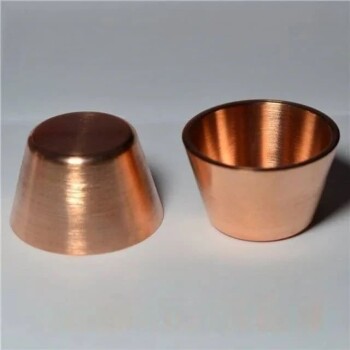
Electron Beam Evaporation Coating Oxygen-Free Copper Crucible and Evaporation Boat

Electron Beam Evaporation Coating Oxygen-Free Copper Crucible and Evaporation Boat

Electron Beam Evaporation Coating Oxygen-Free Copper Crucible enables precise co-deposition of various materials. Its controlled temperature and water-cooled design ensure pure and efficient thin film deposition.

Electron Beam Evaporation Coating Conductive Boron Nitride Crucible BN Crucible

Electron Beam Evaporation Coating Conductive Boron Nitride Crucible BN Crucible

High-purity and smooth conductive boron nitride crucible for electron beam evaporation coating, with high temperature and thermal cycling performance.

Graphite Vacuum Continuous Graphitization Furnace

Graphite Vacuum Continuous Graphitization Furnace

High-temperature graphitization furnace is a professional equipment for graphitization treatment of carbon materials. It is a key equipment for the production of high-quality graphite products. It has high temperature, high efficiency and uniform heating. It is suitable for various high-temperature treatments and graphitization treatments. It is widely used in metallurgy, electronics, aerospace, etc. industry.

Desktop Fast Laboratory Autoclave Sterilizer 35L 50L 90L for Lab Use

Desktop Fast Laboratory Autoclave Sterilizer 35L 50L 90L for Lab Use

The desktop fast steam sterilizer is a compact and reliable device used for rapid sterilization of medical, pharmaceutical, and research items. It efficiently sterilizes surgical instruments, glassware, medicines, and resistant materials, making it suitable for various applications.

Engineering Advanced Fine Ceramics Aluminum Oxide Al2O3 Heat Sink for Insulation

Engineering Advanced Fine Ceramics Aluminum Oxide Al2O3 Heat Sink for Insulation

The hole structure of the ceramic heat sink increases the heat dissipation area in contact with the air, which greatly enhances the heat dissipation effect, and the heat dissipation effect is better than that of super copper and aluminum.

Molybdenum Disilicide (MoSi2) Thermal Elements Electric Furnace Heating Element

Molybdenum Disilicide (MoSi2) Thermal Elements Electric Furnace Heating Element

Discover the power of Molybdenum Disilicide (MoSi2) Heating Element for high-temperature resistance. Unique oxidation resistance with stable resistance value. Learn more about its benefits now!

Small Vacuum Heat Treat and Tungsten Wire Sintering Furnace

Small Vacuum Heat Treat and Tungsten Wire Sintering Furnace

The small vacuum tungsten wire sintering furnace is a compact experimental vacuum furnace specially designed for universities and scientific research institutes. The furnace features a CNC welded shell and vacuum piping to ensure leak-free operation. Quick-connect electrical connections facilitate relocation and debugging, and the standard electrical control cabinet is safe and convenient to operate.

Laboratory Jaw Crusher

Laboratory Jaw Crusher

Discover the small jaw crusher for efficient, flexible, and affordable crushing in labs and small mines. Ideal for coal, ores, and rocks. Learn more now!

Silicon Carbide (SIC) Ceramic Sheet Wear-Resistant Engineering Advanced Fine Ceramics

Silicon Carbide (SIC) Ceramic Sheet Wear-Resistant Engineering Advanced Fine Ceramics

Silicon carbide (sic) ceramic sheet is composed of high-purity silicon carbide and ultra-fine powder, which is formed by vibration molding and high-temperature sintering.


Leave Your Message