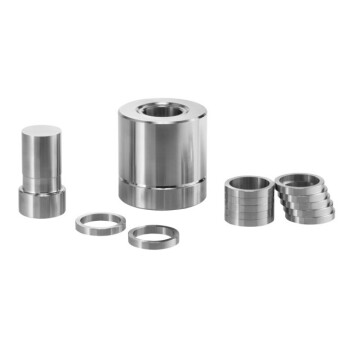
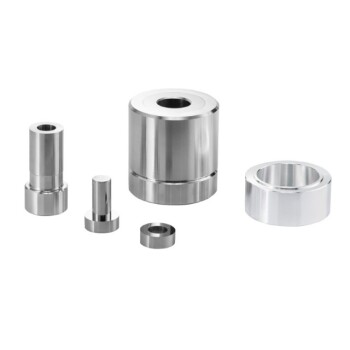
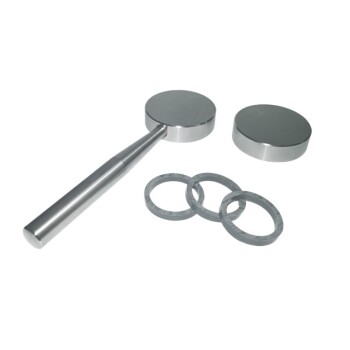
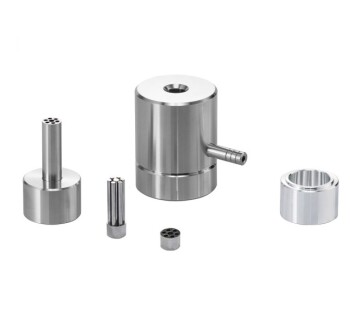
High-precision pressure molds act as the definitive boundary condition for the formation of solid-state electrolytes. They perform three specific physical functions: they strictly define the geometric dimensions of the pellet, ensure uniform pressure distribution throughout the powder volume, and dictate the final surface flatness via their internal finish. This precision is required to contain the powder without leakage while withstanding the immense mechanical stress needed to densify the material.
Core Takeaway The mold is not merely a container; it is a shaping tool where the internal surface quality directly transfers to the electrolyte pellet. A high-precision mold is the primary variable controlling interfacial contact, determining whether the electrolyte can achieve low resistance connections with the lithium metal anode.
Defining Physical Geometry and Containment
Precise Dimensional Control
The most immediate function of the mold is to impose specific geometric dimensions onto the loose powder. By confining the material within a set diameter and thickness, the mold ensures the resulting pellet meets the exact size specifications required for the battery cell assembly.
Preventing Structural Defects
High-precision molds are engineered with tight tolerances to prevent powder leakage between moving parts. If the fit is loose, fine sulfide particles can escape during compression, leading to structural defects or inconsistent pellet density.
Withstanding High-Pressure Densification
To densify LPSCl materials, the mold must endure extreme uniaxial pressures, often ranging from 300 to 500 MPa. The mold’s structural integrity allows it to facilitate this compression without deforming, forcing the powder to overcome friction and elastic recovery to pack tightly.
Ensuring Uniformity and Conductivity
Uniform Pressure Distribution
A critical function of the mold is to ensure that the force applied by the hydraulic press is translated into uniform pressure distribution across the entire powder bed. Without high-precision alignment, pressure gradients can occur, leading to density variations and potential cracking within the electrolyte layer.
Enhancing Ionic Transport
By enabling uniform high-pressure compaction, the mold facilitates the reduction of grain boundary resistance. This mechanical densification eliminates pores and micro-cracks, creating continuous lithium-ion transport channels and significantly increasing ionic conductivity.
Optimizing Surface Properties for Interfaces
Dictating Surface Flatness
The internal surface finish of the mold directly determines the topography of the pressed pellet. A mirror-polished mold interior imparts a smooth, flat surface to the electrolyte, which is impossible to achieve with rougher, lower-precision tools.
Minimizing Interfacial Resistance
The flatness achieved by the mold is vital for establishing tight physical contact between the electrolyte and the lithium metal anode. A high-precision surface minimizes gaps at this interface, thereby reducing contact resistance and helping to inhibit the penetration of lithium dendrites.
Understanding the Trade-offs
Material Hardness vs. Durability
To maintain precision under high loads (300+ MPa), molds must be made of materials with extreme hardness, such as Tungsten Carbide or high-strength Titanium. While these materials resist deformation, they can be brittle; improper handling or misalignment during pressing can lead to catastrophic mold failure.
The Cost of Precision
Achieving the necessary "mirror finish" and tight clearance tolerances significantly increases manufacturing costs. However, using lower-cost molds with poor surface finishes inevitably leads to rougher pellets, higher interfacial resistance, and inconsistent electrochemical performance.
Making the Right Choice for Your Goal
To maximize the performance of your LPSCl pellets, match your tooling strategy to your specific experimental needs:
- If your primary focus is Electrochemical Performance: Prioritize molds with a mirror-grade internal finish (e.g., Tungsten Carbide) to minimize interfacial resistance and ensure optimal contact with the Lithium anode.
- If your primary focus is High Density/Conductivity: Ensure the mold material has a high yield strength to withstand pressures exceeding 450 MPa without plastic deformation, maximizing particle-to-particle contact.
The quality of your data is ultimately limited by the precision of the mold that shapes it.
Summary Table:
| Function | Description | Impact on Electrolyte Performance |
|---|---|---|
| Dimensional Control | Precise boundary confinement & zero leakage | Ensures structural integrity and consistent pellet density |
| Pressure Distribution | Translates uniaxial force uniformly | Eliminates micro-cracks and reduces grain boundary resistance |
| Surface Finishing | Imparts mirror-flat internal finish | Minimizes interfacial resistance with the lithium metal anode |
| Mechanical Strength | Withstands 300-500 MPa loads | Facilitates maximum densification and high ionic conductivity |
Elevate Your Solid-State Battery Performance with KINTEK
Precision is the foundation of reliable electrochemical data. At KINTEK, we specialize in providing high-performance laboratory equipment designed for the rigorous demands of battery research. Our high-precision pressure molds, crafted from premium tungsten carbide and high-strength titanium, ensure your LPSCl solid-state electrolyte pellets achieve the mirror finish and high density required for superior ionic conductivity.
From hydraulic pellet presses and crushing systems to specialized high-temperature reactors and vacuum furnaces, our comprehensive portfolio supports your entire workflow.
Ready to minimize interfacial resistance and eliminate structural defects in your research?
Contact KINTEK Experts Today — Let us provide the precision tools your laboratory deserves.
Related Products
- XRF Boric Acid Lab Powder Pellet Pressing Mold for Laboratory Use
- XRF & KBR steel ring lab Powder Pellet Pressing Mold for FTIR
- Ring Press Mold for Lab Applications
- XRF & KBR plastic ring lab Powder Pellet Pressing Mold for FTIR
- Assemble Square Lab Press Mold for Laboratory Applications
People Also Ask
- What is the purpose of using a mold for pellet pressing when preparing catalyst test samples? Ensure Data Consistency
- What is the XRF method of sampling? Achieve Accurate Elemental Analysis with Proper Sample Prep
- What is the XRF pressed pellet method? A Fast, Cost-Effective Sample Prep Guide
- How are samples prepared for XRF analysis? Achieve Accurate and Reliable Results
- How do you make XRF pellets? A 4-Step Guide to Flawless Sample Preparation