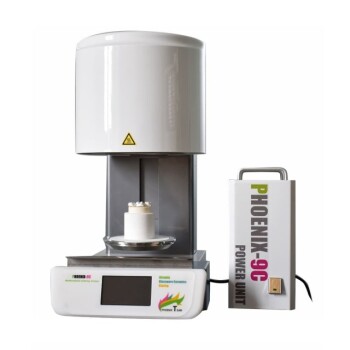
The primary advantage of using a Spark Plasma Sintering (SPS) furnace for Ti-(29-35)Nb-7Zr-0.7O alloys is the ability to achieve full material densification while simultaneously controlling the microstructure. By utilizing pulsed electric current and axial pressure at temperatures between 1300°C and 1500°C, SPS enables high heating efficiency and extremely short holding times. This rapid processing is critical for producing a biomedical implant material that balances high mechanical strength (>900 MPa) with a low elastic modulus.
Core Takeaway The rapid heating and short dwell times of the SPS process solve the inherent processing challenges of refractory alloys. By preventing element segregation and grain coarsening, SPS creates a chemically uniform, fine-grained microstructure that is mechanically superior to alloys prepared via traditional sintering methods.
Optimizing Microstructure Through Rapid Processing
The preparation of Ti-Nb-Zr alloys presents specific challenges due to the presence of refractory elements like Niobium (Nb). The SPS furnace addresses these through its unique heating mechanism.
Ensuring Chemical Uniformity
Refractory elements such as Niobium have high melting points and naturally slow diffusion rates. In traditional slow-heating processes, this can lead to uneven distribution of elements.
SPS utilizes pulsed electric current to generate heat directly within the material. This high heating efficiency overcomes the slow diffusion kinetics of Niobium. The result is a high degree of chemical uniformity throughout the alloy, ensuring consistent material properties.
Inhibiting Grain Coarsening
One of the most critical factors in determining metal strength is grain size. Prolonged exposure to high temperatures typically causes grains to grow (coarsen), which reduces the material's strength.
Because SPS achieves densification in a fraction of the time required for conventional methods, it significantly minimizes the high-temperature dwell time. This effectively inhibits abnormal grain growth, locking in a fine-grained structure that directly contributes to the alloy's high strength (exceeding 900 MPa).
Stabilizing the Critical Beta Phase
For biomedical implants, strength is not the only requirement; the material must also possess an elastic modulus similar to human bone to prevent stress shielding.
Achieving Low Elastic Modulus
The Ti-Nb-Zr system relies on the beta phase to achieve the necessary elasticity. The processing conditions in an SPS furnace—specifically the rapid heating and the potential for fast cooling rates—help stabilize this beta-phase structure.
By preventing the degradation or transformation of the beta phase, the SPS process produces an alloy with the low elastic modulus required for orthodontic and orthopedic applications, without sacrificing durability.
Understanding the Trade-offs
While SPS offers superior material properties, it requires precise control over complex variables compared to conventional sintering.
Process Sensitivity and Complexity
An SPS furnace is a sophisticated system comprising vacuum chambers, water-cooled punch electrodes, and pulsed DC generators. Achieving the specific results mentioned (1300–1500°C range) requires rigorous control of the axial pressure and atmosphere.
Deviations in the synchronization of pressure and pulsed current can impact the densification density. Consequently, the operational window is narrower than in traditional vacuum sintering, demanding higher technical expertise to maintain consistency across batches.
Making the Right Choice for Your Goal
When selecting a processing method for Ti-Nb-Zr biomedical alloys, consider your specific material performance targets:
- If your primary focus is mechanical longevity: SPS is the superior choice for achieving strength exceeding 900 MPa through grain size control.
- If your primary focus is biocompatibility: The SPS process is essential for ensuring chemical uniformity and stabilizing the beta phase to lower the elastic modulus.
- If your primary focus is processing efficiency: SPS drastically reduces cycle times, replacing hours of vacuum sintering with rapid, pulsed-current densification.
By leveraging the high heating efficiency and short holding times of Spark Plasma Sintering, you transform a complex refractory alloy mixture into a high-performance biomedical material.
Summary Table:
| Feature | Spark Plasma Sintering (SPS) | Conventional Sintering |
|---|---|---|
| Heating Mechanism | Pulsed Direct Current (Internal) | Radiant/Convection (External) |
| Processing Time | Minutes (Extremely Short) | Hours (Long) |
| Grain Growth | Inhibited (Fine-grained) | Significant (Coarsening) |
| Chemical Uniformity | High (Even Nb distribution) | Potential for segregation |
| Mechanical Strength | Superior (>900 MPa) | Standard |
| Phase Stability | Stabilizes Beta Phase (Low Modulus) | Difficult to control |
Elevate Your Material Research with KINTEK Precision
Unlock the full potential of advanced refractory alloys and biomedical materials with KINTEK’s cutting-edge Spark Plasma Sintering (SPS) solutions. Whether you are developing high-strength orthopedic implants or exploring innovative metal-ceramic composites, our specialized high-temperature systems provide the precise control you need over densification and microstructure.
Why partner with KINTEK?
- Comprehensive High-Temp Solutions: From SPS and vacuum furnaces to CVD/PECVD and induction melting systems.
- Total Lab Ecosystem: We supply everything from hydraulic presses and milling systems to essential consumables like crucibles and ceramic tools.
- Expertise in Specialized Research: Supporting battery research, metallurgy, and advanced dental applications with tailor-made equipment.
Ready to achieve superior chemical uniformity and mechanical performance? Contact our technical experts today to find the perfect sintering or processing solution for your laboratory’s unique requirements.
References
- Ondřej Pašta, Marcin Kopeć. Debris fretting testing in PWR conditions. DOI: 10.21175/rad.abstr.book.2023.19.11
This article is also based on technical information from Kintek Solution Knowledge Base .
Related Products
- Spark Plasma Sintering Furnace SPS Furnace
- Vacuum Heat Treat and Pressure Sintering Furnace for High Temperature Applications
- Small Vacuum Heat Treat and Tungsten Wire Sintering Furnace
- Vacuum Heat Treat and Sintering Furnace with 9MPa Air Pressure
- Dental Porcelain Zirconia Sintering Ceramic Vacuum Press Furnace
People Also Ask
- What is SPS sintering method? A Guide to High-Speed, High-Performance Material Fabrication
- Why are Spark Plasma Sintering (SPS) furnaces or hot presses utilized in the preparation of Li3PS4 solid electrolytes?
- What is the difference between spark plasma sintering and flash sintering? A Guide to Advanced Sintering Methods
- What technical advantages does a Spark Plasma Sintering (SPS) furnace offer for LZP ceramics? Enhance Ionic Conductivity
- What is the theory of spark plasma sintering? A Guide to Rapid, Low-Temperature Densification