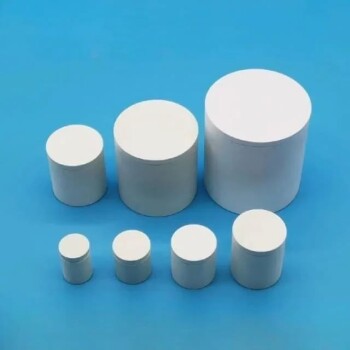
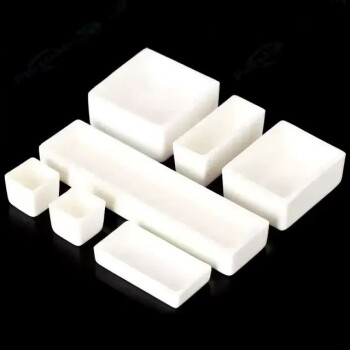
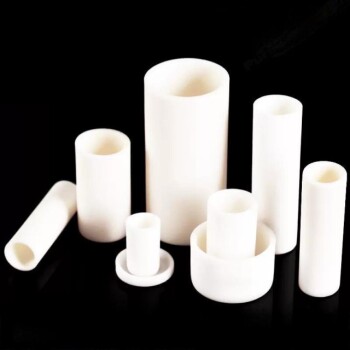
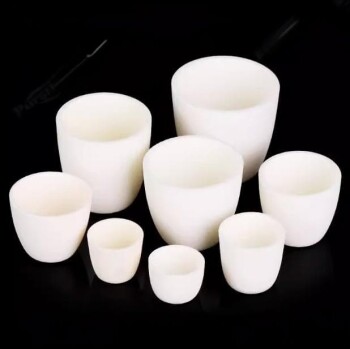
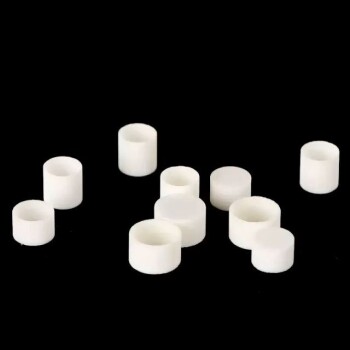
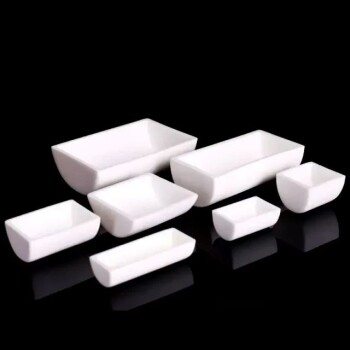
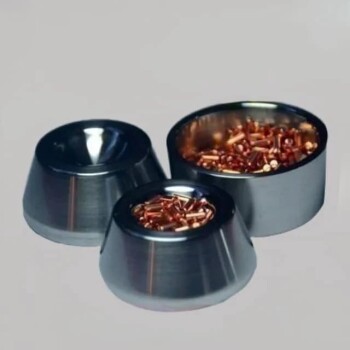
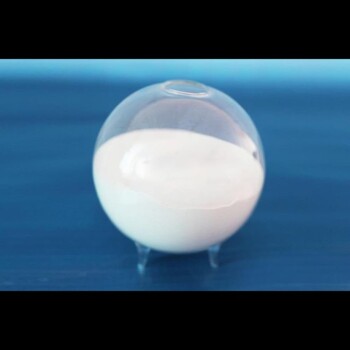
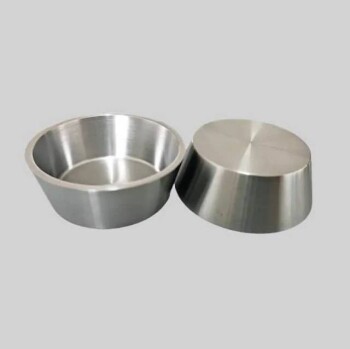
The primary considerations for selection are the material's superior chemical stability and its ability to withstand extreme thermal conditions. When synthesizing LLZTO (Lithium Lanthanum Zirconium Tantalum Oxide), you must choose alumina or zirconia crucibles specifically to prevent the highly reactive lithium-based components from interacting with the container. This ensures the final ceramic powder maintains its purity and precise chemical stoichiometry.
The success of LLZTO synthesis relies on isolating the reactive powder from its environment. High-quality crucibles act as an inert barrier, preventing cross-contamination and ensuring the delicate lithium balance remains intact throughout the heating process.
Preserving Chemical Integrity
Preventing Lithium Reactivity
The synthesis of LLZTO involves high temperatures where lithium becomes extremely reactive. The crucible must serve as a chemically inert boundary.
If the crucible material reacts with the precursor powder, it will alter the chemical composition of the batch. This is particularly critical for maintaining accurate stoichiometry, which defines the conductivity and performance of the final solid electrolyte.
Eliminating Contamination Sources
Beyond the powder itself, the crucible acts as a shield against the external furnace environment.
It prevents impurities from the furnace lining or heating elements from migrating into the LLZTO powder. By using high-purity alumina or zirconia, you ensure that the synthesized material remains free of foreign contaminants that could degrade its electrochemical properties.
Thermal Performance and Durability
Withstanding High-Temperature Sintering
The synthesis process requires sustained exposure to intense heat. Alumina and zirconia are selected because they maintain structural rigidity at these specific processing temperatures.
They do not soften, deform, or melt, ensuring the physical containment of the powder or pressed green bodies remains secure throughout the firing cycle.
Managing Thermal Shock
Crucibles must endure the temperature gradients inherent in heating and cooling cycles.
Thermal shock resistance is a critical factor. A crucible with poor resistance may crack or shatter when subjected to rapid temperature changes, potentially ruining the sample or damaging the furnace.
Understanding the Operational Risks
The Consequence of Leakage
While these materials are robust, physical failure is a risk if the crucible is compromised.
If a crucible cracks due to thermal stress, molten substances can leak into the furnace. This not only results in the loss of the batch but can also cause severe damage to the furnace components and lining.
Limits of Chemical Inertness
While alumina and zirconia are highly stable, they are not infinitely resistant to all conditions indefinitely.
Over repeated cycles or at extreme upper-temperature limits, minor surface interactions can occur. It is vital to monitor the crucible's condition over time to ensure it continues to provide a truly inert environment for sensitive lithium compounds.
Making the Right Choice for Your Process
Selecting the right vessel is about matching the crucible's capabilities to your specific processing parameters and purity requirements.
- If your primary focus is maintaining precise stoichiometry: Prioritize high-purity crucibles with verified chemical inertness to prevent lithium loss or reaction with the vessel walls.
- If your primary focus is equipment safety and longevity: Select crucibles with superior thermal shock resistance to minimize the risk of cracking and subsequent leakage during rapid heating or cooling.
By strictly controlling the container environment, you secure the fundamental purity required for high-performance solid-state battery materials.
Summary Table:
| Consideration Factor | Impact on LLZTO Synthesis | Key Performance Requirement |
|---|---|---|
| Chemical Inertness | Prevents lithium loss & cross-contamination | High-purity alumina or zirconia |
| Stoichiometry Control | Ensures high ionic conductivity | Minimal reactivity with precursor powders |
| Thermal Stability | Prevents deformation at high heat | High melting point and structural rigidity |
| Thermal Shock Resistance | Prevents crucible cracking & furnace damage | Ability to withstand rapid heating/cooling cycles |
Optimize Your Battery Research with KINTEK Precision Ceramics
Maintaining the precise stoichiometry of LLZTO ceramic powders requires laboratory equipment that can withstand extreme thermal and chemical environments. At KINTEK, we specialize in providing high-performance alumina and zirconia crucibles, designed specifically for the rigorous demands of battery research and high-temperature synthesis.
From our extensive range of high-temperature furnaces to specialized crushing, milling, and pellet pressing systems, KINTEK provides the end-to-end solutions necessary for producing superior solid-state electrolytes. Whether you need custom ceramic solutions, PTFE products, or advanced thermal processing tools, our experts are here to support your lab's efficiency and success.
Ready to elevate your material purity? Contact KINTEK today for a consultation and quote!
Related Products
- Boron Nitride (BN) Crucible for Phosphorous Powder Sintered
- Engineering Advanced Fine Alumina Al2O3 Ceramic Crucible for Laboratory Muffle Furnace
- Engineering Advanced Fine Ceramics Alumina Al2O3 Crucible With Lid Cylindrical Laboratory Crucible
- Arc-Shaped Alumina Ceramic Crucible High Temperature Resistant for Engineering Advanced Fine Ceramics
- Engineering Advanced Fine Ceramics Alumina Crucibles (Al2O3) for Thermal Analysis TGA DTA
People Also Ask
- Why use Boron Nitride (BN) crucibles in metal infiltration? Ensure sample purity and non-wetting performance.
- Why are Boron Nitride (BN) or Alumina crucibles preferred for Na-flux GaN growth? Optimize Your Crystal Yield
- What is the necessity of using a ceramic crucible as a carrier during BN synthesis? Ensure High-Purity Results
- How much heat can a ceramic crucible take? Find the Right Crucible for Your High-Temp Process
- What is the necessity of using ceramic crucibles in TGA for TClPhMA? Ensure Accurate Thermal Data Integrity