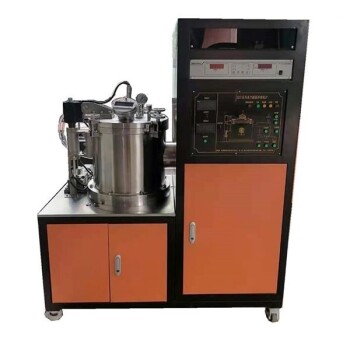
High-precision vacuum annealing furnaces act as a protective and restorative environment for titanium alloys. Their primary function is to eliminate internal residual stresses caused by manufacturing processes while strictly preventing the material from reacting with atmospheric gases. By applying precise thermal cycles in a vacuum, these furnaces regulate the alloy's microstructure to define its final mechanical strength and shape memory characteristics.
Core Takeaway Titanium has a high chemical affinity for oxygen, nitrogen, and hydrogen at elevated temperatures, which leads to immediate surface embrittlement. The defining value of high-precision vacuum annealing is its ability to decouple the necessary heat treatment from this chemical reactivity, ensuring the material remains ductile and structurally sound.
Preserving Material Integrity
Prevention of Environmental Reaction
Titanium is highly reactive. At high temperatures, it readily absorbs oxygen, nitrogen, and hydrogen from the air.
High-precision vacuum furnaces create an environment that isolates the metal from these elements. This prevents the formation of a brittle surface layer (often called the "alpha case") which would otherwise compromise the structural integrity of the part.
Elimination of Residual Stresses
Manufacturing processes such as cold rolling, forging, and additive manufacturing (3D printing) introduce significant internal tension to the metal.
If left untreated, these residual stresses can cause warping or cracking during service. The annealing furnace heats the material to a specific point where the atomic structure relaxes, neutralizing these internal forces without altering the part's shape.
Engineering Microstructure and Properties
Precise Grain Growth Management
The mechanical properties of titanium are dictated by its grain structure.
Vacuum annealing furnaces utilize precise temperature control curves to manage the size of these grains. By strictly controlling how fast the material heats and cools, engineers can optimize the trade-off between the alloy's strength and its ductility.
Phase Transition Control
Titanium alloys often exist in different phases (such as alpha and beta phases) depending on temperature.
High-precision furnaces allow for exact manipulation of these phase transitions. For example, specific aging treatments (like those used for TB8 alloys) ensure the uniform precipitation of specific phases. This is critical for applications requiring shape memory characteristics or specific bioactivity profiles, such as enhancing osseointegration in medical implants.
Understanding the Trade-offs
Cycle Time and Throughput
Vacuum heating relies primarily on radiation rather than convection.
This means heating and cooling cycles can be significantly longer than in atmospheric furnaces. Operators must account for extended cycle times when planning production schedules.
Equipment Sensitivity
High-precision vacuum furnaces are intolerant of contamination.
Even a microscopic leak or a dirty workpiece can ruin an entire batch by introducing oxygen. The requirement for absolute cleanliness in both the furnace and the incoming parts creates a rigorous, capital-intensive maintenance burden.
Making the Right Choice for Your Goal
When integrating vacuum annealing into your processing line, consider your specific end-use requirements:
- If your primary focus is Structural Reliability: Prioritize the furnace's vacuum integrity to ensure absolute prevention of surface embrittlement and stress cracking.
- If your primary focus is Advanced Material Properties: Focus on the precision of the thermal control system to strictly manage phase transitions for shape memory or specific bio-active crystalline states.
Ultimately, the high-precision vacuum annealing furnace is not just a heating tool; it is the gatekeeper of titanium's performance potential.
Summary Table:
| Feature | Primary Function | Benefit for Titanium Alloys |
|---|---|---|
| Vacuum Environment | Prevents reaction with O₂, N₂, & H₂ | Eliminates brittle "alpha case" & surface defects |
| Thermal Stress Relief | Atomic structure relaxation | Prevents warping, cracking, and internal tension |
| Grain Management | Precise heating/cooling curves | Optimizes balance between strength and ductility |
| Phase Control | Regulates alpha/beta transitions | Critical for shape memory and bioactivity properties |
Elevate Your Material Processing with KINTEK Expertise
Don't let atmospheric contamination compromise your titanium components. KINTEK specializes in advanced laboratory equipment, offering high-precision vacuum furnaces and high-temperature solutions designed to maintain absolute material integrity.
Whether you are managing grain growth in aerospace alloys or ensuring biocompatibility in medical implants, our comprehensive range of high-temperature high-pressure reactors, muffle furnaces, and crushing systems provides the reliability your research demands.
Ready to achieve superior thermal precision? Contact our technical team today to discover how KINTEK can enhance your lab's productivity and material performance.
References
- Takayuki Narushima, Yasuaki Sugizaki. Recent activities of titanium research and development in Japan. DOI: 10.1051/matecconf/202032101004
This article is also based on technical information from Kintek Solution Knowledge Base .
Related Products
- Vacuum Heat Treat Furnace with Ceramic Fiber Liner
- Vacuum Sealed Continuous Working Rotary Tube Furnace Rotating Tube Furnace
- Vacuum Heat Treat Sintering Brazing Furnace
- Vacuum Heat Treat and Pressure Sintering Furnace for High Temperature Applications
- Vacuum Heat Treat Furnace and Levitation Induction Melting Furnace
People Also Ask
- What is a vacuum heat treatment furnace? The Ultimate Guide to Controlled Atmosphere Processing
- What is vacuum heat treatment process? Achieve Superior Control, Cleanliness, and Quality
- How does a vacuum heat treatment work? Achieve Superior Material Properties in a Pristine Environment
- What is a vacuum heat treatment furnace? Achieve Unmatched Purity and Control
- What is the temperature of vacuum heat treatment? Achieve Superior Material Properties & Pristine Finishes