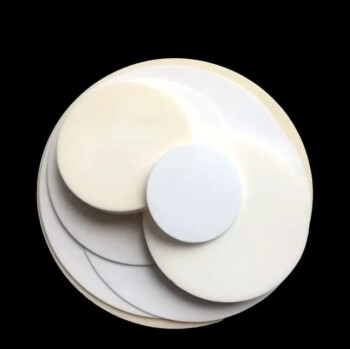
High-purity dense alumina is the preferred material for the inner lining of reaction tubes due to its unique ability to combine hermetic sealing with thermal efficiency. As the primary barrier in a composite structure, it offers exceptional gas tightness to contain reaction media while possessing the high thermal conductivity required to transfer heat effectively from external metal heating elements.
High-purity dense alumina acts as a critical interface, maintaining a stable and chemically inert environment for reactants while ensuring efficient heat transfer under elevated temperatures and pressures.
The Critical Role of the Inner Wall
Ensuring Hermetic Integrity
Gas tightness is the most significant attribute of dense alumina in this application. Because the inner tube functions as the containment vessel, the material’s dense microstructure prevents the leakage of gases or fluids.
This capability is essential when the system operates under elevated pressures, ensuring the reaction media remains isolated from the surrounding environment and heating elements.
Facilitating Thermal Transfer
In electrically heated systems, the heat source is external to the reaction chamber. The inner tube must act as a bridge rather than a barrier to thermal energy.
Alumina’s high thermal conductivity allows it to efficiently transfer heat from the intermediate metal heating elements directly to the reaction media. This ensures that the internal temperature remains consistent with the energy supplied by the heating system.
Withstanding Aggressive Environments
The inner wall is the only component in direct contact with the reaction media. Consequently, it must withstand harsh conditions without degrading.
High-purity alumina provides superior resistance to elevated temperatures and chemical attack. This creates a chemically inert environment, preventing contamination of the reaction and ensuring the structural longevity of the tube.
Understanding System Dependencies
Reliance on the Composite Structure
It is important to recognize that the alumina tube functions as part of a composite structure. While it handles heat transfer and containment, it relies on intermediate metal elements to generate the heat.
The Necessity of Density
The performance of this component is entirely dependent on the material being dense rather than porous. Using a lower-grade or porous alumina would compromise the gas tightness, leading to potential leaks and system failure under pressure.
Making the Right Choice for Your Goal
When evaluating ceramic reaction tubes, aligning the material properties with your specific process requirements is vital.
- If your primary focus is Process Safety: Prioritize high-purity dense alumina for its gas tightness, which ensures the secure containment of volatile reaction media under pressure.
- If your primary focus is Thermal Efficiency: Rely on this material for its thermal conductivity, which minimizes energy loss as heat moves from the metal elements to the process core.
- If your primary focus is Equipment Longevity: Select this material for its chemical inertness, which protects the tube from degradation caused by direct contact with aggressive reactants.
High-purity dense alumina remains the definitive standard for applications requiring a robust balance of thermal performance and physical containment.
Summary Table:
| Key Property | Technical Benefit | Impact on Laboratory Process |
|---|---|---|
| Gas Tightness | Hermetic sealing of vessel | Prevents leaks under high-pressure conditions |
| Thermal Conductivity | Efficient heat bridge | Ensures consistent internal temperatures from external elements |
| Chemical Inertness | Resistance to aggressive media | Prevents contamination and extends equipment lifespan |
| High Density | Non-porous microstructure | Guarantees containment integrity of volatile reaction media |
Elevate Your Research with KINTEK Precision Ceramics
Maximize your laboratory's efficiency and safety with KINTEK’s high-purity dense alumina components. Whether you are working with high-temperature high-pressure reactors, CVD systems, or specialized furnaces, our materials ensure uncompromised gas tightness and superior thermal transfer.
Why choose KINTEK?
- Comprehensive Range: From muffle and vacuum furnaces to hydraulic presses and high-performance consumables like PTFE and ceramics.
- Expert Engineering: Our solutions are designed to withstand the most aggressive chemical environments and extreme temperatures.
- Tailored Support: We provide the precise tools needed for battery research, material science, and industrial processing.
Don't let material failure compromise your results. Contact KINTEK today to find the perfect ceramic solution for your application!
References
- Jörn Matthies, Ulrich Nieken. Electrically Heated Oxide Ceramic Tubes for High Temperature Reactions. DOI: 10.1002/cite.202200186
This article is also based on technical information from Kintek Solution Knowledge Base .
Related Products
- High Temperature Alumina (Al2O3) Furnace Tube for Engineering Advanced Fine Ceramics
- High Temperature Aluminum Oxide (Al2O3) Protective Tube for Engineering Advanced Fine Ceramics
- High Purity Alumina Granulated Powder for Engineering Advanced Fine Ceramics
- High Temperature Wear-Resistant Alumina Al2O3 Plate for Engineering Advanced Fine Ceramics
- Engineering Advanced Fine Ceramics Alumina Crucibles (Al2O3) for Thermal Analysis TGA DTA
People Also Ask
- What is the primary function of an Alumina (Al2O3) tube in LLZTO sintering? Optimize Your Thermal Processing
- What role does a high-alumina furnace tube play in high-temperature nickel slag reduction? Ensure 1400°C Precision
- How does an alumina tube furnace with a controlled atmosphere simulate conditions in CSP environments? Master Accuracy.
- How do you clean an alumina tube furnace? Extend Tube Life with Proper Maintenance
- How to clean an alumina tube furnace? Extend Tube Life and Ensure Experimental Purity