PECVD’s primary advantage lies in its ability to decouple reaction energy from thermal heat. Instead of relying solely on high temperatures to drive chemical reactions, PECVD uses high-energy electron collisions to ionize gases into a plasma. This allows for the synthesis of CF2 modified carbon nitride and graphene films at significantly lower temperatures without catalysts, while offering superior precision in doping and defect control compared to traditional Chemical Vapor Deposition (CVD).
The Core Takeaway While traditional CVD relies on thermal energy for reaction activation, PECVD utilizes non-equilibrium plasma to dissociate gases. This mechanism shifts the focus from "deposition speed" to material architecture, enabling the precise engineering of doped, high-purity films on heat-sensitive substrates that would be destroyed by standard thermal processes.
The Thermodynamic Advantage
Escaping the Temperature Trap
Traditional CVD often requires high reaction temperatures to decompose precursors. PECVD substitutes thermal energy with electrical energy via plasma generation.
Expanding Substrate Compatibility
Because the process occurs near room temperature, you avoid thermal damage to the substrate's physical and mechanical properties. This is critical when growing graphene or carbon nitride on heat-sensitive materials that cannot withstand the aggressive thermal environment of standard CVD.
Precision Material Engineering
Catalyst-Free Growth
In traditional CVD, catalysts are often required to lower the activation energy of the reaction. PECVD eliminates this strict requirement because the high-energy electrons provide the necessary activation energy directly to the gas molecules.
Efficient Heteroatom Doping
For applications involving CF2 modified carbon nitride, the ability to introduce foreign atoms (doping) is essential. PECVD excels at the "efficient doping of heteroatoms," allowing for the precise incorporation of functional groups (like CF2) into the carbon matrix, which is difficult to control in a purely thermal process.
Controlling Defects and Structure
The plasma environment offers "highly controllable material growth." This allows you to regulate the density of defects and manipulate the conformational properties of the film, ensuring high-purity graphene layers or specific crystalline structures in carbon nitride.
Understanding the Trade-offs
Complexity vs. Simplicity
While PECVD offers precision, traditional CVD is generally simpler and more cost-effective. If your application requires rapid, large-area coating on thermally stable substrates (like quartz or silicon) without complex doping requirements, the added cost of vacuum and plasma equipment may be unnecessary.
Throwing Power and Geometry
Traditional CVD generally possesses high "throwing power," making it excellent for coating complex 3D shapes and deep recesses without line-of-sight limitations. While high-density plasma variants (HDP-CVD) have improved gap-filling capabilities, standard CVD remains a robust choice for coating irregular geometries where film nanostructure is less critical than uniform coverage.
Making the Right Choice for Your Goal
To select the correct deposition method for your specific film requirements:
- If your primary focus is material purity and complex doping (e.g., CF2 modification): Prioritize PECVD to leverage its high-energy plasma for precise chemical functionalization without relying on catalysts.
- If your primary focus is substrate preservation: Prioritize PECVD to maintain low deposition temperatures and prevent thermal degradation of the underlying material.
- If your primary focus is cost-efficiency and high deposition speed: Prioritize traditional CVD, provided your substrate can withstand the required reaction temperatures.
Ultimately, choose PECVD when the architecture of the film and the integrity of the substrate matter more than the raw speed of production.
Summary Table:
| Feature | Traditional CVD | PECVD (Plasma Enhanced) |
|---|---|---|
| Activation Energy | Thermal (High Heat) | Electrical (Plasma/Electrons) |
| Operating Temp | High (Often >800°C) | Low (Near Room Temp) |
| Doping Precision | Moderate | High (Efficient Heteroatom Doping) |
| Catalyst Requirement | Often Required | Catalyst-Free Growth |
| Substrate Impact | Risk of Thermal Damage | Preserves Heat-Sensitive Materials |
| Complexity/Cost | Lower | Higher (Vacuum/Plasma Gear) |
Elevate your material research with KINTEK’s advanced PECVD and CVD systems. Whether you are developing CF2 modified carbon nitride, high-purity graphene, or experimenting with complex thin-film architectures, our laboratory equipment is engineered for precision and reliability. From high-temperature vacuum furnaces to specialized PECVD and CVD reactors, we provide the tools necessary to control every defect and doping level. Unlock superior material performance and protect your heat-sensitive substrates—Contact KINTEK today to find the perfect deposition solution for your lab!
References
- Dayu Li, Chao Zhang. Superhydrophobic and Electrochemical Performance of CF2-Modified g-C3N4/Graphene Composite Film Deposited by PECVD. DOI: 10.3390/nano12244387
This article is also based on technical information from Kintek Solution Knowledge Base .
Related Products
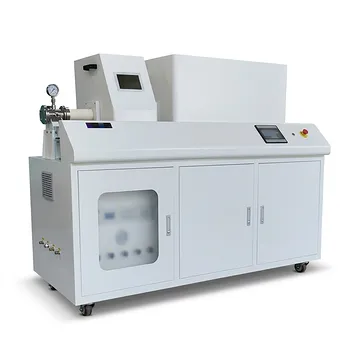
- Inclined Rotary Plasma Enhanced Chemical Vapor Deposition PECVD Equipment Tube Furnace Machine
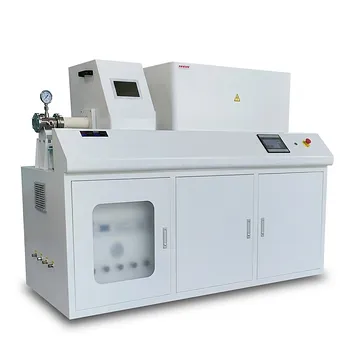
- Chemical Vapor Deposition CVD Equipment System Chamber Slide PECVD Tube Furnace with Liquid Gasifier PECVD Machine
- Inclined Rotary Plasma Enhanced Chemical Vapor Deposition PECVD Equipment Tube Furnace Machine
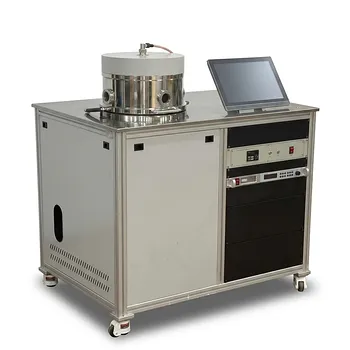
- RF PECVD System Radio Frequency Plasma-Enhanced Chemical Vapor Deposition RF PECVD
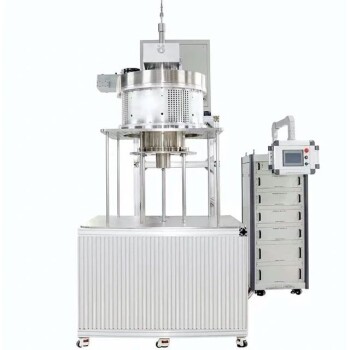
- Multi Heating Zones CVD Tube Furnace Machine Chemical Vapor Deposition Chamber System Equipment
People Also Ask
- What is plasma enhanced chemical vapor deposition PECVD equipment? A Guide to Low-Temperature Thin Film Deposition
- What are the core advantages of PE-CVD in OLED encapsulation? Protect Sensitive Layers with Low-Temp Film Deposition
- What is plasma enhanced chemical vapour deposition PECVD used for? Enable Low-Temp Thin Films for Electronics & Solar
- How does PECVD equipment facilitate the directional growth of carbon nanotubes? Achieve Precision Vertical Alignment
- How does PECVD facilitate Ru-C nanocomposite films? Precision Low-Temperature Thin Film Synthesis