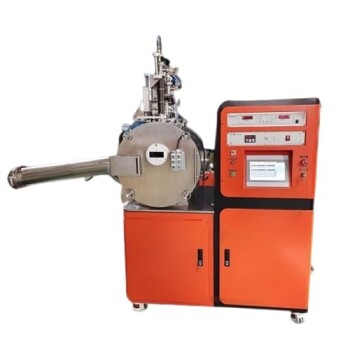
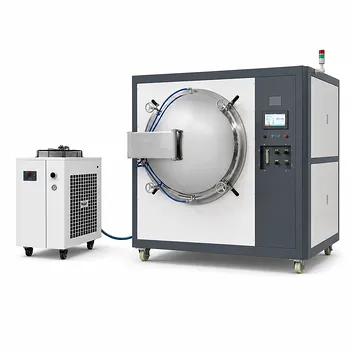
Vacuum Induction Melting (VIM) fundamentally enhances metal integrity by isolating the molten charge from atmospheric variables. By melting metal within a vacuum environment, VIM prevents contact with air, thereby eliminating the formation of oxide films and inclusions that compromise the structural performance of conventionally melted metals.
The core value of VIM lies in defect prevention. By stopping the initial formation of oxide film cracks (bifilms), the process ensures that the metal retains its strength during subsequent processing, leading to superior fracture toughness and stress corrosion resistance.
The Mechanism of Defect Reduction
Eliminating the Bifilm Hazard
The primary technical advantage of VIM is the significant reduction of bifilms. In conventional melting, contact with air creates oxide films that fold into the liquid metal, creating internal cracks.
VIM operates in a vacuum, preventing the metal from contacting oxygen during the melt. This minimizes the initial population of these oxide film cracks, removing the microscopic flaws that often lead to catastrophic failure.
Protecting Heat Treatment Integrity
High-performance metals often undergo strengthening heat treatments. If oxide cracks are present, these treatments can cause precipitate splitting, which degrades performance.
Because VIM produces metal with fewer initial defects, the material is less susceptible to these performance drops. The result is a marked improvement in the final product's fracture toughness.
Enhanced Stress Corrosion Resistance
The reduction of internal defects directly correlates to longevity in harsh environments. By minimizing the inclusion of oxides, VIM-processed metals demonstrate significantly higher resistance to stress corrosion cracking compared to their conventionally melted counterparts.
Achieving Purity and Homogeneity
Exclusion of Atmospheric Contaminants
Beyond bifilms, the vacuum environment eliminates the risk of general contamination from atmospheric gases. Oxygen and nitrogen, which are detrimental to many high-performance alloys, are effectively excluded from the melt.
Electromagnetic Stirring
VIM furnaces utilize an electromagnetic force inherent to the induction process. This force automatically and continuously stirs the molten metal.
This mechanism ensures a uniform composition throughout the batch, eliminating the segregation of elements often found in static melting processes. The result is a homogeneous melt with very close compositional tolerances.
Clean Internal Heat Generation
Induction melting generates heat directly within the charge itself, rather than applying heat from an external, potentially dirty source. This internal heat generation further reduces the risk of introducing foreign contaminants into the alloy.
Precision and Microstructure Control
Preserving Alloying Elements
High-performance alloys often contain volatile or reactive elements. VIM allows for precise temperature control, preventing excess heat from destroying or "burning off" these critical alloying ingredients.
Rapid Thermal Processing
The induction coils in a VIM furnace allow for extremely rapid heating. Furthermore, once power is cut, the system allows for rapid cooling and solidification.
This speed offers engineers a high degree of control over the solidification process. Rapid cooling is particularly beneficial for locking in unique microstructures that define the material's mechanical properties.
Operational Considerations and Trade-offs
Raw Material Requirements
While VIM is a powerful purification tool, it operates best when creating stock from high-purity raw materials. It is most effective for "well-behaved" metals and alloys that allow for even melting and the outgassing of impurities.
Complexity of Application
VIM is often utilized as a secondary refining process rather than a primary smelting method. It is a sophisticated technique typically reserved for complex alloys, such as those used in aerospace engineering, where the cost of operation is justified by the critical need for material reliability.
Making the Right Choice for Your Goal
To determine if VIM is the correct processing route for your application, consider your specific performance requirements:
- If your primary focus is fracture toughness: VIM is essential for minimizing bifilms and oxide cracks that propagate failure under stress.
- If your primary focus is alloy complexity: The electromagnetic stirring and precise temperature control of VIM ensure the uniform distribution of volatile alloying elements.
- If your primary focus is environmental resistance: VIM provides the necessary purity to maximize stress corrosion resistance in harsh operating conditions.
Ultimately, VIM transforms the melting process from a simple phase change into a critical step for structural assurance, delivering a material that is cleaner, stronger, and more consistent.
Summary Table:
| Feature | Vacuum Induction Melting (VIM) | Conventional Melting |
|---|---|---|
| Atmospheric Control | High vacuum (prevents oxidation) | Open air (prone to oxide films) |
| Material Integrity | Eliminates bifilms & micro-cracks | High risk of inclusions & defects |
| Homogeneity | Active electromagnetic stirring | Potential elemental segregation |
| Alloy Precision | Preserves volatile alloying elements | Loss of reactive elements to oxidation |
| Durability | High fracture toughness & corrosion resistance | Lower resistance to stress corrosion |
Elevate Your Material Science with KINTEK Precision
When compromise isn't an option, KINTEK provides the advanced technology necessary for high-performance metal production. From sophisticated Vacuum Induction Melting (VIM) systems and induction melting furnaces to a comprehensive suite of crushing, milling, and high-temperature furnace solutions, we empower researchers and manufacturers to achieve unparalleled material purity.
Whether you are developing aerospace alloys or advanced battery technologies, our portfolio—including high-pressure reactors, autoclaves, and specialized ceramics—is designed to meet the most rigorous laboratory and industrial standards.
Ready to eliminate defects and optimize your alloy performance? Contact our technical experts today to find the perfect equipment for your specific application.
References
- John Campbell. Time-Dependent Failure Mechanisms of Metals; The Role of Precipitation Cleavage. DOI: 10.20944/preprints202508.2134.v1
This article is also based on technical information from Kintek Solution Knowledge Base .
Related Products
- Lab-Scale Vacuum Induction Melting Furnace
- Vacuum Induction Melting Spinning System Arc Melting Furnace
- Vacuum Heat Treat Furnace and Levitation Induction Melting Furnace
- Vacuum Arc Induction Melting Furnace
- Non Consumable Vacuum Arc Induction Melting Furnace
People Also Ask
- How do vacuum induction or arc melting furnaces facilitate the synthesis of U-Al-C MAX phases? Precision Heat & Purity
- Why use VIM for rare earth steel? Essential Precision for Melting Reactive Lanthanum and Cerium
- What types of metals are typically processed in a vacuum induction melting furnace? High-Purity Alloys for Critical Applications
- What is the primary function of a vacuum induction melting furnace in Ni-Mo-Cr-Fe master alloy prep? Ensure High Purity
- What are the advantages of a vacuum induction melting furnace? Achieve High-Purity Alloys with Precision VIM