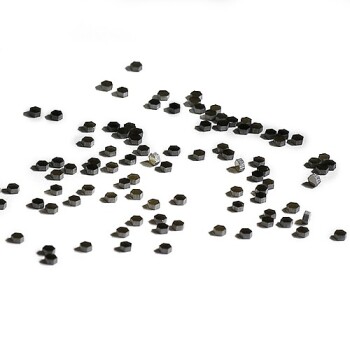
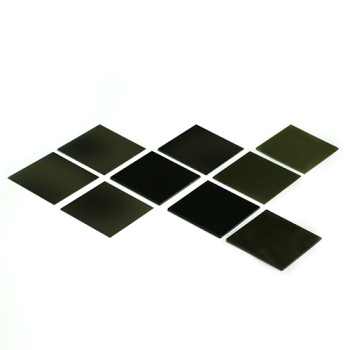
CVD-grown crystals typically exhibit a distinct flat, tabular geometry that distinguishes them from the octahedral shapes of natural diamonds. While they are renowned for high clarity, these crystals often emerge from the reactor with a brown tint and rough edges coated in black graphite, requiring significant post-growth processing.
Core Insight: The Chemical Vapor Deposition (CVD) process builds crystals layer-by-layer on a flat seed. This directional growth results in a tabular shape and high internal clarity, but the method often induces structural stress that creates a brown hue, necessitating High-Pressure High-Temperature (HPHT) annealing to achieve a colorless grade.
The Physical Morphology of CVD Crystals
Distinctive Tabular Shape
Unlike natural diamonds, which grow in multiple directions to form eight-sided octahedrons, CVD crystals grow vertically on a substrate.
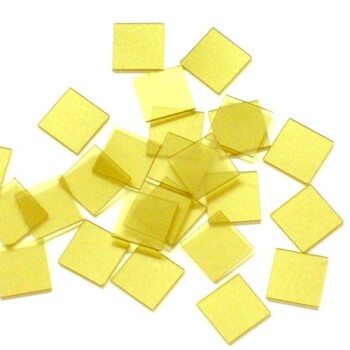
This results in a flat, tabular (cube-like) crystal. The shape is determined by the underlying seed plate used in the vacuum chamber.
The Graphite Rim
The outer boundaries of the crystal are rarely pristine immediately after growth.
CVD crystals frequently develop a rough edge of black graphite. This is non-diamond carbon that accumulates during the plasma deposition process and must be cut away to reveal the gem material inside.
Visual and Optical Characteristics
The Brown Coloration Issue
While CVD allows for high purity, "as-grown" crystals frequently display a brown color.
This is not always due to chemical impurities but rather structural vacancies or stress in the crystal lattice. Supplementary data suggests uncorrected stones often fall into "warmer" color grades (G-I).
Correcting Color via Annealing
To fix the brown hue, CVD diamonds often undergo a secondary treatment called HPHT (High-Pressure High-Temperature) annealing.
This intense heat treatment relaxes the crystal lattice. It effectively removes the brown coloration, transforming the material into a colorless state suitable for high-end faceting.
Internal Clarity and Density
Despite color issues, the CVD method excels at producing material with high clarity.
Because the vacuum environment allows for precise control over impurities, the resulting films are dense, stoichiometric, and chemically pure. This makes them reproducible and highly consistent compared to natural alternatives.
Custom Coloration
The CVD environment allows for the precise introduction of trace elements.
By inserting specific gases into the mix during the growth phase, manufacturers can alter the crystal lattice to create fancy colored diamonds, such as pinks or blues, without needing post-growth radiation.
Understanding the Trade-offs
Mandatory Post-Processing
One specific downside of CVD growth is that the crystal is rarely "market-ready" upon removal from the reactor.
The necessity of removing the black graphite edge and performing HPHT annealing for color adds complexity and cost to the production pipeline.
Size limitations
While CVD is promising for large-area films (up to 200mm for industrial coatings), single-crystal gemstones have typical size constraints.
Gem-quality CVD diamonds predominantly fall within the 1 to 2.5-carat range. While larger stones are possible, maintaining single-crystal integrity becomes exponentially more difficult as size increases.
Making the Right Choice for Your Goal
Whether you are evaluating CVD material for jewelry or industrial application, understanding the growth history is vital.
- If your primary focus is Visual Aesthetics (Jewelry): Look for CVD stones that have undergone HPHT annealing to ensure you are getting a truly colorless stone rather than one with a faint brown undertone.
- If your primary focus is Industrial Application: Prioritize the stoichiometric density and uniformity of the CVD film, as this method produces higher quality insulator films than HPHT.
- If your primary focus is Fancy Colors: Consider CVD diamonds where trace elements were introduced during growth, as this provides stable, uniform color throughout the crystal lattice.
The CVD method offers a pathway to high-clarity, ethically sourced crystals, provided you account for the necessary treatments to correct their initial growth characteristics.
Summary Table:
| Feature | Typical CVD Crystal Characteristic | Post-Growth Requirement |
|---|---|---|
| Morphology | Flat, tabular (cube-like) geometry | Cutting/removal of black graphite rim |
| Color | Often emerges with a brown tint | HPHT annealing to achieve colorless grades |
| Clarity | High internal purity and stoichiometric density | Minimal internal correction needed |
| Composition | Chemically pure with controlled trace elements | None (or specific doping for fancy colors) |
| Size Range | Typically 1.0 to 2.5 carats for single crystals | Precision faceting and polishing |
Elevate Your Material Research with KINTEK Precision
Unlock the full potential of your laboratory synthesis with KINTEK’s industry-leading equipment. Whether you are growing high-purity diamonds or developing advanced industrial coatings, our comprehensive range of CVD and PECVD systems, high-temperature furnaces, and HPHT annealing solutions provides the stability and control you need to eliminate structural stress and achieve perfect crystal clarity.
From crushing and milling systems for seed preparation to graphite crucibles and vacuum solutions, we support every stage of your production pipeline. Contact KINTEK today to discover how our specialized laboratory equipment can optimize your crystal growth and material processing workflows.
Related Products
- CVD Diamond for Thermal Management Applications
- CVD Diamond Domes for Industrial and Scientific Applications
- Custom CVD Diamond Coating for Lab Applications
- Laboratory CVD Boron Doped Diamond Materials
- CVD Diamond Dressing Tools for Precision Applications
People Also Ask
- How long does it take to make a CVD diamond? A Detailed Look at the Growth Timeline
- What are the optical properties of CVD diamond? Unlock Unmatched Performance for Demanding Applications
- What is the hardness of CVD diamond? The Ultimate Guide to Engineered Super-Materials
- What is the chemical vapour deposition method for diamonds? Grow a Diamond from a Gas
- How long does it take to grow a CVD diamond? A 2-4 Week Journey to a Flawless Gem