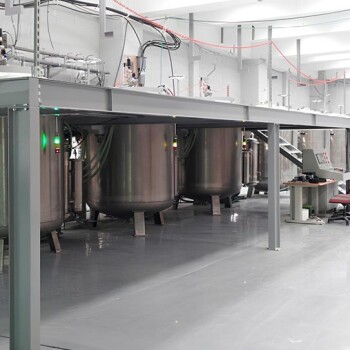
A tube furnace serves as the critical reaction chamber for synthesizing high-performance intermetallic compound nanocatalysts. Specifically, it provides a precisely controlled high-temperature hydrogen reduction environment. This controlled atmosphere is essential for reducing metal ions supported on a carrier and facilitating the necessary atomic-level changes to form a structured catalyst.
The tube furnace does not merely heat materials; it drives the specific atomic migration required to transform randomly distributed alloys into highly ordered intermetallic compounds, establishing the precise active sites needed for catalysis.
The Physics of the Annealing Environment
Precise High-Temperature Control
The primary function of the tube furnace is to generate and maintain a stable high-temperature zone.
This thermal energy is the driving force that allows metal atoms to break free from their initial states. Without this intense, controlled heat, the necessary atomic-level rearrangement cannot occur.
The Hydrogen Reduction Atmosphere
Beyond heat, the furnace creates a specific chemical environment using hydrogen gas.
This environment acts as a reducing agent, stripping oxygen or other ligands from the metal ions supported on the carrier. This reduction is the first step in preparing the raw metal atoms for structural reorganization.
Structural Transformation and Active Sites
From Random to Ordered
The most critical outcome of this process is a phase transformation.
Initially, the metals exist in a randomly distributed alloy state, where atoms are mixed without a specific pattern. The furnace's conditions force these atoms to reorganize into a highly ordered intermetallic compound structure.
Establishing Catalytic Performance
The purpose of achieving this ordered structure is strictly functional.
By arranging the atoms into a defined intermetallic lattice, the process creates well-defined catalytic active sites. These specific sites are what determine the final efficiency and selectivity of the nanocatalyst.
Understanding the Process Trade-offs
The Necessity of Precision
The transition from a random alloy to an ordered compound is sensitive.
The tube furnace must maintain "precisely controlled" conditions because deviations in temperature or atmosphere can arrest the process at the random alloy stage. If the atomic rearrangement is incomplete, the catalyst will lack the ordered structure required for peak performance.
Balancing Reduction and Structure
There is a critical interplay between the reduction of ions and their subsequent arrangement.
If the hydrogen environment is insufficient, the metal ions may not fully reduce, preventing the formation of the metallic bond required for the intermetallic structure. Conversely, aggressive conditions without proper regulation could lead to unwanted aggregation rather than ordered rearrangement.
Optimizing the Annealing Process
To achieve the best results when synthesizing intermetallic nanocatalysts, focus on the specific goals of your thermal treatment.
- If your primary focus is Structural Integrity: Ensure the furnace maintains a stable temperature profile to allow complete atomic rearrangement from random to ordered states.
- If your primary focus is Chemical Composition: Prioritize the consistency of the hydrogen flow to guarantee the full reduction of metal ions on the carrier.
Mastering the tube furnace environment is the key to engineering the atomic architecture that defines a superior catalyst.
Summary Table:
| Critical Processing Factor | Role in Nanocatalyst Synthesis | Impact on Performance |
|---|---|---|
| High-Temperature Control | Drives atomic-level rearrangement | Creates structured intermetallic lattices |
| Hydrogen Atmosphere | Acts as a chemical reducing agent | Ensures full reduction of metal ions from carriers |
| Thermal Stability | Facilitates phase transformation | Prevents unwanted aggregation and ensures uniformity |
| Atomic Migration | Shifts atoms from random to ordered states | Establishes precise catalytic active sites |
Elevate Your Nanomaterials Research with KINTEK Precision
Unlock the full potential of your nanocatalyst synthesis with KINTEK’s high-performance tube furnaces. Our equipment is engineered to deliver the precise temperature control and stable atmosphere required for critical hydrogen reduction and atomic-level annealing.
From advanced high-temperature furnaces (tube, vacuum, CVD, and PECVD) to specialized high-pressure reactors and battery research tools, KINTEK provides laboratory professionals with the reliable infrastructure needed for groundbreaking discoveries. Whether you are engineering intermetallic compounds or optimizing catalytic active sites, our comprehensive portfolio of furnaces, crushing systems, and essential consumables like ceramics and crucibles ensures your research is never compromised.
Ready to achieve superior structural integrity in your catalysts? Contact our laboratory equipment experts today to find the perfect solution for your thermal processing needs.
References
- Zhiquan Hou, Hongxing Dai. Exploring Intermetallic Compounds: Properties and Applications in Catalysis. DOI: 10.3390/catal14080538
This article is also based on technical information from Kintek Solution Knowledge Base .
Related Products
- Vertical Laboratory Tube Furnace
- Customer Made Versatile CVD Tube Furnace Chemical Vapor Deposition Chamber System Equipment
- Vacuum Sealed Continuous Working Rotary Tube Furnace Rotating Tube Furnace
- 1200℃ Split Tube Furnace with Quartz Tube Laboratory Tubular Furnace
- Multi Heating Zones CVD Tube Furnace Machine Chemical Vapor Deposition Chamber System Equipment
People Also Ask
- What is the function of a laboratory vertical tube furnace in microalgae catalytic pyrolysis? Optimize Your Bio-Fuel.
- How does a laboratory tube furnace provide atmospheric control during the sintering of glass-ceramics? Achieve Precision
- Why is a laboratory tube furnace required for LMTP0.1/CA materials? Achieve Precise Carbon Coating & Crystal Growth
- How does a laboratory tube furnace provide precise temperature control? Expert Simulation for Steam Cracking
- What is the role of a laboratory tube furnace in zeolite nitridation? Precision Engineering for Advanced Catalysts