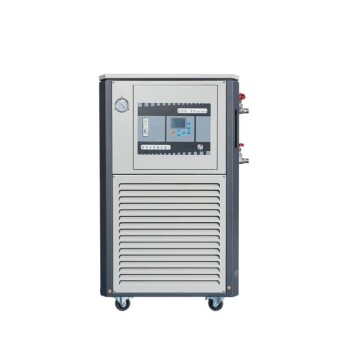
Laboratory high-temperature thermal simulation equipment serves as a critical tool for extracting mechanical and durability data for SA508 alloy under reactor-like conditions (650 K). Specifically, this testing yields detailed stress-strain analysis, which allows engineers to calculate toughness values and measure strain rates under high-cycle aggregation. Furthermore, it provides comparative data to evaluate how chemical variations, such as optimized silicon content, influence the material's resistance to fatigue crack initiation.
By recreating the precise operational environment of reactor pressure vessels, this simulation data enables the design of processes that mitigate fatigue and significantly extend the service life of critical equipment.
Deriving Mechanical Properties from Simulation
Analyzing Stress and Strain
The foundational output of this equipment is rigorous stress-strain analysis. This raw data captures how the SA508 alloy deforms under load at elevated temperatures (approximately 377°C), providing an accurate baseline for its mechanical behavior.
Calculating Material Toughness
Researchers utilize the stress-strain data to calculate specific toughness values. This metric is essential for determining the material's ability to absorb energy and resist fracturing before failure occurs.
Monitoring Strain Rates
The equipment provides granular data on strain rates, particularly under conditions of high-cycle aggregation. Understanding these rates is vital for predicting how the material will behave during repeated, long-term operational cycles rather than single-stress events.
Optimizing Chemical Composition
Evaluating Silicon Content
Thermal simulation creates a controlled environment to test the impact of chemical variations within the SA508 alloy. Specifically, it generates performance data regarding optimized silicon content (e.g., 0.45 wt.%), helping metallurgists refine the alloy's recipe for maximum stability.
Reducing Fatigue Crack Initiation
By correlating chemical composition with performance data, engineers can identify which variations best resist fatigue crack initiation. This data allows for the design of alloys that are less improved at the microstructural level, reducing the risk of early failure.
Understanding the Limitations
Simulation vs. Operational Reality
While laboratory thermal simulation is highly effective, it is a recreation of the operational environment, not the environment itself. Users must acknowledge that while the temperature and stress factors are simulated, complex interactions found in an active nuclear reactor may introduce variables not fully captured in the lab.
Data Interpretation Context
The data regarding service life extension is predictive. It relies on the assumption that the "high-cycle aggregation" observed in the lab correlates perfectly with real-world usage over decades, requiring careful validation against field data.
Applying These Findings to Reactor Design
To maximize the value of SA508 thermal simulation, align your data collection strategies with your specific engineering objectives.
- If your primary focus is Material Durability: Prioritize the analysis of strain rates under high-cycle aggregation to identify the thresholds for fatigue crack initiation.
- If your primary focus is Alloy Optimization: Use the equipment to isolate the effects of specific chemical changes, such as silicon levels, to determine their direct impact on toughness values.
Leveraging this precise thermal data allows you to transition from reactive maintenance to proactive process design, ensuring the long-term integrity of critical pressure vessels.
Summary Table:
| Data Category | Key Output Metrics | Application in Reactor Design |
|---|---|---|
| Mechanical Behavior | Stress-strain curves & strain rates | Determining load-bearing limits at 377°C |
| Durability | Toughness values & high-cycle aggregation | Predicting energy absorption and fracture resistance |
| Microstructural | Fatigue crack initiation thresholds | Optimizing chemical composition (e.g., silicon content) |
| Life Assessment | Service life extension predictions | Shifting from reactive maintenance to proactive design |
Optimize Your Reactor Material Performance with KINTEK
Precision in laboratory simulation is the key to ensuring the safety and longevity of critical pressure vessels. KINTEK specializes in advanced laboratory equipment, including high-performance high-temperature furnaces (muffle, vacuum, and atmosphere) and specialized high-temperature high-pressure reactors and autoclaves designed to replicate extreme operational environments.
Whether you are refining SA508 alloy compositions or analyzing fatigue crack initiation, our comprehensive range of tools—from crushing and milling systems to isostatic hydraulic presses and PTFE consumables—supports every stage of your material research.
Ready to elevate your research accuracy? Contact our technical experts today to find the perfect simulation solution for your lab and ensure the long-term integrity of your critical equipment.
References
- Muhammad Raies Abdullah, Liang Fang. Strategies Regarding High-Temperature Applications w.r.t Strength, Toughness, and Fatigue Life for SA508 Alloy. DOI: 10.3390/ma14081953
This article is also based on technical information from Kintek Solution Knowledge Base .
Related Products
- Customizable Laboratory High Temperature High Pressure Reactors for Diverse Scientific Applications
- High Temperature Constant Temperature Heating Circulator Water Bath Chiller Circulator for Reaction Bath
- 5L Heating Chilling Circulator Cooling Water Bath Circulator for High and Low Temperature Constant Temperature Reaction
- 100L Heating Chilling Circulator Cooling Water Bath Circulator for High and Low Temperature Constant Temperature Reaction
- 20L Heating Chilling Circulator Cooling Water Bath Circulator for High and Low Temperature Constant Temperature Reaction
People Also Ask
- How do high-pressure and high-temperature reactors ensure the effective treatment of lignocellulosic wastewater in WAO?
- What equipment is required for high-pressure high-temperature reactions? Master Extreme Chemistry Safely
- How do you control high pressure in a reactor? A Guide to Safe & Stable Operation
- How does initial oxygen pressure affect the wet oxidation of pharmaceutical sludge? Master Your Oxidation Depth
- Why is argon better than nitrogen for inert atmosphere? Ensure Absolute Reactivity & Stability