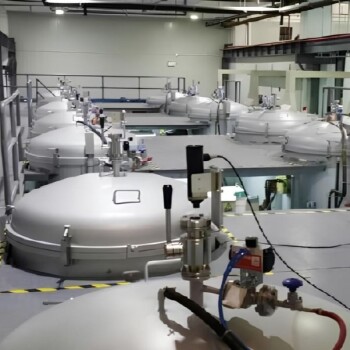
A muffle furnace creates a controlled, static air environment designed to rigorously evaluate the thermal stability of (Ti,M)3AlC2 ceramics. Specifically, it provides precise temperature regulation between 800°C and 1000°C, enabling sustained isothermal heating that is essential for analyzing oxidation behavior.
The muffle furnace serves as a simulation chamber for high-temperature service environments, generating a stable oxidizing thermal field that allows for the precise measurement of oxide film growth and reaction kinetics.
The Oxidizing Atmosphere
Static Air Environment
The primary condition provided by the muffle furnace is a static air atmosphere. Unlike flow-through reactors that constantly replenish gases, the muffle furnace maintains a contained volume of air.
This setting exposes the ceramic surface to oxygen without the mechanical disturbance of high-velocity gas flows. It isolates the chemical interaction between the ceramic surface and the ambient air.
Simulation of Service Conditions
By utilizing this static environment, researchers can simulate the actual conditions the material will face in industrial applications.
This setup is crucial for determining if the material can withstand prolonged exposure to heat and oxygen without catastrophic degradation.
Thermal Precision and Control
Specific Temperature Range
For (Ti,M)3AlC2 ceramics, the furnace is typically operated within a specific window of 800°C to 1000°C.
This range is critical because it represents the threshold where significant oxidation behaviors often transition or accelerate. Precise control in this bracket ensures that the data collected is relevant to high-performance applications.
Isothermal Heating
The furnace allows for isothermal heating, meaning the temperature is held constant for extended periods, such as 2 hours.
This stability is vital for studying oxidation kinetics. By eliminating temperature fluctuations, researchers can attribute changes in the material's mass or microstructure solely to time-dependent chemical reactions.
Facilitating Film Growth Studies
The combination of stable heat and static air facilitates the steady growth of oxide films.
This controlled rate of growth allows for the detailed analysis of the oxide layer's thickness, composition, and adherence to the substrate.
Understanding the Trade-offs
Static vs. Dynamic Limitations
While the static air atmosphere is excellent for standard oxidation testing, it limits the ability to study corrosion under high-velocity gas streams.
If your application involves erosion-corrosion or high-speed exhaust flows, the static nature of a muffle furnace may not fully replicate those mechanical stressors.
Atmosphere Composition
Standard muffle furnaces typically utilize ambient air.
If your research requires studying oxidation under specific partial pressures of oxygen or in the presence of water vapor (hydrothermal oxidation), a standard muffle furnace may lack the necessary atmosphere controls without modification.
Making the Right Choice for Your Research
To determine if a muffle furnace is the correct tool for your specific (Ti,M)3AlC2 characterization, consider your analytical goals:
- If your primary focus is oxidation kinetics: The muffle furnace is ideal because its isothermal stability allows you to plot reaction rates against time without thermal interference.
- If your primary focus is oxide scale integrity: The static air environment provides the necessary conditions to grow and analyze the uniformity and phase purity of the oxide film.
By leveraging the stable thermal field of a muffle furnace, you establish a baseline for how these advanced ceramics will perform in demanding, oxygen-rich environments.
Summary Table:
| Feature | Experimental Condition Provided | Impact on (Ti,M)3AlC2 Research |
|---|---|---|
| Atmosphere | Static Air Environment | Facilitates oxygen interaction without mechanical gas disturbance. |
| Thermal Control | Isothermal Heating (800°C–1000°C) | Ensures data accuracy for oxidation kinetics and reaction rates. |
| Heating Duration | Sustained High-Temp Exposure | Allows for precise measurement of oxide film growth and thickness. |
| Thermal Field | Stable Oxidizing Field | Simulates real-world industrial service environments for material testing. |
Elevate Your Material Research with KINTEK Precision
Unlock the full potential of your high-temperature studies with KINTEK’s premium laboratory equipment. Whether you are analyzing the oxidation kinetics of advanced ceramics or developing next-generation alloys, our precision muffle furnaces, tube furnaces, and vacuum systems provide the stable thermal environments your research demands.
From high-temperature reactors to specialized ceramic crucibles and hydraulic presses for pellet preparation, KINTEK offers a comprehensive portfolio designed for excellence. Partner with us to achieve unmatched thermal stability and experimental repeatability.
Contact KINTEK Today to Find Your Ideal Lab Solution
Related Products
- 1200℃ Muffle Furnace Oven for Laboratory
- 1800℃ Muffle Oven Furnace for Laboratory
- 1400℃ Muffle Oven Furnace for Laboratory
- 1700℃ Muffle Oven Furnace for Laboratory
- High Temperature Muffle Oven Furnace for Laboratory Debinding and Pre Sintering
People Also Ask
- How does a muffle furnace ensure reliability in calcification roasting? Achieve Precision in Pellets Conversion
- Why is a laboratory high-temperature muffle furnace required for the post-annealing treatment of copper oxide?
- What role does a laboratory high-temperature muffle furnace play in iron-based composite phase structure development?
- How is a laboratory high-temperature muffle furnace utilized in sol-gel synthesis for perovskite catalysts?
- How does a muffle furnace influence 8YSZ ceramic densification? Master Precision Sintering at 1500°C