When a hydraulic system overheats, its fluid begins to chemically break down, losing its ability to lubricate and protect components. This triggers a cascade of failures, including seal degradation, accelerated metal wear, and a severe loss of system efficiency, ultimately leading to costly downtime and component destruction.
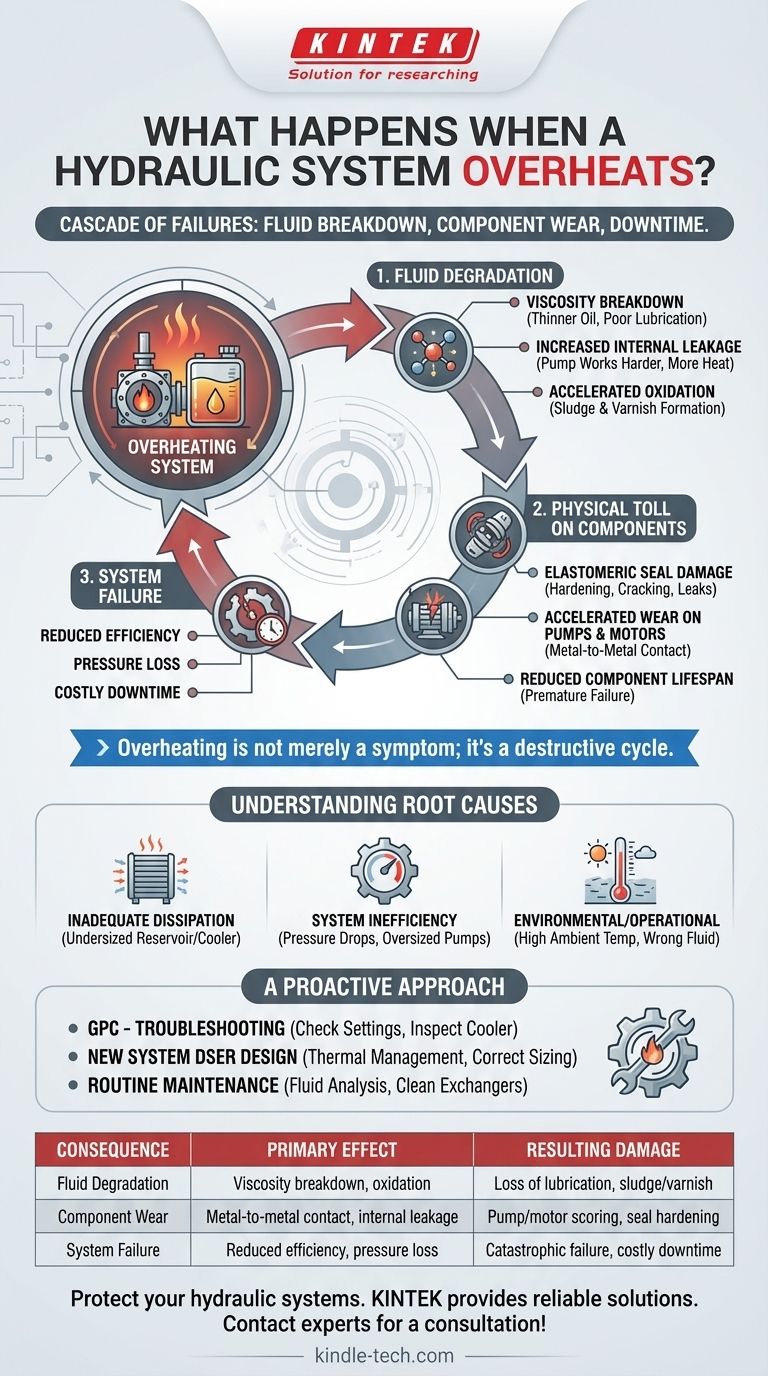
Overheating is not merely a symptom; it's a destructive cycle. Excessive heat permanently degrades the hydraulic fluid, which then fails to protect system components, generating more friction and even more heat until the system fails.

The Vicious Cycle of Heat and Degradation
The most immediate and critical consequence of overheating is its effect on the hydraulic fluid itself. Heat acts as a catalyst for a chain reaction that undermines the entire system.
Fluid Viscosity Breakdown
High temperatures cause the viscosity of hydraulic oil to drop significantly. The fluid becomes thinner and less able to maintain the critical lubricating film between moving metal parts.
This loss of viscosity is the first step toward accelerated wear, as it compromises the fluid's core function.
Increased Internal Leakage
As the oil thins, it more easily bypasses the tight clearances within pumps, motors, and valves. This phenomenon is known as internal leakage.
This leakage reduces the system's efficiency, meaning the pump must work harder (and generate more heat) to perform the same amount of work. This creates a dangerous feedback loop where heat causes leakage, and leakage creates more heat.
Accelerated Oxidation and Sludge Formation
Heat dramatically accelerates the oxidation rate of the oil. This chemical reaction creates byproducts like varnish and sludge.
Varnish deposits coat internal surfaces, causing valves to stick and reducing heat dissipation. Sludge clogs filters, strainers, and small orifices, starving components of lubrication and leading to catastrophic failure.
The Physical Toll on System Components
Once the fluid is compromised, the damage to the system's physical hardware begins to accumulate rapidly.
Elastomeric Seal Damage
Hydraulic seals, O-rings, and hoses are typically made from specific polymer compounds designed to operate within a set temperature range.
Excessive heat causes these materials to harden, become brittle, and crack. This results in fluid leaks, loss of pressure, and the introduction of contaminants into the system.
Accelerated Wear on Pumps and Motors
With the lubricating film compromised by low viscosity, metal-to-metal contact occurs inside the pump and motors.
This leads to abrasive wear, scoring of precision surfaces, and the generation of metal particles that contaminate the entire system, spreading the damage.
Reduced Component Lifespan
Every component is affected. The combination of high heat, degraded fluid, and particulate contamination drastically shortens the operational life of valves, cylinders, accumulators, and hoses.
Understanding the Root Causes
Overheating is almost always a symptom of a design flaw or operational issue. Understanding the source is key to preventing it.
Inadequate Heat Dissipation
The system cannot get rid of the heat it generates. This is often due to an undersized reservoir, which doesn't allow the fluid enough time to cool.
It can also be caused by a dirty, clogged, or undersized heat exchanger (cooler) that is no longer effective.
System Inefficiency as a Heat Source
Every time fluid flows across a pressure drop without performing useful work, the energy is converted directly into heat.
Common sources include relief valves opening frequently, flow controls causing large pressure drops, or using oversized pumps for the required function. An inefficient circuit is a heat factory.
Environmental and Operational Factors
Operating a hydraulic system in a high ambient temperature environment can overwhelm its designed cooling capacity.
Similarly, using the wrong type of hydraulic fluid or operating with fluid levels that are too low can lead to rapid overheating.
A Proactive Approach to Thermal Management
Addressing hydraulic temperature is not about fixing a single problem but about maintaining the health of the entire system.
- If you are troubleshooting an overheating system: Your first priority is to identify the source of excess heat. Check relief valve settings, inspect the cooler for blockages, and measure pressure drops across the circuit to find the inefficiency.
- If you are designing a new system: Ensure thermal management is a core consideration. Correctly size the reservoir and heat exchanger based on a thermal load calculation, and design the circuit for maximum efficiency.
- If you are performing routine maintenance: Make fluid analysis a regular practice. A check for oxidation and viscosity loss can predict an overheating problem before it causes damage. Keep heat exchangers clean and ensure fluid levels are correct.
Ultimately, maintaining the correct operating temperature is the single most important factor in ensuring the longevity and reliability of any hydraulic system.
Summary Table:
| Consequence | Primary Effect | Resulting Damage |
|---|---|---|
| Fluid Degradation | Viscosity breakdown, oxidation | Loss of lubrication, sludge/varnish formation |
| Component Wear | Metal-to-metal contact, internal leakage | Pump/motor scoring, seal hardening/cracking |
| System Failure | Reduced efficiency, pressure loss | Catastrophic failure, costly downtime |
Protect your hydraulic systems from catastrophic failure. Overheating leads to fluid breakdown, accelerated wear, and costly downtime. KINTEK specializes in lab equipment and consumables, providing reliable solutions for maintaining optimal hydraulic system performance. Ensure your laboratory's efficiency and longevity—contact our experts today for a consultation on your specific needs!
Visual Guide
Related Products
- Automatic High Temperature Heated Hydraulic Press Machine with Heated Plates for Lab
- Heated Hydraulic Press Machine with Heated Plates for Vacuum Box Laboratory Hot Press
- Automatic Laboratory Hydraulic Press for XRF & KBR Pellet Press
- Manual High Temperature Heated Hydraulic Press Machine with Heated Plates for Lab
- Laboratory Hydraulic Press Split Electric Lab Pellet Press
People Also Ask
- What is a hot hydraulic press? Harness Heat and Pressure for Advanced Manufacturing
- Why is a heated laboratory hydraulic press necessary for composite laminates? Achieve Void-Free Structural Integrity
- What are the advantages of using a laboratory hydraulic press for hot pressing? Achieve Peak Nano-Composite Density
- What role does a heated hydraulic press play in Cold Sintering (CSP)? Enhancing LATP-Halide Densification
- What are heated hydraulic presses used for? Molding Composites, Vulcanizing Rubber, and More