Vacuum deposition is a precision manufacturing process used to apply thin, high-quality coatings across diverse industrial sectors. Its primary applications currently drive the production of solar cells, medical in-home devices, and LED displays.
The vacuum deposition process is no longer limited to niche scientific experiments; it is a manufacturing cornerstone for modern electronics, renewable energy, and life-saving healthcare technologies.
Electronics and Display Technology
Visual Interface Manufacturing
The production of modern screens relies heavily on vacuum deposition. It is a critical step in manufacturing LED displays, ensuring the precise layering required for high-resolution visual output.
Supplementary to LED production, the Chemical Vapor Deposition (CVD) process is utilized to create Liquid Crystal Displays (LCDs).
Computer Microfabrication
Beyond displays, the computer industry utilizes Physical Vapor Deposition (PVD) for microfabrication. This allows for the creation of microscopic circuits and components essential to computing hardware.
Energy and Healthcare
Renewable Energy Solutions
The energy sector is a primary user of this technology. Vacuum deposition is explicitly used to manufacture solar cells, allowing for the efficient capture and conversion of solar energy.
Medical Devices and Implants
In the healthcare sector, vacuum deposition is used to manufacture medical in-home devices. The high-purity environment creates sterile, durable coatings essential for patient safety.
Additionally, the medical industry utilizes PVD for surgical implants. This ensures that materials placed inside the human body meet rigorous biocompatibility and durability standards.
Heavy Industry and Specialized Applications
Aerospace and Automotive
Historically, the high cost of vacuum processing restricted it to sectors where quality is paramount, such as aerospace. It is used to coat engine parts and components that must withstand extreme environments.
The automotive industry also utilizes these processes for high-volume manufacturing. Despite the cost, it is justified in this sector because it improves component durability and reduces the need for post-heat-treatment operations.
Packaging
Vacuum deposition extends to consumer goods packaging. Specifically, the PVD process is used to create coated film packaging, often used to preserve food products or protect sensitive materials.
Understanding the Trade-offs
The Cost Barrier
Vacuum deposition is generally a high-cost process compared to atmospheric coating methods. Consequently, it has traditionally been restricted to industries like aerospace and medical where performance outweighs expense.
Environmental Control
The primary benefit—and complexity—is the requirement of a pressure environment lower than the atmosphere. This removes unwanted gas atoms, ensuring the deposited layer has a chemical composition closer to the desired formula, but it requires sophisticated equipment to maintain.
Making the Right Choice for Your Project
If you are evaluating whether vacuum deposition fits your manufacturing needs, consider your industry requirements:
- If your primary focus is Consumer Electronics: Utilizing PVD or CVD is essential for creating high-resolution LED and LCD displays.
- If your primary focus is Renewable Energy: This process is non-negotiable for the efficient layering required in modern solar cell production.
- If your primary focus is High-Volume Manufacturing: Industries like automotive justify the higher upfront cost by reducing downstream finishing steps and extending part life.
Vacuum deposition transforms raw materials into high-performance components by prioritizing purity and precision over low-cost production.
Summary Table:
| Industry | Primary Application | Specific Vacuum Process Used |
|---|---|---|
| Electronics | LED & LCD Displays, Microchips | PVD, CVD, Microfabrication |
| Energy | Solar Cell Production | High-efficiency thin-film layering |
| Medical | Surgical Implants & Home Devices | PVD for biocompatibility |
| Aerospace | Engine & Structural Components | High-performance protective coatings |
| Automotive | Durable Parts & Components | High-volume PVD/CVD coatings |
| Packaging | Food & Sensitive Goods | PVD coated film packaging |
Elevate Your Manufacturing with KINTEK Precision Solutions
Unlock the full potential of your thin-film research and production with KINTEK. Whether you are developing next-generation solar cells, precision medical implants, or advanced LED displays, our high-performance CVD and PECVD systems provide the purity and control your projects demand.
Beyond vacuum deposition, KINTEK specializes in a comprehensive range of laboratory equipment including high-temperature furnaces, hydraulic presses, and battery research tools. We empower researchers and manufacturers across the aerospace, automotive, and healthcare sectors to achieve superior material performance and durability.
Ready to optimize your thin-film process? Contact our technical experts today to find the perfect equipment for your laboratory or industrial facility.
Related Products
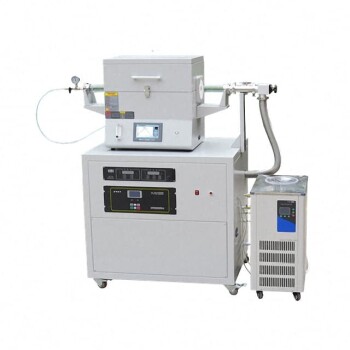
- Split Chamber CVD Tube Furnace with Vacuum Station Chemical Vapor Deposition System Equipment Machine
- Chemical Vapor Deposition CVD Equipment System Chamber Slide PECVD Tube Furnace with Liquid Gasifier PECVD Machine
- HFCVD Machine System Equipment for Drawing Die Nano-Diamond Coating
- Customer Made Versatile CVD Tube Furnace Chemical Vapor Deposition Chamber System Equipment
- Inclined Rotary Plasma Enhanced Chemical Vapor Deposition PECVD Equipment Tube Furnace Machine
People Also Ask
- What is the function of a tube furnace in CVD SiC synthesis? Achieving Ultra-Pure Silicon Carbide Powders
- What is a CVD tube furnace? A Complete Guide to Thin-Film Deposition
- What are the technical advantages of using a CVD tube furnace? Optimize Silicon-Carbon Battery Anodes
- What is the function of a high-temperature CVD tube furnace in 3D graphene foam prep? Master 3D Nanomaterial Growth
- How does a CVD tube furnace inhibit the sintering of silver supports? Boost Membrane Durability and Performance