Knowledge What is a pellet die? A Guide to Creating Uniform Solid Samples from Powder
Author avatar

Tech Team · Kintek Solution

Updated 5 days ago

What is a pellet die? A Guide to Creating Uniform Solid Samples from Powder


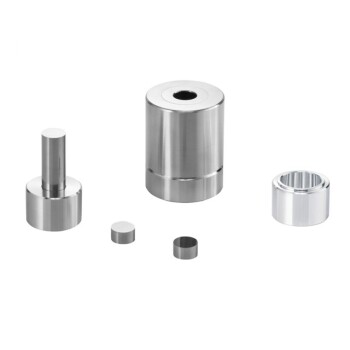
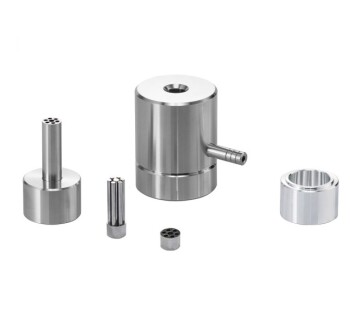
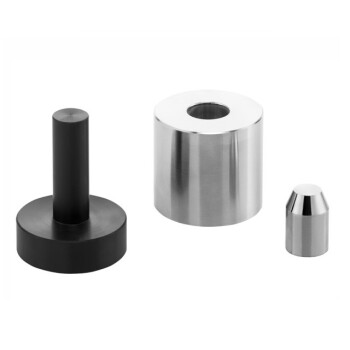
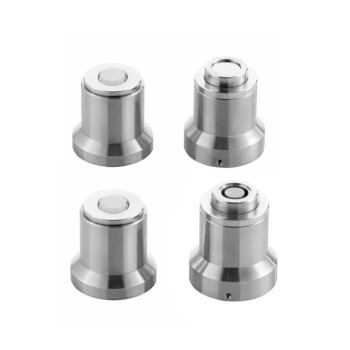
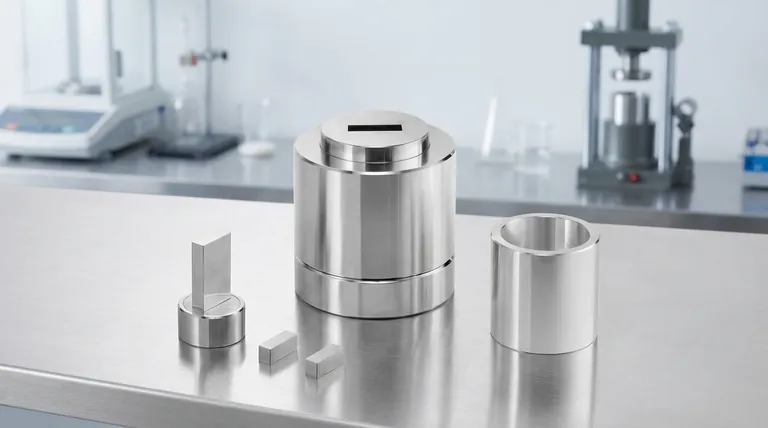
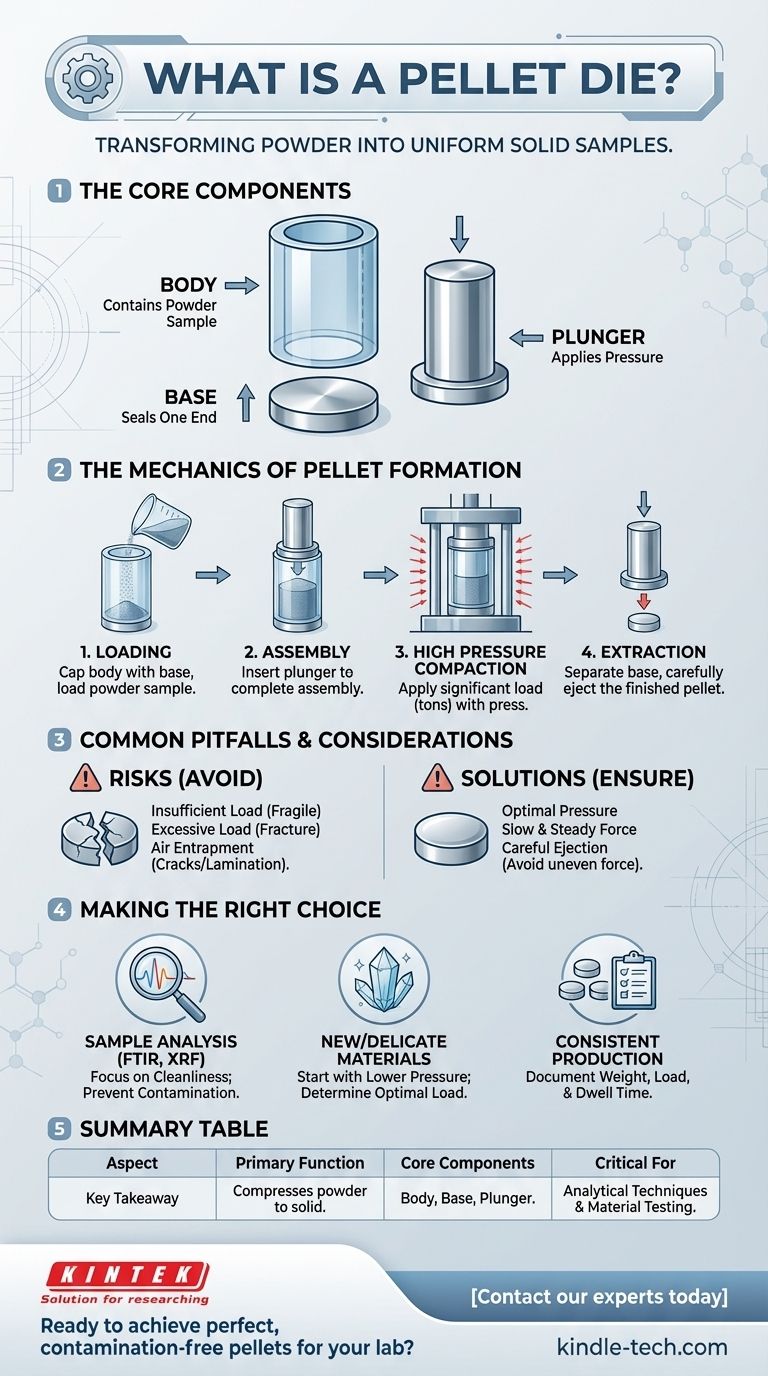
In material science and sample preparation, a pellet die is a precision tool designed to compress a powdered substance into a solid, cylindrical disc known as a pellet. At its most fundamental level, it consists of three primary parts: a hollow cylindrical body, a solid base that seals one end, and a plunger that fits snugly into the body to apply pressure. The entire assembly is used within a hydraulic or mechanical press to achieve the high forces necessary for compaction.

A pellet die is the essential component in a high-pressure process that transforms loose, inconsistent powder into a dense, uniform solid. This conversion is critical for preparing samples for a wide range of analytical techniques and material testing.
What is a pellet die? A Guide to Creating Uniform Solid Samples from Powder

The Mechanics of Pellet Formation

Understanding how a pellet die functions requires looking at its simple components and the powerful process they enable. The goal is to apply immense, uniform pressure to force individual powder grains to bind together.

The Core Components

The die's design is straightforward. The hollow body contains the powder sample. The base provides a solid, flat surface for the powder to be compressed against. The plunger transmits the force from the press directly onto the powder.

The Loading and Assembly

The process begins by capping the cylindrical body with the base to form a self-contained tube. The powdered sample is then carefully poured into this cavity. Finally, the plunger is inserted into the top of the body, completing the assembly.

The Role of High Pressure

With the powder sealed inside, the die is placed into a press. The press applies a significant load, often several tons, to the plunger. This immense pressure compacts the powder, eliminating voids and forcing the individual grains into intimate contact until they mechanically lock and bind into a solid mass.

Extracting the Finished Pellet

Once the desired pressure has been applied and released, the pellet is formed. To remove it, the base is separated from the die body. A small amount of force is then applied to the plunger to carefully push the newly formed pellet out of the body without fracturing it.

Common Pitfalls and Considerations

While the concept is simple, achieving a perfect, durable pellet requires attention to detail. Several factors can influence the quality of the final product.

Insufficient or Excessive Load

The amount of pressure applied is critical. Too little force will result in a fragile, crumbly pellet that falls apart easily. Conversely, applying too much force can sometimes cause the pellet to fracture upon extraction due to stored stress.

The Risk of Air Entrapment

If pressure is applied too quickly, air can become trapped within the powder. This trapped air can cause the pellet to crack or even laminate (split into layers) when the pressure is released. A slow, steady application of force is key.

The Challenge of Ejection

Removing the finished pellet is a delicate step. The pellet is held tightly within the die body by friction. Improper or uneven force during ejection is a common cause of breakage, especially with brittle materials.

Making the Right Choice for Your Goal

The successful use of a pellet die depends on your specific objective. The ideal process parameters are dictated by the material properties and the intended application of the pellet.

  • If your primary focus is preparing samples for analysis (e.g., FTIR or XRF): Your top priority is preventing contamination. Ensure the die is immaculately cleaned between samples to maintain the integrity of your results.
  • If you are working with a new or delicate material: Begin with a lower pressure and create a series of pellets at increasing loads to determine the optimal compaction force that yields a stable pellet without causing fractures.
  • If you need to produce many pellets consistently: Focus on a repeatable process. Document the exact weight of the powder, the applied load, and the dwell time (how long the pressure is held) for every sample.

Ultimately, mastering the use of a pellet die is about transforming an unrefined powder into a standardized, reliable solid sample ready for precise measurement.

Summary Table:

Aspect Key Takeaway
Primary Function Compresses powdered substances into solid, cylindrical pellets.
Core Components Hollow body, solid base, and plunger.
Key Process Uses high pressure (often tons of force) in a hydraulic or mechanical press.
Critical for Sample preparation for analytical techniques (FTIR, XRF) and material testing.
Common Pitfalls Insufficient/excessive load, air entrapment, and improper pellet ejection.

Ready to achieve perfect, contamination-free pellets for your lab?

KINTEK specializes in high-quality lab equipment and consumables, including durable pellet dies designed for precise and repeatable sample preparation. Whether your focus is FTIR, XRF, or material testing, our tools help you create uniform solid samples with ease.

Contact our experts today to find the perfect pellet die for your specific application and ensure the integrity of your analytical results.

Visual Guide
What is a pellet die? A Guide to Creating Uniform Solid Samples from Powder Visual Guide

Related Products

People Also Ask

Related Products

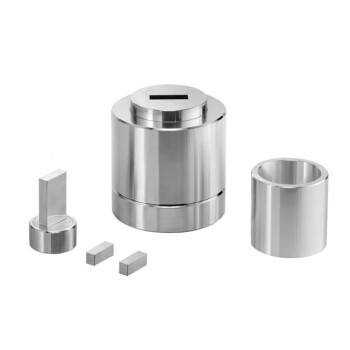
Assemble Square Lab Press Mold for Laboratory Applications

Assemble Square Lab Press Mold for Laboratory Applications

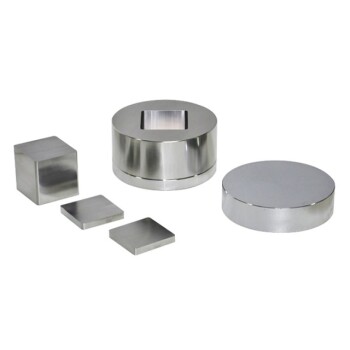
Achieve perfect sample preparation with Assemble Square Lab Press Mold. Quick disassembly eliminates sample deformation. Perfect for battery, cement, ceramics, and more. Customizable sizes available.

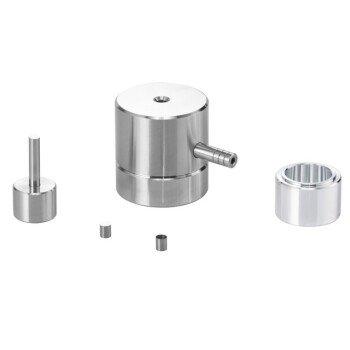
Cylindrical Press Mold for Lab Applications

Cylindrical Press Mold for Lab Applications

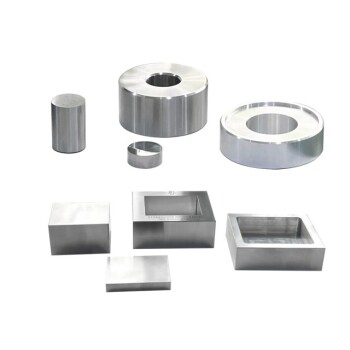
Efficiently form and test most samples with Cylindrical Press Molds in a range of sizes. Made of Japanese high-speed steel, with long service life and customizable sizes.

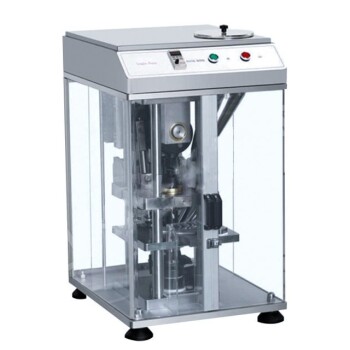
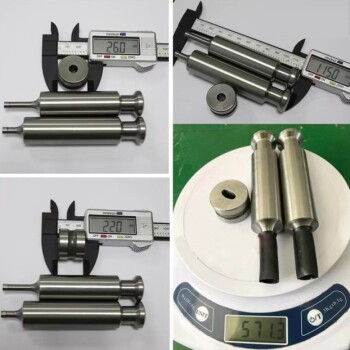
Single Punch Electric Tablet Press Machine Laboratory Powder Tablet Punching TDP Tablet Press

Single Punch Electric Tablet Press Machine Laboratory Powder Tablet Punching TDP Tablet Press

The single-punch electric tablet press is a laboratory-scale tablet press suitable for corporate laboratories in pharmaceutical, chemical, food, metallurgical and other industries.

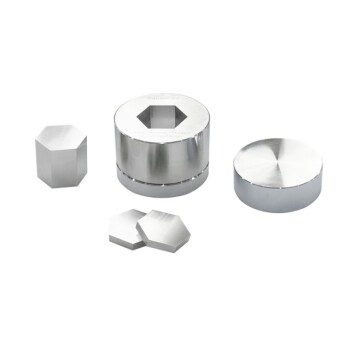
Polygon Press Mold for Lab

Polygon Press Mold for Lab

Discover precision polygon press molds for sintering. Ideal for pentagon-shaped parts, our molds ensure uniform pressure and stability. Perfect for repeatable, high-quality production.

Ball Press Mold for Lab

Ball Press Mold for Lab

Explore versatile Hydraulic Hot Press molds for precise compression molding. Ideal for creating various shapes and sizes with uniform stability.

Carbide Lab Press Mold for Laboratory Applications

Carbide Lab Press Mold for Laboratory Applications

Form ultra-hard samples with Carbide Lab Press Mold. Made of Japanese high-speed steel, it has a long service life. Custom sizes available.

Square Lab Press Mold for Laboratory Applications

Square Lab Press Mold for Laboratory Applications

Create uniform samples easily with Square Lab Press Mold - available in various sizes. Ideal for battery, cement, ceramics, and more. Custom sizes available.

Special Heat Press Mold for Lab Use

Special Heat Press Mold for Lab Use

Square, round and flat plate forming dies for hot presses.

Multi-Punch Rotary Tablet Press Mold Ring for Rotating Oval and Square Molds

Multi-Punch Rotary Tablet Press Mold Ring for Rotating Oval and Square Molds

The multi-punch rotary tablet press mold stands as a pivotal component in pharmaceutical and manufacturing industries, revolutionizing the process of tablet production. This intricate mold system comprises multiple punches and dies arranged in a circular fashion, facilitating rapid and efficient tablet formation.

Round Bidirectional Press Mold for Lab

Round Bidirectional Press Mold for Lab

The round bidirectional press mold is a specialized tool used in high-pressure molding processes, particularly for creating intricate shapes from metal powders.

Special Shape Press Mold for Lab

Special Shape Press Mold for Lab

Discover high-pressure special shape press molds for diverse applications, from ceramics to automotive parts. Ideal for precise, efficient molding of various shapes and sizes.

Cylindrical Lab Electric Heating Press Mold for Laboratory Applications

Cylindrical Lab Electric Heating Press Mold for Laboratory Applications

Efficiently prepare samples with Cylindrical Lab Electric Heating Press Mold. Fast heating, high temp & easy operation. Custom sizes available. Perfect for battery, ceramic & biochemical research.

Single Punch Tablet Press Machine and Mass Production Rotary Tablet Punching Machine for TDP

Single Punch Tablet Press Machine and Mass Production Rotary Tablet Punching Machine for TDP

Rotary tablet punching machine is an automatic rotating and continuous tableting machine. It is mainly used for tablet manufacturing in the pharmaceutical industry, and is also suitable for industrial sectors such as food, chemicals, batteries, electronics, ceramics, etc. to compress granular raw materials into tablets.

Button Battery Tablet Press Sealing Mold for Lab Use

Button Battery Tablet Press Sealing Mold for Lab Use

The sealing die is essential for assembling button batteries, ensuring components like the anode, cathode, and electrolyte are securely enclosed.

Button Battery Disassembly and Sealing Mold for Lab Use

Button Battery Disassembly and Sealing Mold for Lab Use

The simple sealing and disassembly mold can be directly used on ordinary tablet presses, which can save costs, is convenient and fast, and can be used to encapsulate and disassemble button batteries. Other specifications can be customized.

Metallographic Specimen Mounting Machine for Laboratory Materials and Analysis

Metallographic Specimen Mounting Machine for Laboratory Materials and Analysis

Precision metallographic mounting machines for labs—automated, versatile, and efficient. Ideal for sample prep in research and quality control. Contact KINTEK today!

Three-dimensional electromagnetic sieving instrument

Three-dimensional electromagnetic sieving instrument

KT-VT150 is a desktop sample processing instrument for both sieving and grinding. Grinding and sieving can be used both dry and wet. The vibration amplitude is 5mm and the vibration frequency is 3000-3600 times/min.

Laboratory Disc Rotary Mixer for Efficient Sample Mixing and Homogenization

Laboratory Disc Rotary Mixer for Efficient Sample Mixing and Homogenization

Efficient Laboratory Disc Rotary Mixer for Precise Sample Mixing, Versatile for Various Applications, DC Motor and Microcomputer Control, Adjustable Speed and Angle.

Platinum Sheet Electrode for Laboratory and Industrial Applications

Platinum Sheet Electrode for Laboratory and Industrial Applications

Elevate your experiments with our Platinum Sheet Electrode. Crafted with quality materials, our safe and durable models can be tailored to fit your needs.

Precision Wire Saw Laboratory Cutting Machine with 800mm x 800mm Workbench for Diamond Single Wire Circular Small Cutting

Precision Wire Saw Laboratory Cutting Machine with 800mm x 800mm Workbench for Diamond Single Wire Circular Small Cutting

Diamond wire cutting machines are mainly used for precision cutting of ceramics, crystals, glass, metals, rocks, thermoelectric materials, infrared optical materials, composite materials, biomedical materials and other material analysis samples. Especially suitable for precision cutting of ultra-thin plates with thickness up to 0.2mm.


Leave Your Message