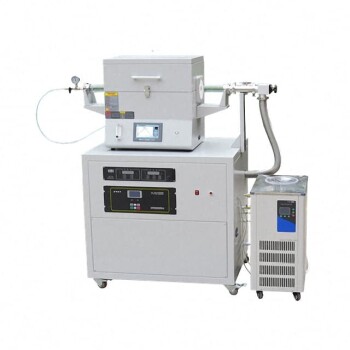
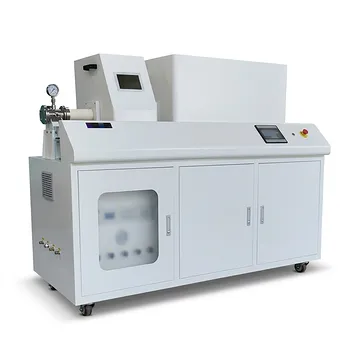
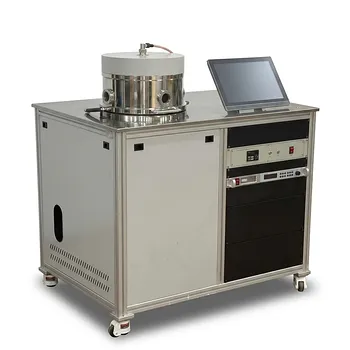
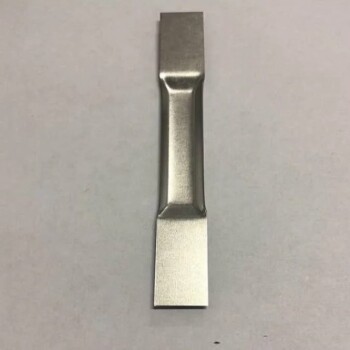
Medium Temperature Chemical Vapour Deposition (MTCVD) is a specialized process used primarily to produce homogeneous and dense films of hard alloy coating materials. It is a critical technology in the manufacturing sector, specifically designed to enhance the durability and performance of cemented carbide tools. By depositing these advanced coatings, MTCVD significantly extends the lifespan of equipment used in demanding mechanical processing.
Core Takeaway: MTCVD is an industrial hard coating technology that solves the problem of low tool service life. It is essential for creating "super carbide" tools capable of withstanding high-speed, heavy, and dry cutting environments.
The Primary Application: Industrial Tooling
Enhancing Carbide Tools
The most significant application of MTCVD is within the coated carbide tool industry. Manufacturers utilize this technology to apply ultra-thin, hard layers onto tool substrates.
Creating Dense, Homogeneous Films
The process is valued for its ability to produce films that are structurally superior. The resulting coatings are dense and homogeneous, ensuring consistent performance across the entire surface of the tool.
Solving Critical Machining Problems
Overcoming Low Service Life
The deep need addressed by MTCVD is the premature failure of tools in aggressive manufacturing settings. It effectively solves the problem of low tool service life, reducing downtime and replacement costs.
Handling Extreme Conditions
MTCVD coatings are engineered for specific, high-stress applications. They are particularly effective for high-speed cutting and heavy cutting of alloy steel.
Success in Dry Cutting
This technology is also vital for dry cutting operations. By removing the need for coolant, MTCVD-coated tools must withstand higher thermal stress, a capability intrinsic to these hard alloy coatings.
Technical Implementation and Context
The Hybrid Approach
In advanced manufacturing, MTCVD is frequently used in combination with HTCVD (High Temperature Chemical Vapour Deposition). This combined approach allows researchers to develop new "super carbide" coating materials with optimized properties.
Precision and Control
Like standard CVD, MTCVD relies on chemical reactions within a vacuum environment. This gives manufacturers full control over the timing and thickness of the deposition, allowing for the creation of ultra-thin, precise layers.
Understanding the Operational Context
Specificity of Application
It is important to distinguish MTCVD from general CVD applications. While general CVD is used for electronics, graphene, and medical devices, MTCVD is highly specialized for hard wear resistance.
The Niche Focus
MTCVD is not typically a general-purpose solution for optical or conductive films. Its utility is maximized in scenarios requiring extreme mechanical hardness and thermal stability for cutting tools.
Making the Right Choice for Your Goal
To determine if MTCVD is the right solution for your project, consider your primary performance metrics.
- If your primary focus is Extended Tool Life: Implement MTCVD to protect carbide tools against wear during high-speed or heavy alloy steel cutting.
- If your primary focus is Advanced Material Development: Investigate the combination of MTCVD and HTCVD to engineer new super cemented carbide coating materials.
MTCVD transforms the capability of standard carbide tools, turning them into high-performance assets for the most demanding manufacturing tasks.
Summary Table:
| Feature | MTCVD Application Benefits |
|---|---|
| Primary Use | Coating cemented carbide tools and hard alloys |
| Film Quality | Dense, homogeneous, and structurally superior films |
| Key Performance | Extended tool service life in high-speed & heavy cutting |
| Special Capability | High thermal stability for dry cutting environments |
| Hybrid Potential | Combined with HTCVD for "super carbide" material R&D |
Maximize Your Machining Efficiency with KINTEK
Are your industrial tools failing under high-stress conditions? KINTEK specializes in advanced laboratory and manufacturing equipment designed to push the boundaries of material science. Whether you are developing "super carbide" coatings or optimizing high-speed cutting processes, our comprehensive range of CVD systems (including MTCVD, PECVD, and MPCVD), vacuum furnaces, and precision crushing systems provides the control you need.
From high-temperature high-pressure reactors to specialized ceramics and crucibles, KINTEK is your partner in achieving superior tool durability and performance. Contact us today to discover how our high-performance solutions can revolutionize your production line and reduce operational downtime.
Related Products
- Microwave Plasma Chemical Vapor Deposition MPCVD Machine System Reactor for Lab and Diamond Growth
- HFCVD Machine System Equipment for Drawing Die Nano-Diamond Coating
- 915MHz MPCVD Diamond Machine Microwave Plasma Chemical Vapor Deposition System Reactor
- Chemical Vapor Deposition CVD Equipment System Chamber Slide PECVD Tube Furnace with Liquid Gasifier PECVD Machine
- Customer Made Versatile CVD Tube Furnace Chemical Vapor Deposition Chamber System Equipment
People Also Ask
- How does a microwave plasma reactor facilitate the synthesis of diamond? Master MPCVD with Precision Technology
- What are the advantages of a Microwave Plasma CVD reactor for MCD/NCD coatings? Precision Multilayer Diamond Engineering
- How do vacuum pumps and valves collaborate in MPCVD? Achieve Precise Pressure Control for Superior CNT Synthesis
- How does MPCVD work? A Guide to Low-Temperature, High-Quality Film Deposition
- What is microwave plasma chemical vapor deposition? A Guide to High-Purity Diamond Film Growth