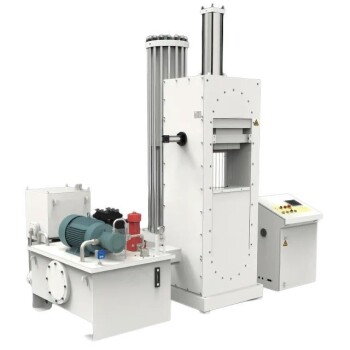
Press forging is a metal forming process that shapes a workpiece by applying slow, continuous, and controlled pressure. Unlike the rapid impacts of a hammer, a press squeezes the metal into a die, allowing the force to penetrate deep into the material for a more uniform deformation.
The core advantage of press forging lies in its ability to apply massive, sustained pressure. This method excels at creating very large components and achieving a uniform internal grain structure, which is critical for high-performance and safety-critical applications.
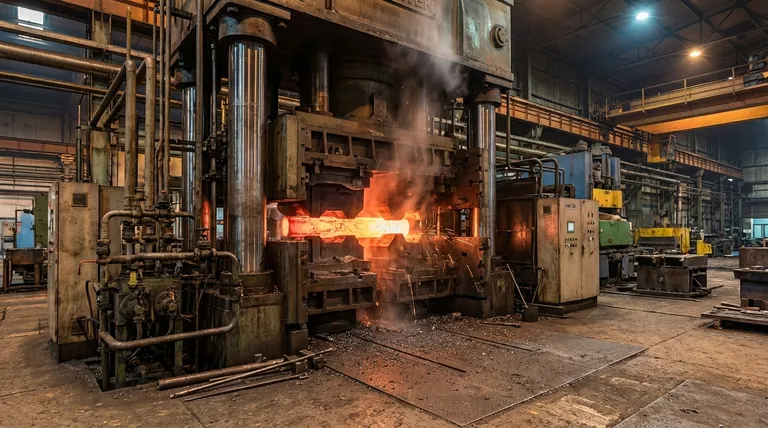
How Press Forging Works: The Principle of Squeezing
Press forging fundamentally relies on controlled force rather than kinetic energy. This distinction dictates its unique characteristics and applications.
The Role of the Press
The process uses either a hydraulic or mechanical press to generate the necessary force. Hydraulic presses are most common for this work, with capacities ranging from a few hundred tons to over 80,000 tons.
This immense power allows for the forging of exceptionally large and heavy workpieces, far beyond the capabilities of other methods.
Controlled Deformation
The key to press forging is the slow squeezing action. This deliberate application of pressure allows the force to travel through the entire thickness of the workpiece.
The result is a more uniform refinement of the metal's internal grain structure, leading to consistent and predictable mechanical properties throughout the part.
The Use of Forging Dies
Press forging can be performed using two main die configurations. Open-die forging uses simple, non-enclosing dies for large, relatively simple shapes.
Closed-die forging, also known as impression-die forging, uses dies that fully enclose the workpiece, forcing the metal to flow and fill a complex cavity to create a near-net shape.
Key Characteristics and Advantages
The slow and powerful nature of press forging delivers distinct benefits, particularly for demanding industrial components.
Deep and Uniform Material Properties
Because the force penetrates completely, press forging eliminates the surface-level-only deformation that can occur with impact methods. This ensures a consistent, refined grain structure, enhancing strength, ductility, and fatigue resistance.
Creating Complex Geometries
By applying heat, hot press forging significantly increases the material's malleability. This allows for the creation of intricate shapes with high precision, reducing the need for extensive secondary machining.
Ideal for Large Components
The sheer force capacity of forging presses makes them the go-to solution for manufacturing massive parts like aircraft structural components, turbine shafts, and large industrial fittings.
Understanding the Trade-offs and Limitations
While powerful, press forging is not the ideal solution for every scenario. It involves specific operational and economic considerations.
Slower Production Speeds
The deliberate squeezing process is inherently slower than the rapid blows of hammer forging. This can lead to longer cycle times and lower overall production rates for smaller components.
High Equipment Cost
The massive hydraulic presses required for this work represent a significant capital investment. The infrastructure needed to support such machinery is also substantial.
Heat Management Challenges
In hot forging, the prolonged contact between the hot workpiece and the cooler dies can lead to significant heat loss. This requires careful process control to maintain the material's optimal forging temperature.
Higher Cost for Hot Forging
As noted, hot forging enables complex shapes but adds costs. The process requires advanced electric heating systems and often involves post-forging fixture quenching to secure the part's final properties, increasing overall expense.
When to Choose Press Forging
Selecting the right forging method depends entirely on the component's requirements for size, material integrity, and complexity.
- If your primary focus is producing very large components: Press forging is often the only viable method due to its unmatched force capacity.
- If your primary focus is superior internal material properties: The slow, penetrating pressure is ideal for creating the uniform grain structure required in high-stress applications.
- If your primary focus is creating complex, near-net shapes with high precision: Closed-die hot press forging provides excellent dimensional accuracy, minimizing material waste and post-processing.
Ultimately, selecting press forging is a strategic decision for applications where material integrity, precision, and component scale are paramount.
Summary Table:
| Aspect | Description |
|---|---|
| Process | Shaping metal using slow, continuous pressure from a hydraulic or mechanical press. |
| Key Advantage | Creates uniform internal grain structure for superior mechanical properties. |
| Ideal For | Very large components, high-performance applications, and complex near-net shapes. |
| Common Types | Open-die forging (simple shapes) and Closed-die forging (complex shapes). |
Need to forge high-performance components with superior material integrity? KINTEK specializes in advanced lab and industrial equipment, including solutions for material testing and processing that support high-quality forging outcomes. Our expertise helps ensure your materials meet the strictest standards for strength and durability. Contact our experts today to discuss how we can support your metal forming and testing requirements!
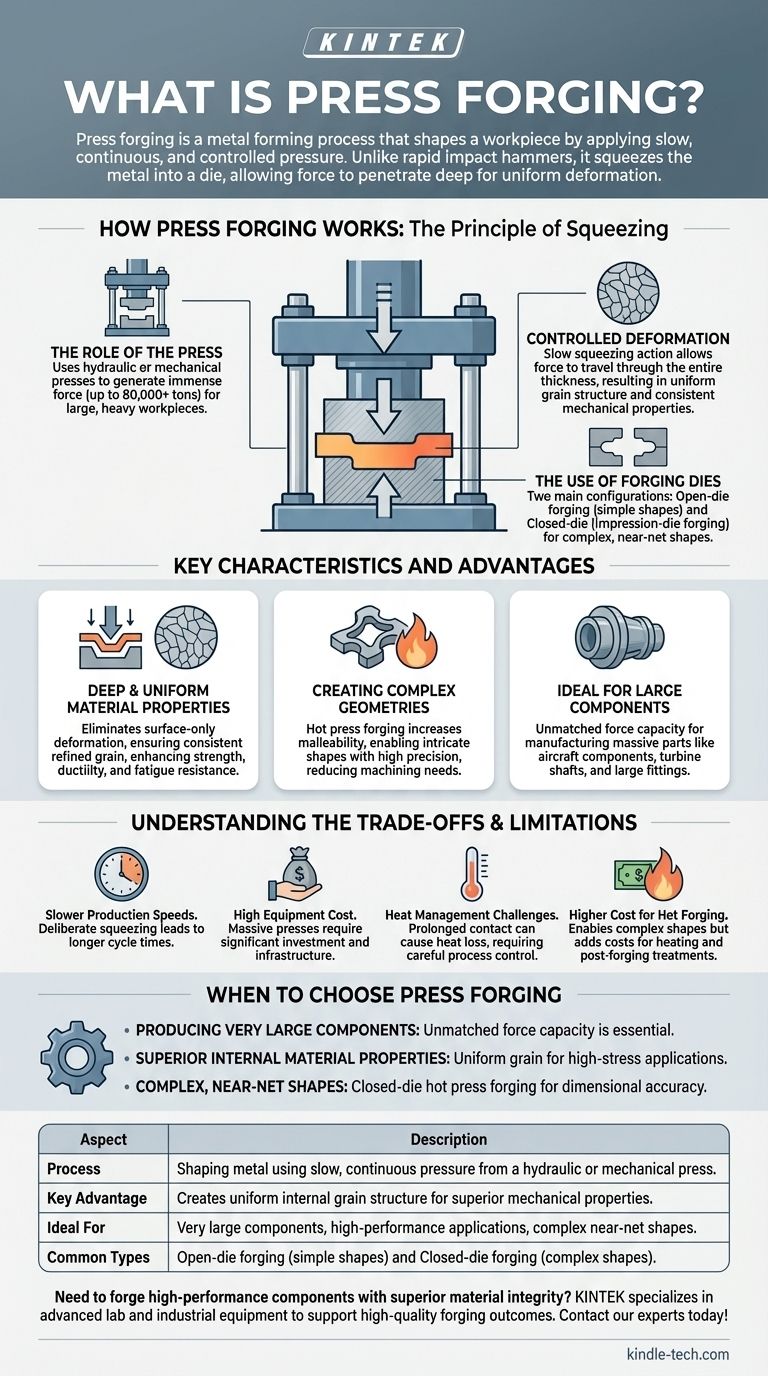
Visual Guide
Related Products
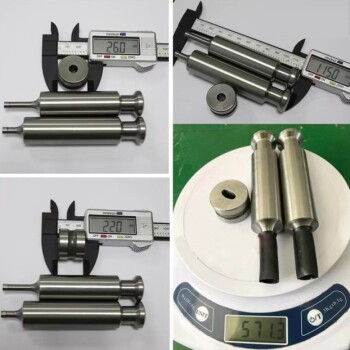
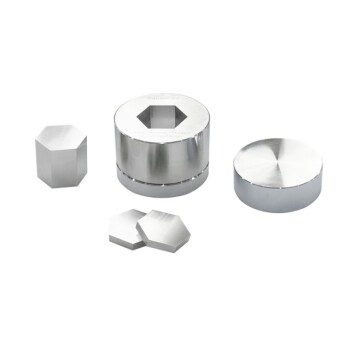
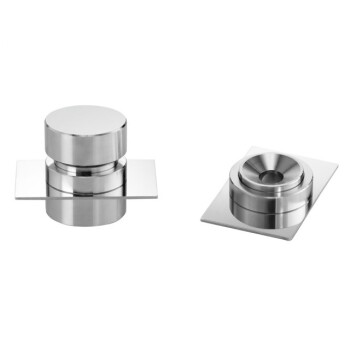
- Ring Press Mold for Lab Applications
- Round Bidirectional Press Mold for Lab
- Anti-Cracking Press Mold for Lab Use
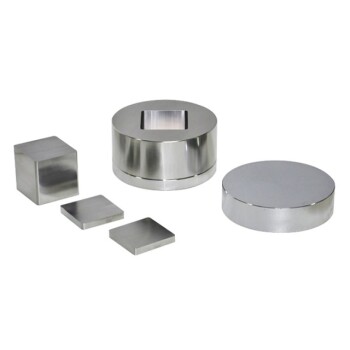
- Assemble Square Lab Press Mold for Laboratory Applications
- Cylindrical Press Mold for Lab Applications
People Also Ask
- What is the process of mold press? A Step-by-Step Guide to Compression Molding
- Why are pressure molds with non-conductive resin inner walls required for battery testing? Ensure Data Accuracy
- What technical issues do specialized pressure dies resolve? Fix delamination and density gradients in battery pressing.
- What is a press mold used for? Achieve Repeatable Precision and Efficiency
- What is the primary function of mold pressing for LAGP powders? Achieve High-Performance Solid Electrolytes