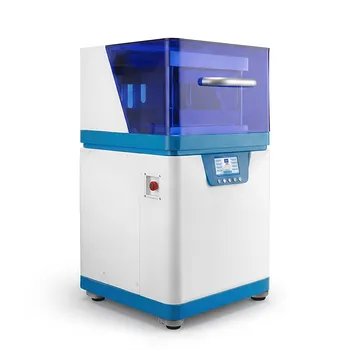
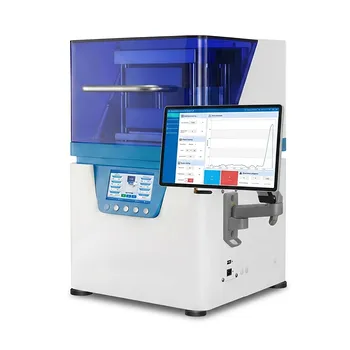
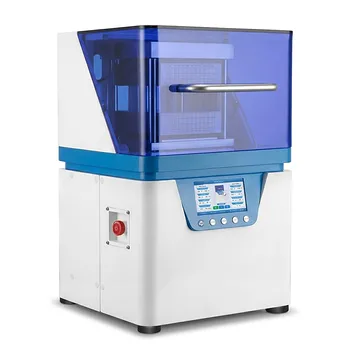
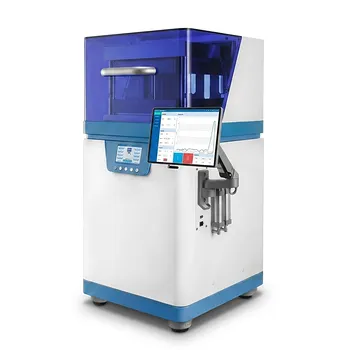
The core function of a vacuum hot pressing sintering furnace is force-thermal coupling. This process integrates high temperatures (up to 2000°C) with precise gradient pressure (often around 10 MPa) to facilitate the carbonization of materials while simultaneously forcing the directional alignment of internal structures. For heat dissipation plates, this dual action is what creates the high density and anisotropic thermal conductivity necessary for efficient heat transfer.
The furnace acts as a transformative environment where vacuum control, extreme heat, and mechanical force work in tandem to densify material powders. Its primary goal is to organize the microscopic orientation of components, such as carbon nanotubes, to ensure the final plate can move heat in a specific, intended direction.
Transforming Raw Materials into Controlled Structures
The Carbonization of Impregnated Pitch
In the production of heat dissipation plates, the furnace facilitates the complete carbonization of impregnated pitch. This occurs in a controlled vacuum environment to ensure the chemical transformation happens without interference from atmospheric gases.
Inducing Directional Alignment
The application of precise gradient pressure is used to induce the directional alignment or interweaving of internal carbon nanotubes. This mechanical force, applied during the heating phase, ensures that the internal "skeleton" of the material is oriented correctly for thermal performance.
Defining Anisotropic Thermal Conductivity
The synergy of force and heat determines the final macroscopic anisotropic thermal conductivity. By controlling the direction of the nanotubes, the furnace allows the plate to conduct heat more effectively in one direction than another, a critical requirement for advanced electronics cooling.
Maximizing Thermal Performance Through Forced Densification
Achieving High-Density Structures
High-pressure pressing during the sintering process brings powder particles into closer contact, causing them to deform and fuse. This removes voids within the material, resulting in a higher mechanical strength and a more consistent thermal path.
Facilitating Atomic Diffusion
At temperatures reaching 2000°C, adjacent crystal grains bond and diffuse into each other. This microscopic bonding is what consolidates loose powders or impregnated materials into a single, solid, high-performance part.
Preventing Oxidation and Contamination
The vacuum environment is essential for preventing oxidation reactions that could degrade the material's thermal properties. By removing oxygen and impurities, the furnace ensures the final heat dissipation plate maintains the highest possible purity and performance.
Understanding the Trade-offs and Pitfalls
Complexity of Gradient Pressure Control
Managing precise gradient pressure is technically demanding and requires sophisticated control systems. If the pressure is applied unevenly, the resulting plate may suffer from internal stresses or non-uniform density, leading to thermal "hot spots."
High Operational Costs and Wear
Operating at temperatures up to 2000°C causes significant wear on tungsten crucibles and heating elements. This makes the manufacturing process expensive and necessitates a rigorous maintenance schedule to prevent equipment failure.
Limitations in Geometry
Vacuum hot pressing is generally restricted to relatively simple shapes, such as flat plates or blocks. The requirement for unidirectional mechanical force means that complex, three-dimensional geometries are difficult or impossible to achieve in a single pressing cycle.
Making the Right Choice for Your Goal
When utilizing a vacuum hot pressing sintering furnace, your technical focus should shift based on the specific requirements of your end-product.
- If your primary focus is Maximum Thermal Conductivity: Prioritize the precise control of gradient pressure to ensure the highest possible alignment of carbon nanotubes or internal fibers.
- If your primary focus is Material Purity and Longevity: Focus on the integrity of the vacuum system and the use of inert protective atmospheres to prevent oxidation of refractory alloys.
- If your primary focus is Structural Integrity: Emphasize the sintering time and temperature curves to maximize atomic diffusion and eliminate micro-porosity within the plate.
By mastering the balance between thermal energy and mechanical force, manufacturers can produce heat dissipation plates that meet the extreme cooling demands of modern technology.
Summary Table:
| Core Function | Process Detail | Impact on Heat Dissipation Plates |
|---|---|---|
| Force-Thermal Coupling | 2000°C Heat + 10 MPa Gradient Pressure | Enables Anisotropic Thermal Conductivity |
| Carbonization | Controlled Vacuum Environment | Ensures High Material Purity & Density |
| Directional Alignment | Applied Mechanical Force | Organizes Nanotubes for Optimized Heat Flow |
| Atomic Diffusion | High-Temp Microscopic Bonding | Eliminates Voids & Enhances Structural Integrity |
Elevate Your Material Manufacturing with KINTEK Precision
Maximize the thermal performance of your components with KINTEK’s advanced vacuum hot pressing sintering furnaces. We specialize in providing the force-thermal coupling technology essential for creating high-density, anisotropic heat dissipation plates. Whether you are focused on carbon nanotube alignment or material densification, our systems deliver the precise control you need.
Our Comprehensive Laboratory Portfolio Includes:
- High-Temperature Furnaces: Vacuum, Muffle, Tube, CVD, and PECVD systems.
- Pressing Solutions: Hydraulic pellet presses, hot presses, and isostatic presses.
- Specialized Reactors: High-temperature high-pressure reactors and autoclaves.
- Material Processing: Crushing, milling, and sieving equipment.
- Research Tools: Electrolytic cells, electrodes, battery research tools, and essential ceramics/crucibles.
Partner with KINTEK to access reliable equipment, OEM/ODM support, and industry-leading expertise. Contact our technical experts today to find the perfect solution for your lab!
References
- Lianqiang Peng, Wei Feng. Tailoring Dense, Orientation–Tunable, and Interleavedly Structured Carbon‐Based Heat Dissipation Plates. DOI: 10.1002/advs.202205962
This article is also based on technical information from Kintek Solution Knowledge Base .
Related Products
- 600T Vacuum Induction Hot Press Furnace for Heat Treat and Sintering
- Vacuum Heat Treat and Sintering Furnace with 9MPa Air Pressure
- Vacuum Heat Treat and Pressure Sintering Furnace for High Temperature Applications
- 2200 ℃ Tungsten Vacuum Heat Treat and Sintering Furnace
- Vacuum Hot Press Furnace Heated Vacuum Press Machine Tube Furnace
People Also Ask
- What role does an induction vacuum hot pressing furnace play in sintering? Achieve 98% Density in Carbide Blocks
- What advantages does a vacuum hot press furnace provide for LSLBO ceramic electrolytes? Achieve 94% Relative Density
- What role does a Vacuum Hot Press (VHP) furnace play in the densification of austenitic stainless steel 316 composites?
- What are the advantages of a vacuum hot press furnace for W-50%Cu? Achieve 99.6% Density at Lower Temperatures
- What role does mechanical pressure play during the vacuum diffusion bonding of tungsten and copper? Keys to Solid Bonding