The primary value of Plasma Enhanced Chemical Vapor Deposition (PECVD) is its ability to decouple the deposition process from thermal energy. Unlike traditional Chemical Vapor Deposition (CVD), which relies on high heat to trigger reactions, PECVD utilizes high-energy electrons within a non-equilibrium plasma. This allows for critical thin-film deposition at significantly lower substrate temperatures, often near room temperature.
Core Takeaway: By substituting thermal energy with plasma energy, PECVD enables the coating of heat-sensitive materials that would be damaged by traditional CVD processes, while simultaneously reducing film stress and improving structural bonding.
The Mechanics of Low-Temperature Deposition
Dissociation via Plasma
In a standard CVD process, the system must be heated to temperatures between 600°C and 800°C to thermally decompose the precursor gases. PECVD fundamentally changes this driver.
Instead of heat, PECVD uses high-energy electrons generated within a plasma field to dissociate the reaction gases. This kinetic energy triggers the necessary chemical reactions without requiring the environment to be thermally hot.
Preserving Substrate Integrity
Because the reaction is driven by plasma, the substrate temperature can remain low, typically ranging from room temperature to 350°C.
This is the defining advantage of PECVD: it prevents thermal damage to the substrate. It preserves the physical and mechanical properties of the material beneath the coating, expanding the use of CVD technology to delicate or heat-sensitive components that cannot withstand the intense heat of traditional methods.
Performance Benefits Beyond Temperature
Reduced Film Stress
Temperature management is not just about preventing melting; it is about mechanical stability. The lower processing temperatures of PECVD significantly reduce the thermal stress between the film layers.
High-temperature processes often result in distinct expansion and contraction rates between the coating and the substrate. By keeping the process cooler, PECVD mitigates this mismatch, leading to stronger bonding and better film integrity.
Superior Conformity and Control
PECVD offers advantages in how the film actually forms on the surface. Because it is a gas-driven chemical process (like traditional CVD), it offers superior conformity and step coverage on uneven surfaces.
This is a distinct advantage over line-of-sight physical processes. Additionally, PECVD provides more precise control over the thin-film process, allowing for high deposition rates and the creation of unique films with high solvent and corrosion resistance that standard CVD cannot achieve.
Understanding the Trade-offs
Chemical Management
While PECVD solves the thermal issue, it remains a chemical process. Like traditional CVD, it involves precursor gases reacting to form a solid film.
This means operators must still manage the handling of potentially toxic chemical byproducts, a complexity not found in physical processes like PVD (Physical Vapor Deposition).
Equipment Complexity
PECVD represents a specialized subset of CVD technology. It requires not only the gas management systems of standard CVD but also the plasma generation capability.
While this grants the ability to work with sensitive substrates, it implies a more complex process control environment compared to simple thermal activation or physical evaporation methods.
Making the Right Choice for Your Goal
To determine if PECVD is the correct solution for your specific application, evaluate your constraints against the following criteria:
- If your primary focus is protecting the substrate: Choose PECVD for its ability to operate near room temperature, ensuring the physical properties of your heat-sensitive material remain unaltered.
- If your primary focus is complex geometries: Choose PECVD (or CVD) over physical methods, as the gas-driven nature ensures uniform coverage on uneven or "stepped" surfaces.
- If your primary focus is film durability: Rely on PECVD to produce unique, high-resistance films with lower internal stress due to the reduced thermal shock during deposition.
Ultimately, PECVD is the definitive choice when you require the chemical precision of CVD but cannot afford the thermal penalty of traditional high-heat processing.
Summary Table:
| Feature | Traditional CVD | PECVD |
|---|---|---|
| Operating Temperature | High (600°C - 800°C) | Low (Room Temp - 350°C) |
| Energy Source | Thermal Heat | Plasma (High-energy electrons) |
| Substrate Compatibility | Heat-resistant only | Heat-sensitive & Delicate |
| Film Stress | High (due to thermal expansion) | Significantly Reduced |
| Deposition Rate | Moderate | High |
| Conformity | Excellent | Superior Step Coverage |
Elevate Your Thin-Film Research with KINTEK Precision
Don't let high temperatures compromise your materials. KINTEK specializes in advanced PECVD and CVD systems, alongside a comprehensive suite of laboratory solutions including high-temperature furnaces, crushing systems, and vacuum equipment.
Whether you are developing next-gen semiconductors or researching heat-sensitive polymers, our team provides the expert guidance and high-performance tools—like high-pressure reactors and battery research consumables—needed to ensure superior film integrity and process efficiency.
Ready to optimize your deposition process? Contact KINTEK today for a custom consultation!
References
- Ruixue Wang, Pengcheng Xie. Research Progress of Low Temperature Plasma Surface Strengthening Technology. DOI: 10.3901/jme.2021.12.192
This article is also based on technical information from Kintek Solution Knowledge Base .
Related Products
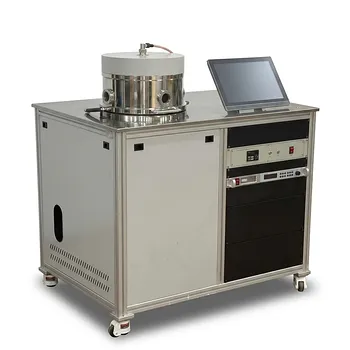
- RF PECVD System Radio Frequency Plasma-Enhanced Chemical Vapor Deposition RF PECVD
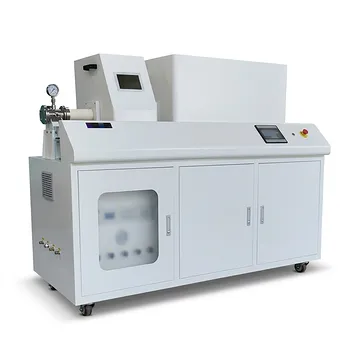
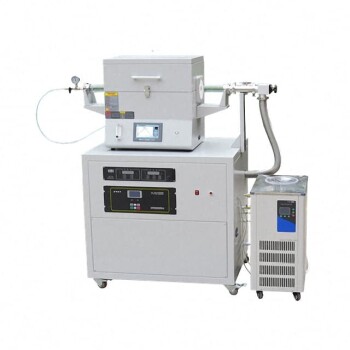
- Inclined Rotary Plasma Enhanced Chemical Vapor Deposition PECVD Equipment Tube Furnace Machine
- Inclined Rotary Plasma Enhanced Chemical Vapor Deposition PECVD Equipment Tube Furnace Machine
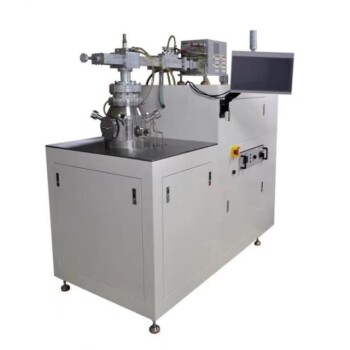
- Chemical Vapor Deposition CVD Equipment System Chamber Slide PECVD Tube Furnace with Liquid Gasifier PECVD Machine
- Microwave Plasma Chemical Vapor Deposition MPCVD Machine System Reactor for Lab and Diamond Growth
People Also Ask
- What is plasma enhanced chemical vapour deposition PECVD used for? Enable Low-Temp Thin Films for Electronics & Solar
- What is an example of PECVD? RF-PECVD for High-Quality Thin Film Deposition
- What is the role of RF-PECVD in VFG preparation? Mastering Vertical Growth and Surface Functionality
- What is plasma enhanced chemical Vapour deposition process used for fabrication of? A Guide to Low-Temperature Thin Films
- What is plasma CVD? Unlock Low-Temperature Thin Film Deposition for Sensitive Materials