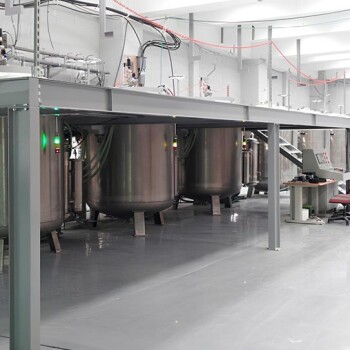
The primary function of the high-temperature furnace in this context is surface modification. Specifically, it is used to treat carbon fibers at 450 °C for 30 minutes under anaerobic conditions. This precise thermal cycle strips away surface impurities and alters the physical characteristics of the fiber to prepare it for biological interaction.
The furnace does not merely clean the material; it transforms the carbon brush into a bio-receptive interface. By optimizing surface characteristics, this thermal treatment enables the attachment of electrochemically active bacteria, ensuring the formation of the stable biofilm anodes required for efficient Microbial Electrolysis Cell (MEC) operation.
The Mechanics of Thermal Treatment
Precise Temperature Regulation
The process requires a strict adherence to a 450 °C set point. This temperature is high enough to degrade organic contaminants and manufacturing residues on the carbon fibers without destroying the structural integrity of the brush itself.
Anaerobic Environment
The treatment must occur under anaerobic conditions (without oxygen). This prevents the carbon fibers from simply burning up (oxidizing) at high temperatures, ensuring the conductive core of the anode remains intact.
Time-Dependent Modification
A duration of 30 minutes is critical. This specific timeframe ensures uniform heat distribution and complete surface treatment across the complex geometry of the brush, rather than just the outer layers.
Why Surface Modification is Vital
Removing Biological Barriers
Raw carbon fibers often carry surface impurities from the manufacturing process. These impurities act as a physical or chemical barrier, preventing bacteria from making direct contact with the conductive surface.
Enhancing Bacterial Attachment
The furnace treatment modifies the carbon fiber surface characteristics. This alteration increases the affinity between the electrode and electrochemically active bacteria.
Creating Stable Biofilms
The ultimate goal of this preparation is the formation of a stable biofilm anode. A well-treated surface allows bacteria to colonize robustly, leading to consistent electrochemical performance over the lifespan of the MEC.
Understanding the Process Risks
The Oxidation Trap
If the anaerobic seal is compromised, oxygen will enter the chamber. At 450 °C, oxygen will react with the carbon, causing the brush to essentially burn away or become brittle, rendering it useless as an electrode.
Temperature Sensitivity
Temperature deviations create significant issues. If the temperature is too low, impurities remain, resulting in poor bacterial adhesion. If the temperature significantly exceeds 450 °C, you risk altering the carbon's conductivity or mechanical strength negatively.
Making the Right Choice for Your Goal
To ensure optimal MEC performance, align your furnace protocol with your specific experimental needs:
- If your primary focus is rapid startup: Prioritize the accuracy of the 450 °C set point to ensure the surface is perfectly primed for immediate bacterial colonization.
- If your primary focus is anode longevity: Strictly verify the anaerobic conditions to ensure no structural degradation occurs during the cleaning phase.
A properly calibrated furnace cycle is the single most effective step in converting raw carbon material into a high-performance bio-electrode.
Summary Table:
| Parameter | Specification | Purpose |
|---|---|---|
| Temperature | 450 °C | Strips impurities without damaging structural integrity |
| Duration | 30 Minutes | Ensures uniform thermal treatment across brush geometry |
| Atmosphere | Anaerobic (Oxygen-free) | Prevents carbon oxidation and maintains conductivity |
| Outcome | Bio-receptive Interface | Enhances bacterial attachment and stable biofilm formation |
Elevate Your MEC Research with KINTEK Precision
Successful Microbial Electrolysis Cell (MEC) performance hinges on the perfect thermal treatment of your carbon brush anodes. KINTEK specializes in advanced high-temperature furnaces—including muffle, tube, and atmosphere furnaces—engineered to maintain the precise anaerobic conditions and temperature accuracy required for critical surface modification.
Whether you are developing bio-anodes, testing high-temperature high-pressure reactors, or sourcing electrolytic cells and electrodes, our comprehensive laboratory equipment ensures your research is backed by reliability and precision.
Ready to optimize your carbon material processing? Contact us today to discover how KINTEK’s specialized furnaces and laboratory consumables can transform your experimental results.
References
- Hyungwon Chai, Sokhee P. Jung. Validity and Reproducibility of Counter Electrodes for Linear Sweep Voltammetry Test in Microbial Electrolysis Cells. DOI: 10.3390/en17112674
This article is also based on technical information from Kintek Solution Knowledge Base .
Related Products
- Graphite Vacuum Furnace Bottom Discharge Graphitization Furnace for Carbon Materials
- High Temperature Muffle Oven Furnace for Laboratory Debinding and Pre Sintering
- Vacuum Heat Treat and Pressure Sintering Furnace for High Temperature Applications
- Graphite Vacuum Continuous Graphitization Furnace
- 1200℃ Muffle Furnace Oven for Laboratory
People Also Ask
- What is the use of graphite furnace? Achieve Extreme-Temperature Processing for Advanced Materials
- What is the disadvantage of graphite furnace? Managing Reactivity and Contamination Risks
- What gas is used in graphite furnace? Maximize Accuracy with the Right Inert Gas
- What is the application of graphite furnace? Essential for High-Temp Material Processing & Synthesis
- What are the advantages of graphite furnace over flame? Achieve Superior Trace Analysis Sensitivity