Knowledge What is the density of a sinter? It's a Variable, Engineered Property
Author avatar

Tech Team · Kintek Solution

Updated 1 week ago

What is the density of a sinter? It's a Variable, Engineered Property


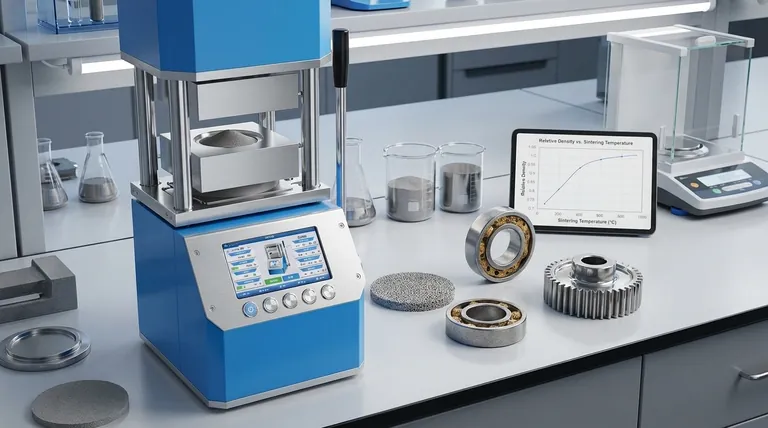
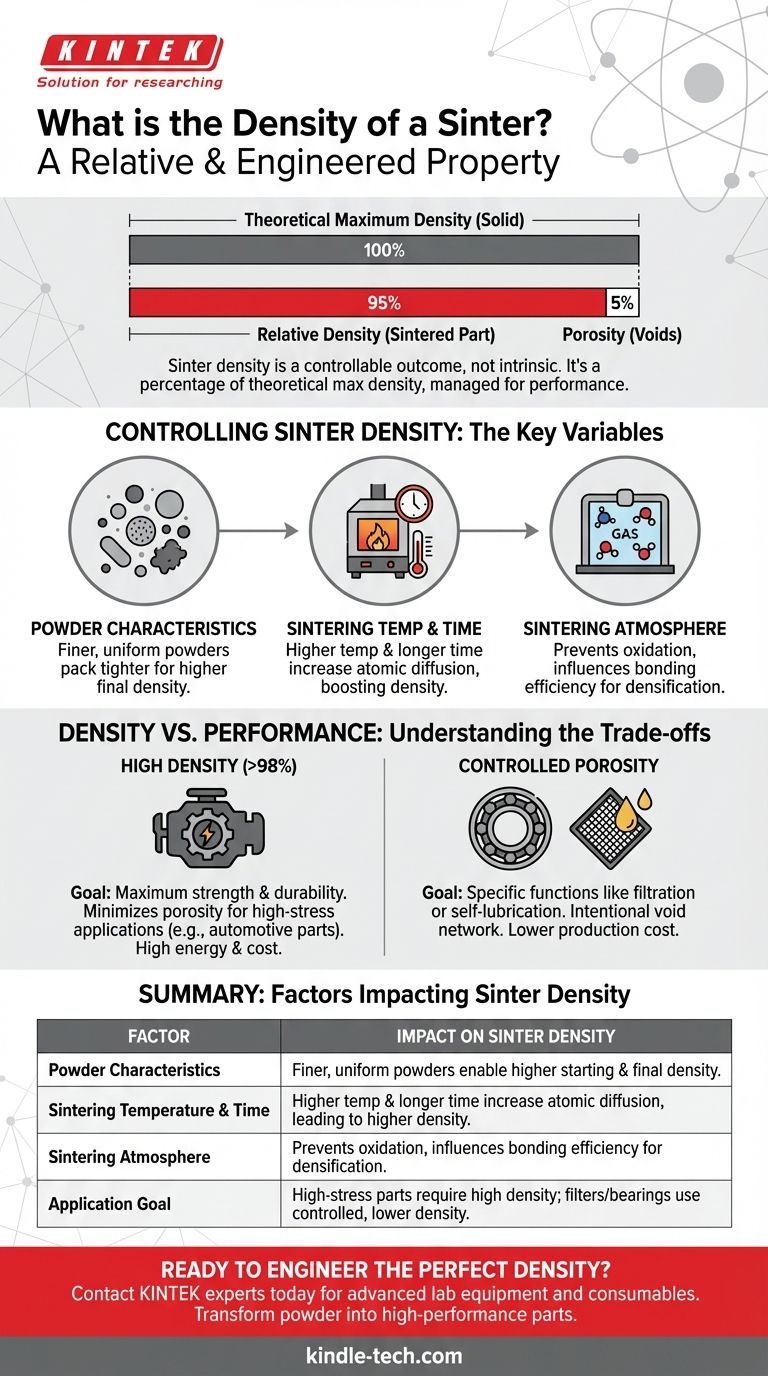
Crucially, a "sinter" does not have a single, fixed density. Instead, the density of a sintered part is a highly variable and engineered property. It is most accurately described as a relative density, which is a percentage of the theoretical maximum density of the solid material used to create it. For example, a sintered steel part might have a density that is 95% of the density of a solid, non-sintered steel bar.

The central concept to grasp is that the density of a sintered component is a controllable outcome of the manufacturing process, not an intrinsic property. This control allows engineers to intentionally manage porosity to balance mechanical performance, special functions, and production cost.
What is the density of a sinter? It's a Variable, Engineered Property

Why Density is a Variable, Not a Constant

A sintered part begins as a collection of fine powders that are compressed and then heated. This process inherently leaves microscopic voids between the original powder particles.

Theoretical vs. Relative Density

Theoretical density is the maximum possible density of the base material if it were a perfectly solid, void-free mass.

Relative density, the key metric for sintered parts, is the actual measured density of the component divided by its theoretical density, expressed as a percentage. A part is never 100% dense, but high-performance applications aim to get as close as possible.

The Role of Porosity

The voids that remain after the sintering process are known as porosity. The amount of porosity directly determines the part's density; higher porosity means lower relative density. The initial goal of sintering is often to achieve a relative density above 75% to eliminate the largest, most critical pores.

How the Sintering Process Controls Density

The final density of a component is not an accident; it is the direct result of carefully controlled variables during manufacturing.

The Impact of Powder Characteristics

The size, shape, and distribution of the initial powder particles play a fundamental role. Finer, more uniform powders can pack together more tightly, resulting in a higher starting density and a denser final product.

The Influence of Sintering Temperature and Time

Higher sintering temperatures and longer hold times give atoms more energy and opportunity to diffuse, closing the gaps between particles. High-temperature sintering is directly linked to higher density, which in turn leads to superior tensile strength and impact energy.

The Effect of Atmosphere

The atmosphere inside the furnace (such as a vacuum, nitrogen, or argon) prevents oxidation and can influence the chemical reactions at the particle surfaces, affecting how efficiently they bond together and densify.

Understanding the Trade-offs: Density vs. Performance

The "right" density depends entirely on the part's intended application. There is often a trade-off between achieving maximum density and other factors like cost or desired functionality.

The Goal of Full Densification

For high-stress applications like engine or transmission components, the goal is to achieve the highest possible density (often >98%). This minimizes porosity, which can act as a stress concentration point, and maximizes mechanical properties like strength and fatigue resistance.

The Advantage of Controlled Porosity

In some cases, porosity is a desirable feature. For example, self-lubricating bearings are made with intentionally controlled porosity. These voids are impregnated with oil, which is released during operation to provide continuous lubrication. Similarly, sintered metal filters rely on interconnected pores to function.

The Cost Factor

Achieving very high densities requires more energy, longer furnace cycles, or more complex multi-stage sintering processes. For less critical components, manufacturers may choose a lower target density that provides adequate performance at a significantly lower production cost.

Making the Right Choice for Your Goal

The optimal density for a sintered part is determined by its final application. By manipulating the sintering process, you can engineer a wide range of material properties from the same base powder.

  • If your primary focus is maximum strength and durability: Aim for the highest achievable relative density, minimizing porosity to create a part with properties approaching its solid, wrought equivalent.
  • If your primary focus is creating a filter or self-lubricating part: Intentionally engineer a specific, lower density to create a network of controlled and interconnected pores.
  • If your primary focus is cost-efficiency for a non-critical component: Target a moderate relative density that offers a reliable balance between acceptable mechanical performance and lower manufacturing costs.

Ultimately, controlling the density of a sintered part is how you transform a simple powder into a high-performance, engineered component.

Summary Table:

Factor Impact on Sinter Density
Powder Characteristics Finer, more uniform powders enable higher starting and final density.
Sintering Temperature & Time Higher temperatures and longer times increase atomic diffusion, leading to higher density.
Sintering Atmosphere Prevents oxidation and can influence bonding efficiency for densification.
Application Goal High-stress parts require high density (>98%); filters/ bearings use controlled, lower density.

Ready to engineer the perfect density for your sintered components?

At KINTEK, we specialize in providing the advanced lab equipment and consumables needed to precisely control the sintering process. Whether your goal is maximum strength, controlled porosity for filtration, or cost-effective production, our solutions help you achieve the exact material properties you require.

Contact our experts today to discuss how we can support your laboratory's specific sintering needs and help you transform powder into high-performance parts.

Visual Guide
What is the density of a sinter? It's a Variable, Engineered Property Visual Guide

Related Products

People Also Ask

Related Products

Manual High Temperature Heated Hydraulic Press Machine with Heated Plates for Lab

Manual High Temperature Heated Hydraulic Press Machine with Heated Plates for Lab

The High Temperature Hot Press is a machine specifically designed for pressing, sintering and processing materials in a high temperature environment. It is capable of operating in the range of hundreds of degrees Celsius to thousands of degrees Celsius for a variety of high temperature process requirements.

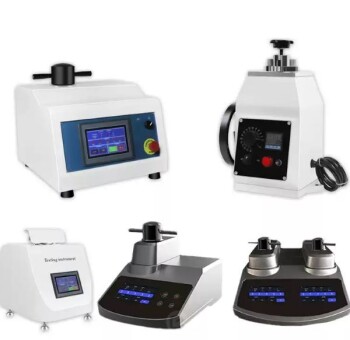
Metallographic Specimen Mounting Machine for Laboratory Materials and Analysis

Metallographic Specimen Mounting Machine for Laboratory Materials and Analysis

Precision metallographic mounting machines for labs—automated, versatile, and efficient. Ideal for sample prep in research and quality control. Contact KINTEK today!

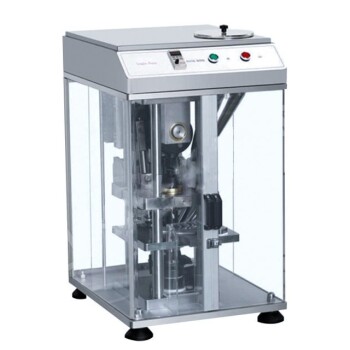
Single Punch Electric Tablet Press Machine Laboratory Powder Tablet Punching TDP Tablet Press

Single Punch Electric Tablet Press Machine Laboratory Powder Tablet Punching TDP Tablet Press

The single-punch electric tablet press is a laboratory-scale tablet press suitable for corporate laboratories in pharmaceutical, chemical, food, metallurgical and other industries.

Automatic Heated Hydraulic Press Machine with Heated Plates for Laboratory Hot Press 25T 30T 50T

Automatic Heated Hydraulic Press Machine with Heated Plates for Laboratory Hot Press 25T 30T 50T

Efficiently prepare your samples with our Automatic Heated Lab Press. With a pressure range up to 50T and precise control, it's perfect for various industries.

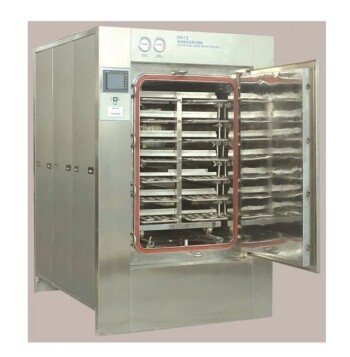
Laboratory Sterilizer Lab Autoclave Herbal Powder Sterilization Machine for Plant

Laboratory Sterilizer Lab Autoclave Herbal Powder Sterilization Machine for Plant

The herbal powder sterilization autoclave machine for Chinese medicine uses saturated steam for effective sterilization. It utilizes the heat and penetrative properties of steam, achieves sterilization after heat preservation, and maintains a good drying effect with a dedicated drying system.

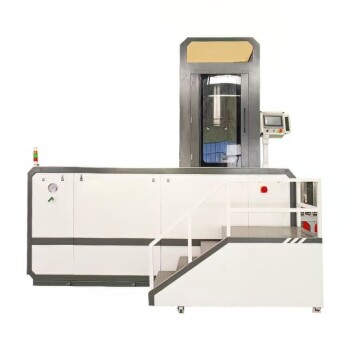
Warm Isostatic Press WIP Workstation 300Mpa for High Pressure Applications

Warm Isostatic Press WIP Workstation 300Mpa for High Pressure Applications

Discover Warm Isostatic Pressing (WIP) - A cutting-edge technology that enables uniform pressure to shape and press powdered products at a precise temperature. Ideal for complex parts and components in manufacturing.

Manual Heated Hydraulic Press Machine with Heated Plates for Laboratory Hot Press

Manual Heated Hydraulic Press Machine with Heated Plates for Laboratory Hot Press

The Manual Heat Press is a versatile piece of equipment suitable for a variety of applications, operated by a manual hydraulic system that applies controlled pressure and heat to the material placed on the piston.

Vacuum Hot Press Furnace Machine for Lamination and Heating

Vacuum Hot Press Furnace Machine for Lamination and Heating

Experience clean and precise lamination with Vacuum Lamination Press. Perfect for wafer bonding, thin-film transformations, and LCP lamination. Order now!

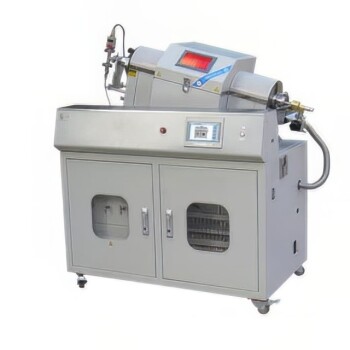
Inclined Rotary Plasma Enhanced Chemical Vapor Deposition PECVD Equipment Tube Furnace Machine

Inclined Rotary Plasma Enhanced Chemical Vapor Deposition PECVD Equipment Tube Furnace Machine

Introducing our inclined rotary PECVD furnace for precise thin film deposition. Enjoy automatic matching source, PID programmable temperature control, and high accuracy MFC mass flowmeter control. Built-in safety features for peace of mind.

Desktop Fast Laboratory Autoclave Sterilizer 35L 50L 90L for Lab Use

Desktop Fast Laboratory Autoclave Sterilizer 35L 50L 90L for Lab Use

The desktop fast steam sterilizer is a compact and reliable device used for rapid sterilization of medical, pharmaceutical, and research items. It efficiently sterilizes surgical instruments, glassware, medicines, and resistant materials, making it suitable for various applications.

Double Plate Heating Press Mold for Lab

Double Plate Heating Press Mold for Lab

Discover precision in heating with our Double Plate Heating Mold, featuring high-quality steel and uniform temperature control for efficient lab processes. Ideal for various thermal applications.

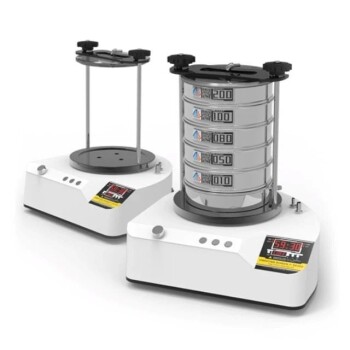
Laboratory Vibratory Sieve Shaker Machine for Dry and Wet Three-Dimensional Sieving

Laboratory Vibratory Sieve Shaker Machine for Dry and Wet Three-Dimensional Sieving

KT-VD200 can be used for sieving tasks of dry and wet samples in the laboratory. The screening quality is 20g-3kg. The product is designed with a unique mechanical structure and an electromagnetic vibrating body with a vibration frequency of 3000 times per minute.

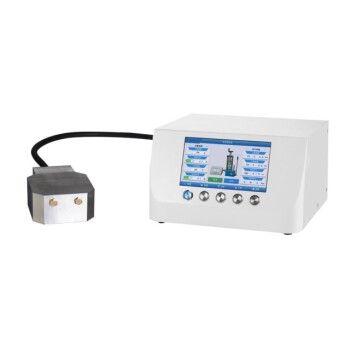
Touchscreen Automatic Vacuum Heat Press

Touchscreen Automatic Vacuum Heat Press

Precision vacuum heat press for labs: 800°C, 5-ton pressure, 0.1MPa vacuum. Ideal for composites, solar cells, aerospace.

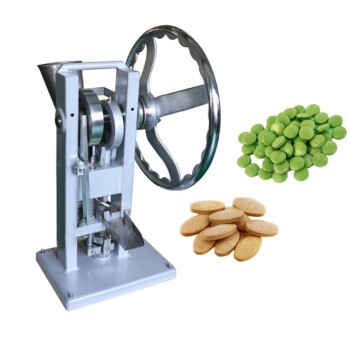
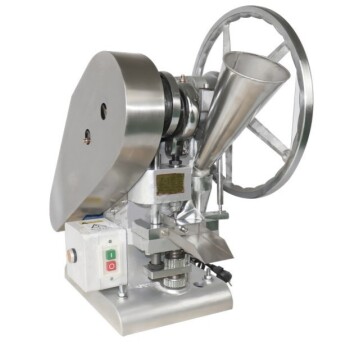
Single Punch Manual Tablet Press Machine TDP Tablet Punching Machine

Single Punch Manual Tablet Press Machine TDP Tablet Punching Machine

Single punch manual tablet punching machine can press various granular, crystal or powdery raw materials with good fluidity into disc-shaped, cylindrical, spherical, convex, concave and other various geometric shapes (such as square, triangle, ellipse, capsule shape, etc.), and can also press products with text and patterns.

High Energy Planetary Ball Mill Machine for Laboratory Horizontal Tank Type

High Energy Planetary Ball Mill Machine for Laboratory Horizontal Tank Type

The KT-P2000H uses a unique Y-axis planetary trajectory, and utilizes the collision, friction and gravity between the sample and the grinding ball.

Mini Planetary Ball Mill Machine for Laboratory Milling

Mini Planetary Ball Mill Machine for Laboratory Milling

Discover the KT-P400 desktop planetary ball mill, ideal for grinding and mixing small samples in the lab. Enjoy stable performance, long service life, and practicality. Functions include timing and overload protection.

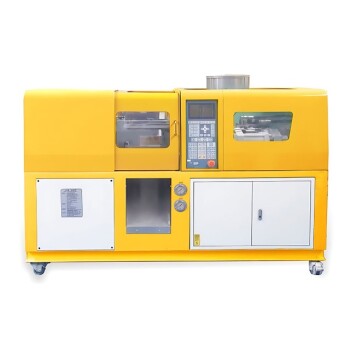
Small Injection Molding Machine for Lab Use

Small Injection Molding Machine for Lab Use

The small injection molding machinehas fast and stable movements; good controllability and repeatability, super energy saving; the product can be automatically dropped and formed; the machine body is low, convenient for feeding, easy to maintain, and no height restrictions on the installation site.

Single Punch Tablet Press Machine and Mass Production Rotary Tablet Punching Machine for TDP

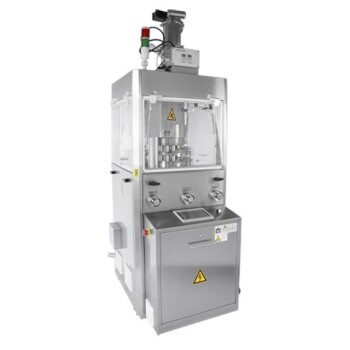
Single Punch Tablet Press Machine and Mass Production Rotary Tablet Punching Machine for TDP

Rotary tablet punching machine is an automatic rotating and continuous tableting machine. It is mainly used for tablet manufacturing in the pharmaceutical industry, and is also suitable for industrial sectors such as food, chemicals, batteries, electronics, ceramics, etc. to compress granular raw materials into tablets.

Single Punch Electric Tablet Press Machine TDP Tablet Punching Machine

Single Punch Electric Tablet Press Machine TDP Tablet Punching Machine

The electric tablet punching machine is a laboratory equipment designed for pressing various granular and powdery raw materials into discs and other geometric shapes. It is commonly used in pharmaceutical, healthcare products, food, and other industries for small batch production and processing. The machine is compact, lightweight, and easy to operate, making it suitable for use in clinics, schools, laboratories, and research units.

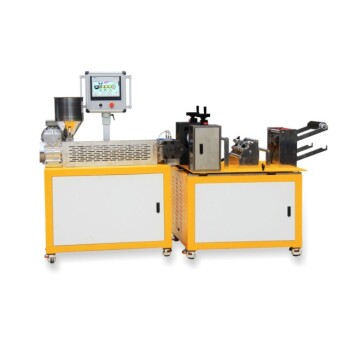
Lab Plastic PVC Calender Stretch Film Casting Machine for Film Testing

Lab Plastic PVC Calender Stretch Film Casting Machine for Film Testing

The cast film machine is designed for the molding of polymer cast film products and has multiple processing functions such as casting, extrusion, stretching, and compounding.


Leave Your Message