Knowledge Resources What is the evaporation method in physical vapour deposition? A Guide to Thin Film Coating Techniques
Author avatar

Tech Team · Kintek Solution

Updated 2 months ago

What is the evaporation method in physical vapour deposition? A Guide to Thin Film Coating Techniques


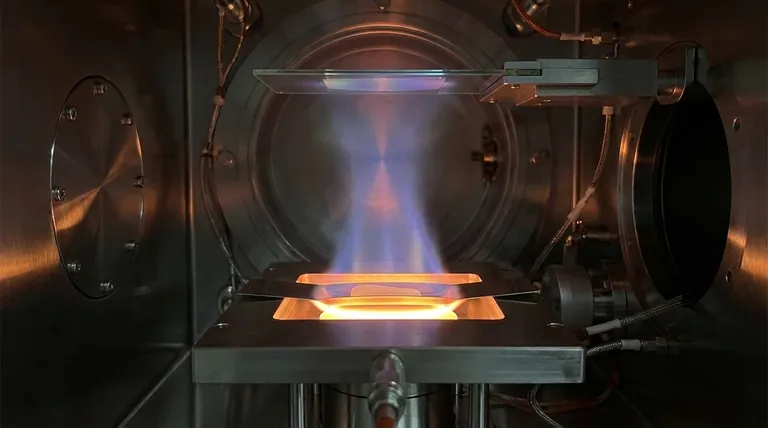
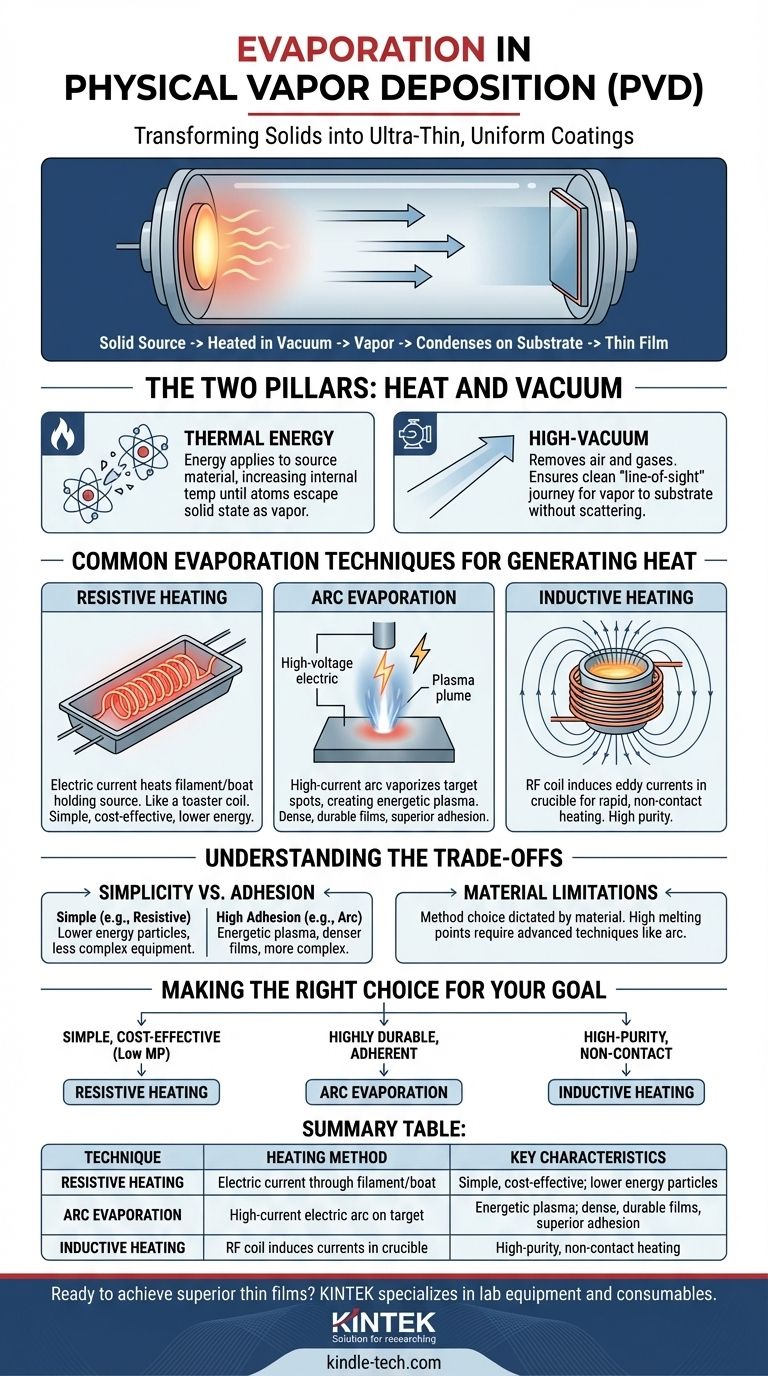
In Physical Vapor Deposition (PVD), the evaporation method is a process where a solid source material is heated within a high-vacuum chamber until it transforms into a vapor. This vapor then travels through the vacuum and condenses onto a cooler target object, known as a substrate, forming an ultra-thin, uniform coating.

The core principle of PVD by evaporation is straightforward: convert a solid material into a gas using heat, and then let that gas re-solidify as a thin film onto a surface. The key is controlling the heating method and maintaining a vacuum to ensure the vapor travels without interference.
What is the evaporation method in physical vapour deposition? A Guide to Thin Film Coating Techniques

The Two Pillars of Evaporation: Heat and Vacuum

To understand how this process works, it's essential to grasp the two fundamental components that make it possible: the application of thermal energy and the environment in which it occurs.

The Role of Thermal Energy

The entire process begins by applying energy—typically heat—to a source material. This energy increases the material's internal temperature to the point where its atoms gain enough momentum to break their bonds and escape the solid state, turning directly into a gas or vapor. The specific method used to generate this heat defines the different types of evaporation techniques.

Why a Vacuum is Non-Negotiable

The process must occur in a high-vacuum environment. This vacuum removes air and other gas molecules from the chamber, serving a critical purpose. Without a vacuum, the evaporated material atoms would constantly collide with air molecules, scattering them and preventing them from reaching the substrate in a straight, unimpeded path. The vacuum ensures a clean "line-of-sight" journey from the source to the substrate, which is essential for forming a high-quality, uniform film.

Common Techniques for Generating Heat

While the principle is the same, the method used to heat and vaporize the source material varies. This choice impacts the energy of the vapor and the properties of the final film.

Resistive Heating (Thermal Evaporation)

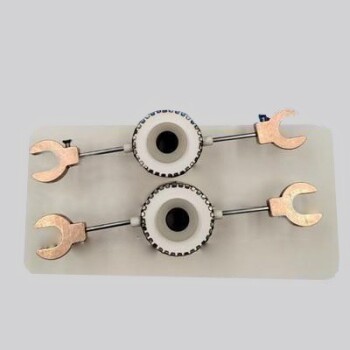
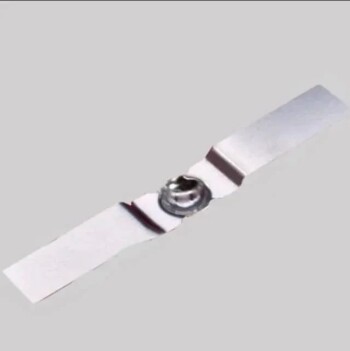
This is one of the most direct methods. A resistive heat source, like a super-heated filament or a ceramic "boat," holds the source material. An electric current is passed through the source, causing it to heat up and evaporate, much like how a toaster coil glows red hot.

Arc Evaporation

This is a more energetic technique. A high-current, low-voltage electric arc is struck on the surface of the solid source material (the target). The arc's immense energy vaporizes tiny spots on the target, creating a highly ionized plasma of the material. This plasma is then guided to the substrate to form the coating.

Inductive Heating

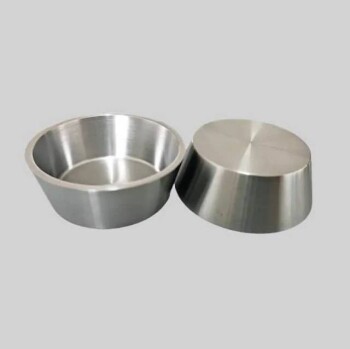
This method uses electromagnetic induction. A crucible containing the source material is placed inside a coil. A high-frequency alternating current (RF power) is passed through the coil, creating a changing magnetic field. This field induces powerful electrical currents (eddy currents) within the crucible, causing it to heat up rapidly and evaporate the material inside without direct contact.

Understanding the Trade-offs

Each evaporation technique comes with its own set of advantages and limitations. The primary trade-off is often between the simplicity of the process and the quality or energy of the resulting film.

Simplicity vs. Adhesion

Methods like resistive thermal evaporation are relatively simple and cost-effective. However, the evaporated particles have lower kinetic energy. More energetic processes like arc evaporation create an ionized plasma, resulting in a denser and more durable film with superior adhesion to the substrate, but the equipment is more complex.

Material Limitations

The choice of method can also be dictated by the material itself. Some materials have extremely high melting points that are difficult to reach with simple resistive heating, making techniques like arc or electron beam evaporation more suitable.

Making the Right Choice for Your Goal

Selecting the appropriate evaporation method depends entirely on the desired properties of the final thin film and the material being deposited.

  • If your primary focus is a simple, cost-effective coating for materials with lower melting points: Standard vacuum thermal evaporation using resistive heating is often the most practical choice.
  • If your primary focus is a highly durable, dense, and strongly adhered film: Arc evaporation provides the high-energy plasma needed to achieve superior coating properties.
  • If your primary focus is depositing a high-purity film without direct contact from a heating element: Inductive heating offers a clean, contained method for materials that can be heated in a crucible.

Ultimately, understanding these foundational techniques empowers you to select the process that best aligns with your material and performance requirements.

Summary Table:

Technique Heating Method Key Characteristics
Resistive Heating Electric current through a filament/boat Simple, cost-effective; lower energy particles
Arc Evaporation High-current electric arc on target Energetic plasma; dense, durable films with superior adhesion
Inductive Heating RF coil induces currents in a crucible High-purity, non-contact heating; suitable for crucible-contained materials

Ready to achieve superior thin films for your laboratory?

The right PVD evaporation technique is critical for coating performance. KINTEK specializes in lab equipment and consumables, serving all your laboratory needs. Our experts can help you select the ideal evaporation method—whether for cost-effective resistive heating or high-adhesion arc evaporation—to ensure your materials meet their performance requirements.

Contact our team today to discuss your specific application and discover how KINTEK's solutions can enhance your research and development.

Visual Guide
What is the evaporation method in physical vapour deposition? A Guide to Thin Film Coating Techniques Visual Guide

Related Products

People Also Ask

Related Products

Chemical Vapor Deposition CVD Equipment System Chamber Slide PECVD Tube Furnace with Liquid Gasifier PECVD Machine

Chemical Vapor Deposition CVD Equipment System Chamber Slide PECVD Tube Furnace with Liquid Gasifier PECVD Machine

KT-PE12 Slide PECVD System: Wide power range, programmable temp control, fast heating/cooling with sliding system, MFC mass flow control & vacuum pump.

Customer Made Versatile CVD Tube Furnace Chemical Vapor Deposition Chamber System Equipment

Customer Made Versatile CVD Tube Furnace Chemical Vapor Deposition Chamber System Equipment

Get your exclusive CVD furnace with KT-CTF16 Customer Made Versatile Furnace. Customizable sliding, rotating, and tilting functions for precise reactions. Order now!

HFCVD Machine System Equipment for Drawing Die Nano-Diamond Coating

HFCVD Machine System Equipment for Drawing Die Nano-Diamond Coating

The nano-diamond composite coating drawing die uses cemented carbide (WC-Co) as the substrate, and uses the chemical vapor phase method ( CVD method for short ) to coat the conventional diamond and nano-diamond composite coating on the surface of the inner hole of the mold.

Inclined Rotary Plasma Enhanced Chemical Vapor Deposition PECVD Equipment Tube Furnace Machine

Inclined Rotary Plasma Enhanced Chemical Vapor Deposition PECVD Equipment Tube Furnace Machine

Upgrade your coating process with PECVD coating equipment. Ideal for LED, power semiconductors, MEMS and more. Deposits high-quality solid films at low temps.

Inclined Rotary Plasma Enhanced Chemical Vapor Deposition PECVD Equipment Tube Furnace Machine

Inclined Rotary Plasma Enhanced Chemical Vapor Deposition PECVD Equipment Tube Furnace Machine

Introducing our inclined rotary PECVD furnace for precise thin film deposition. Enjoy automatic matching source, PID programmable temperature control, and high accuracy MFC mass flowmeter control. Built-in safety features for peace of mind.

Ceramic Evaporation Boat Set Alumina Crucible for Laboratory Use

Ceramic Evaporation Boat Set Alumina Crucible for Laboratory Use

It can be used for vapor deposition of various metals and alloys. Most metals can be evaporated completely without loss. Evaporation baskets are reusable.1

915MHz MPCVD Diamond Machine Microwave Plasma Chemical Vapor Deposition System Reactor

915MHz MPCVD Diamond Machine Microwave Plasma Chemical Vapor Deposition System Reactor

915MHz MPCVD Diamond Machine and its multi-crystal effective growth, the maximum area can reach 8 inches, the maximum effective growth area of single crystal can reach 5 inches. This equipment is mainly used for the production of large-size polycrystalline diamond films, the growth of long single crystal diamonds, the low-temperature growth of high-quality graphene, and other materials that require energy provided by microwave plasma for growth.

RF PECVD System Radio Frequency Plasma-Enhanced Chemical Vapor Deposition RF PECVD

RF PECVD System Radio Frequency Plasma-Enhanced Chemical Vapor Deposition RF PECVD

RF-PECVD is an acronym for "Radio Frequency Plasma-Enhanced Chemical Vapor Deposition." It deposits DLC (Diamond-like carbon film) on germanium and silicon substrates. It is utilized in the 3-12um infrared wavelength range.

Microwave Plasma Chemical Vapor Deposition MPCVD Machine System Reactor for Lab and Diamond Growth

Microwave Plasma Chemical Vapor Deposition MPCVD Machine System Reactor for Lab and Diamond Growth

Get high-quality diamond films with our Bell-jar Resonator MPCVD machine designed for lab and diamond growth. Discover how Microwave Plasma Chemical Vapor Deposition works for growing diamonds using carbon gas and plasma.

Molybdenum Tungsten Tantalum Evaporation Boat for High Temperature Applications

Molybdenum Tungsten Tantalum Evaporation Boat for High Temperature Applications

Evaporation boat sources are used in thermal evaporation systems and are suitable for depositing various metals, alloys and materials. Evaporation boat sources are available in different thicknesses of tungsten, tantalum and molybdenum to ensure compatibility with a variety of power sources. As a container, it is used for vacuum evaporation of materials. They can be used for thin film deposition of various materials, or designed to be compatible with techniques such as electron beam fabrication.

Aluminized Ceramic Evaporation Boat for Thin Film Deposition
Aluminized Ceramic Evaporation Boat for Thin Film Deposition
Vessel for depositing thin films; has an aluminum-coated ceramic body for improved thermal efficiency and chemical resistance. making it suitable for various applications.

Tungsten Evaporation Boat for Thin Film Deposition

Tungsten Evaporation Boat for Thin Film Deposition

Learn about tungsten boats, also known as evaporated or coated tungsten boats. With a high tungsten content of 99.95%, these boats are ideal for high-temperature environments and widely used in various industries. Discover their properties and applications here.

Evaporation Boat for Organic Matter

Evaporation Boat for Organic Matter

The evaporation boat for organic matter is an important tool for precise and uniform heating during the deposition of organic materials.

Hemispherical Bottom Tungsten Molybdenum Evaporation Boat

Hemispherical Bottom Tungsten Molybdenum Evaporation Boat

Used for gold plating, silver plating, platinum, palladium, suitable for a small amount of thin film materials. Reduce the waste of film materials and reduce heat dissipation.

Electron Beam Evaporation Coating Oxygen-Free Copper Crucible and Evaporation Boat

Electron Beam Evaporation Coating Oxygen-Free Copper Crucible and Evaporation Boat

Electron Beam Evaporation Coating Oxygen-Free Copper Crucible enables precise co-deposition of various materials. Its controlled temperature and water-cooled design ensure pure and efficient thin film deposition.

E Beam Crucibles Electron Gun Beam Crucible for Evaporation

E Beam Crucibles Electron Gun Beam Crucible for Evaporation

In the context of electron gun beam evaporation, a crucible is a container or source holder used to contain and evaporate the material to be deposited onto a substrate.

High Purity Pure Graphite Crucible for Evaporation

High Purity Pure Graphite Crucible for Evaporation

Vessels for high temperature applications, where materials are kept at extremely high temperatures to evaporate, allowing thin films to be deposited on substrates.

Electron Beam Evaporation Coating Gold Plating Tungsten Molybdenum Crucible for Evaporation

Electron Beam Evaporation Coating Gold Plating Tungsten Molybdenum Crucible for Evaporation

These crucibles act as containers for the gold material evaporated by the electron evaporation beam while precisely directing the electron beam for precise deposition.

Evaporation Crucible for Organic Matter

Evaporation Crucible for Organic Matter

An evaporation crucible for organic matter, referred to as an evaporation crucible, is a container for evaporating organic solvents in a laboratory environment.

Electron Beam Evaporation Coating Tungsten Crucible and Molybdenum Crucible for High Temperature Applications

Electron Beam Evaporation Coating Tungsten Crucible and Molybdenum Crucible for High Temperature Applications

Tungsten and molybdenum crucibles are commonly used in electron beam evaporation processes due to their excellent thermal and mechanical properties.


Leave Your Message