Knowledge What is the filling stage of injection molding? Master the Critical First Phase for Quality Parts
Author avatar

Tech Team · Kintek Solution

Updated 1 week ago

What is the filling stage of injection molding? Master the Critical First Phase for Quality Parts


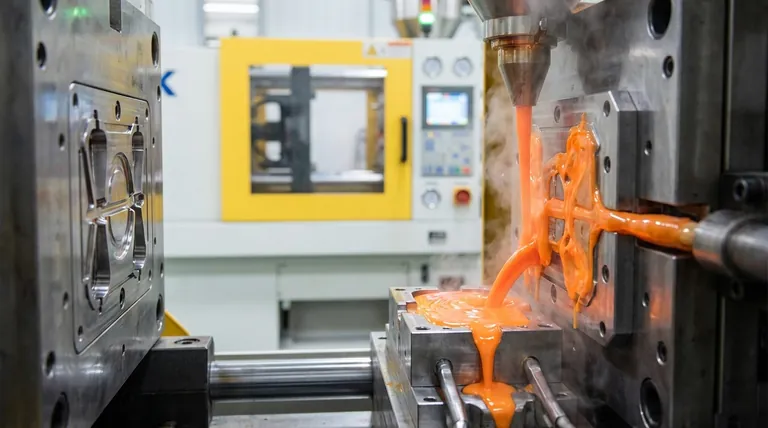
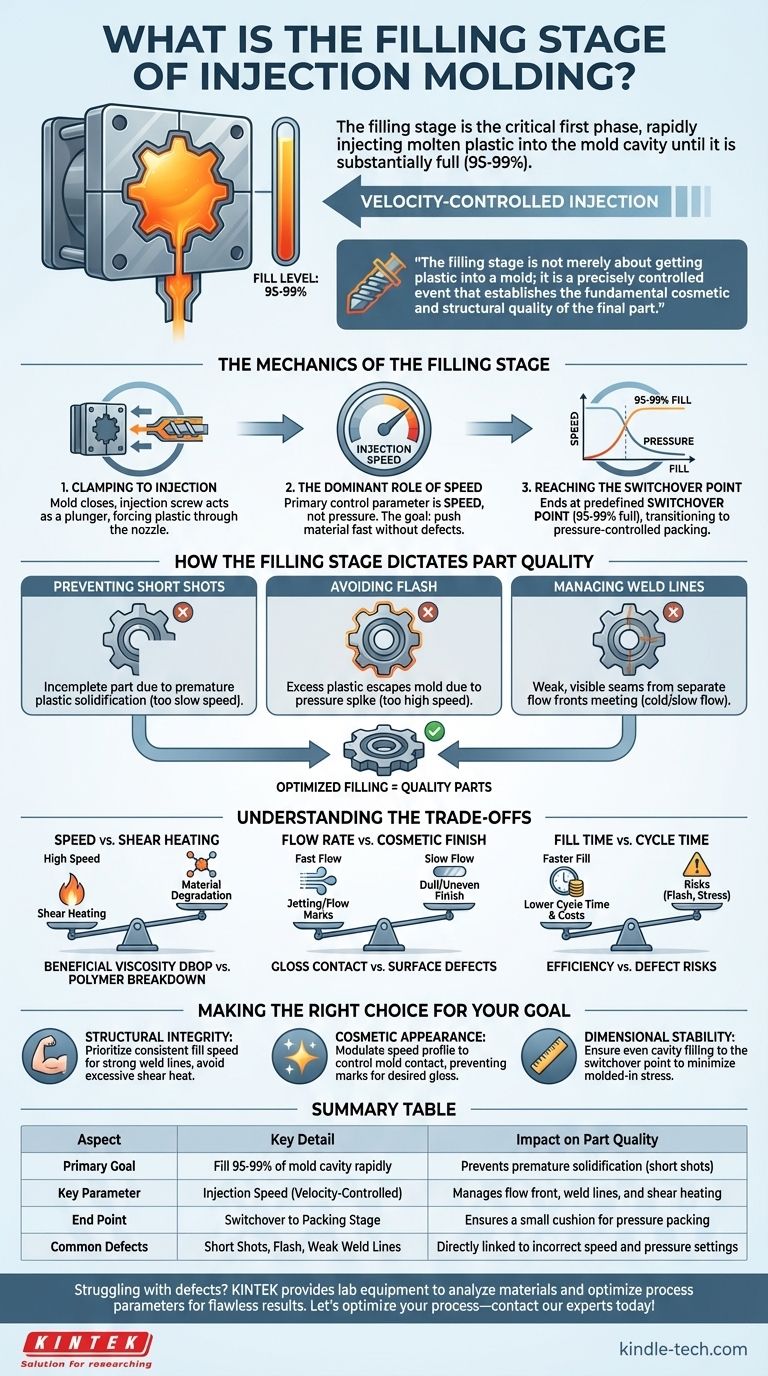
The filling stage is the critical first phase of the injection molding process. It begins the moment the two halves of the mold are clamped shut and involves rapidly injecting molten plastic material into the empty mold cavity. This high-speed, high-pressure event continues until the cavity is substantially full, typically between 95% and 99%.

The filling stage is not merely about getting plastic into a mold; it is a precisely controlled event that establishes the fundamental cosmetic and structural quality of the final part. The parameters set during these few seconds determine everything from surface finish to internal strength.
What is the filling stage of injection molding? Master the Critical First Phase for Quality Parts

The Mechanics of the Filling Stage

To understand its importance, you must first understand the sequence of events. The filling stage is a dynamic process governed by speed, pressure, and temperature.

From Clamping to Injection

The cycle begins with the mold closing and being held together under immense force by the clamping unit. Once secure, the injection unit's screw moves forward like a plunger, forcing the accumulated molten plastic through the nozzle and into the mold's runner system.

The Dominant Role of Speed

During the filling stage, the primary control parameter is injection speed, not pressure. The goal is to push the material into the mold as quickly as possible without causing defects. This velocity-controlled approach ensures the entire cavity is filled before any section of the plastic can prematurely cool and solidify.

Reaching the Switchover Point

The filling stage ends at a predefined position known as the switchover point. This is the critical moment the machine transitions from the high-speed "filling" stage to the pressure-controlled "packing" stage. This switch typically occurs when the mold is 95% to 99% full, leaving a small cushion to be filled during the subsequent packing phase.

How the Filling Stage Dictates Part Quality

Nearly all common molding defects can be traced back to an improperly controlled filling stage. How the plastic enters and flows within the mold is paramount.

Preventing Short Shots

A short shot is an incomplete part, which occurs if the molten plastic solidifies before it has completely filled the mold cavity. This is often caused by an injection speed that is too slow, allowing the material to cool excessively as it travels.

Avoiding Flash

Flash is the opposite problem: a thin layer of excess plastic that escapes the mold cavity, typically at the parting line. This can happen if the injection speed is too high, creating a pressure spike that forces the mold halves apart slightly.

Managing Weld Lines

When the molten plastic flows around a core or enters from multiple gates, the separate flow fronts must meet and fuse. The point where they meet is called a weld line. A cold or slow-moving flow front results in a weak, often visible weld line, compromising the part's strength and appearance.

Understanding the Trade-offs

Optimizing the filling stage is a balancing act. Pushing for one objective can negatively impact another, requiring careful consideration of the material and part design.

Speed vs. Shear Heating

High injection speeds generate friction as the plastic flows, a phenomenon known as shear heating. This can be beneficial, as it lowers the plastic's viscosity and helps it fill thin sections. However, excessive shear can degrade the polymer, breaking down its molecular chains and weakening the final part.

Flow Rate vs. Cosmetic Finish

The speed at which the molten plastic contacts the mold surface directly impacts the part's gloss and finish. A fast injection can create a "jetting" effect, causing flow marks on the surface. Conversely, a fill that is too slow can lead to a dull or uneven finish.

Fill Time vs. Cycle Time

Naturally, a faster fill time reduces the overall cycle time, increasing production efficiency and lowering costs. However, this pursuit of speed must be balanced against the risk of creating defects like flash, high internal stresses, or material degradation.

Making the Right Choice for Your Goal

The ideal filling strategy depends entirely on the specific requirements of the part.

  • If your primary focus is structural integrity: Prioritize a consistent fill speed that ensures strong weld lines and avoids degrading the material with excessive shear heat.
  • If your primary focus is cosmetic appearance: Modulate the injection speed profile to manage how the plastic contacts the mold wall, preventing flow marks and achieving the desired surface gloss.
  • If your primary focus is dimensional stability: Ensure the cavity is filled evenly and consistently to the switchover point, minimizing molded-in stress that can cause warping later.

Ultimately, mastering the filling stage is the first and most essential step toward producing consistent, high-quality injection-molded parts.

Summary Table:

Aspect Key Detail Impact on Part Quality
Primary Goal Fill 95-99% of mold cavity rapidly Prevents premature solidification (short shots)
Key Parameter Injection Speed (Velocity-Controlled) Manages flow front, weld lines, and shear heating
End Point Switchover to Packing Stage Ensures a small cushion of material remains for pressure packing
Common Defects Short Shots, Flash, Weak Weld Lines Directly linked to incorrect speed and pressure settings

Struggling with molding defects like short shots or flash? The precision of your filling stage is critical. At KINTEK, we specialize in providing the high-performance lab equipment and consumables needed to analyze materials, optimize your process parameters, and achieve flawless results. Our expertise supports laboratories in perfecting injection molding for superior structural integrity and cosmetic finishes. Let's optimize your process—contact our experts today for a consultation!

Visual Guide
What is the filling stage of injection molding? Master the Critical First Phase for Quality Parts Visual Guide

Related Products

People Also Ask

Related Products

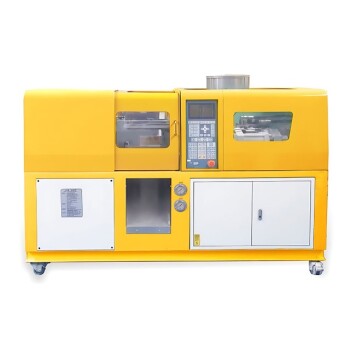
Small Injection Molding Machine for Lab Use

Small Injection Molding Machine for Lab Use

The small injection molding machinehas fast and stable movements; good controllability and repeatability, super energy saving; the product can be automatically dropped and formed; the machine body is low, convenient for feeding, easy to maintain, and no height restrictions on the installation site.

Double Plate Heating Press Mold for Lab

Double Plate Heating Press Mold for Lab

Discover precision in heating with our Double Plate Heating Mold, featuring high-quality steel and uniform temperature control for efficient lab processes. Ideal for various thermal applications.

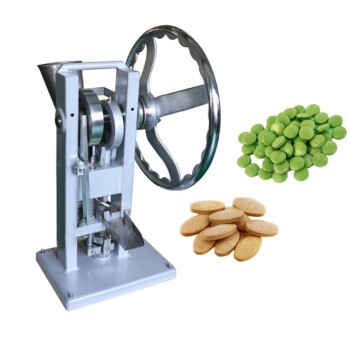
Single Punch Electric Tablet Press Machine Laboratory Powder Tablet Punching TDP Tablet Press

Single Punch Electric Tablet Press Machine Laboratory Powder Tablet Punching TDP Tablet Press

The single-punch electric tablet press is a laboratory-scale tablet press suitable for corporate laboratories in pharmaceutical, chemical, food, metallurgical and other industries.

Lab Plastic PVC Calender Stretch Film Casting Machine for Film Testing

Lab Plastic PVC Calender Stretch Film Casting Machine for Film Testing

The cast film machine is designed for the molding of polymer cast film products and has multiple processing functions such as casting, extrusion, stretching, and compounding.

Single Punch Electric Tablet Press Machine TDP Tablet Punching Machine

Single Punch Electric Tablet Press Machine TDP Tablet Punching Machine

The electric tablet punching machine is a laboratory equipment designed for pressing various granular and powdery raw materials into discs and other geometric shapes. It is commonly used in pharmaceutical, healthcare products, food, and other industries for small batch production and processing. The machine is compact, lightweight, and easy to operate, making it suitable for use in clinics, schools, laboratories, and research units.

Single Punch Tablet Press Machine and Mass Production Rotary Tablet Punching Machine for TDP

Single Punch Tablet Press Machine and Mass Production Rotary Tablet Punching Machine for TDP

Rotary tablet punching machine is an automatic rotating and continuous tableting machine. It is mainly used for tablet manufacturing in the pharmaceutical industry, and is also suitable for industrial sectors such as food, chemicals, batteries, electronics, ceramics, etc. to compress granular raw materials into tablets.

Warm Isostatic Press WIP Workstation 300Mpa for High Pressure Applications

Warm Isostatic Press WIP Workstation 300Mpa for High Pressure Applications

Discover Warm Isostatic Pressing (WIP) - A cutting-edge technology that enables uniform pressure to shape and press powdered products at a precise temperature. Ideal for complex parts and components in manufacturing.

Lab Scale Rotary Single Punch Tablet Press Machine TDP Tablet Punching Machine

Lab Scale Rotary Single Punch Tablet Press Machine TDP Tablet Punching Machine

This machine is a single-pressure automatic rotating, continuous tableting machine that compresses granular raw materials into various tablets. It is mainly used for tablet production in the pharmaceutical industry, and is also suitable for chemical, food, electronics and other industrial sectors.

Automatic Lab Cold Isostatic Press CIP Machine Cold Isostatic Pressing

Automatic Lab Cold Isostatic Press CIP Machine Cold Isostatic Pressing

Efficiently prepare samples with our Automatic Lab Cold Isostatic Press. Widely used in material research, pharmacy, and electronic industries. Provides greater flexibility and control compared to electric CIPs.

Single Punch Manual Tablet Press Machine TDP Tablet Punching Machine

Single Punch Manual Tablet Press Machine TDP Tablet Punching Machine

Single punch manual tablet punching machine can press various granular, crystal or powdery raw materials with good fluidity into disc-shaped, cylindrical, spherical, convex, concave and other various geometric shapes (such as square, triangle, ellipse, capsule shape, etc.), and can also press products with text and patterns.

Automatic Heated Hydraulic Press Machine with Heated Plates for Laboratory Hot Press 25T 30T 50T

Automatic Heated Hydraulic Press Machine with Heated Plates for Laboratory Hot Press 25T 30T 50T

Efficiently prepare your samples with our Automatic Heated Lab Press. With a pressure range up to 50T and precise control, it's perfect for various industries.

Heated Hydraulic Press Machine with Integrated Manual Heated Plates for Lab Use

Heated Hydraulic Press Machine with Integrated Manual Heated Plates for Lab Use

Efficiently process heat-pressing samples with our Integrated Manual Heated Lab Press. With a heating range up to 500°C, it's perfect for various industries.

Manual Heated Hydraulic Press Machine with Heated Plates for Laboratory Hot Press

Manual Heated Hydraulic Press Machine with Heated Plates for Laboratory Hot Press

The Manual Heat Press is a versatile piece of equipment suitable for a variety of applications, operated by a manual hydraulic system that applies controlled pressure and heat to the material placed on the piston.

Touchscreen Automatic Vacuum Heat Press

Touchscreen Automatic Vacuum Heat Press

Precision vacuum heat press for labs: 800°C, 5-ton pressure, 0.1MPa vacuum. Ideal for composites, solar cells, aerospace.

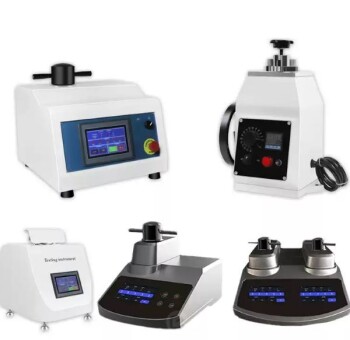
Metallographic Specimen Mounting Machine for Laboratory Materials and Analysis

Metallographic Specimen Mounting Machine for Laboratory Materials and Analysis

Precision metallographic mounting machines for labs—automated, versatile, and efficient. Ideal for sample prep in research and quality control. Contact KINTEK today!

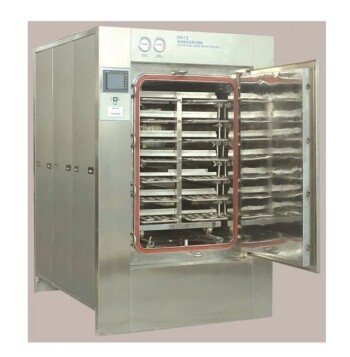
Laboratory Sterilizer Lab Autoclave Herbal Powder Sterilization Machine for Plant

Laboratory Sterilizer Lab Autoclave Herbal Powder Sterilization Machine for Plant

The herbal powder sterilization autoclave machine for Chinese medicine uses saturated steam for effective sterilization. It utilizes the heat and penetrative properties of steam, achieves sterilization after heat preservation, and maintains a good drying effect with a dedicated drying system.

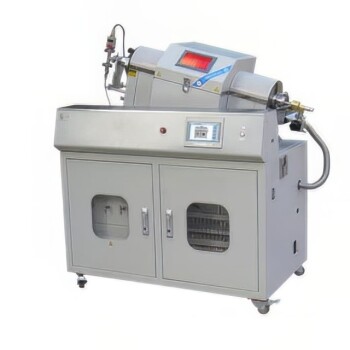
Inclined Rotary Plasma Enhanced Chemical Vapor Deposition PECVD Equipment Tube Furnace Machine

Inclined Rotary Plasma Enhanced Chemical Vapor Deposition PECVD Equipment Tube Furnace Machine

Introducing our inclined rotary PECVD furnace for precise thin film deposition. Enjoy automatic matching source, PID programmable temperature control, and high accuracy MFC mass flowmeter control. Built-in safety features for peace of mind.

Lab Blown Film Extrusion Three Layer Co-Extrusion Film Blowing Machine

Lab Blown Film Extrusion Three Layer Co-Extrusion Film Blowing Machine

Lab blown film extrusion is mainly used to detect the feasibility of film blowing of polymer materials and the colloid condition in the materials, as well as the dispersion of colored dispersions, controlled mixtures, and extrudates;

High Energy Planetary Ball Mill Machine for Laboratory Horizontal Tank Type

High Energy Planetary Ball Mill Machine for Laboratory Horizontal Tank Type

The KT-P2000H uses a unique Y-axis planetary trajectory, and utilizes the collision, friction and gravity between the sample and the grinding ball.

Manual button battery sealing machine

Manual button battery sealing machine

The manual button battery sealing machine is a high-precision packaging device designed specifically for small button batteries (such as CR2032, LR44 and other models). It is suitable for laboratory research and development, small batch production and teaching demonstrations.


Leave Your Message