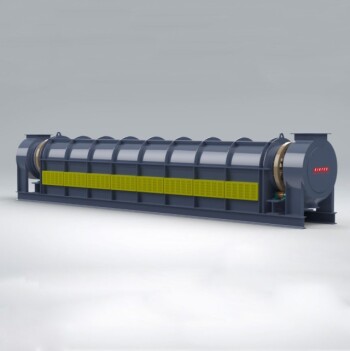
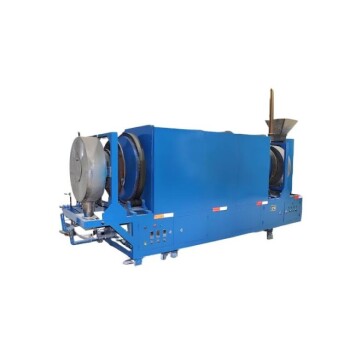
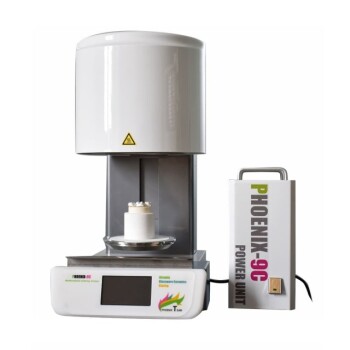
A calcination furnace serves as the primary instrument for thermal activation in the modification of natural zeolites like clinoptilolite. By applying high temperatures, the furnace physically alters the zeolite's structure to remove internal obstructions. This process is essential for preparing the material to effectively capture specific cations, such as ammonium.
The primary value of the calcination furnace lies in its ability to enhance porosity and thermal stability through controlled dehydration. By purging structural water and impurities, it unlocks the zeolite's full ion-exchange potential, directly increasing its capacity to adsorb ammonium nitrogen.
The Mechanics of Thermal Activation
Precise Temperature Control
The furnace operates by strictly adhering to specific heating curves.
This involves managing the rate at which temperature rises to ensure uniform heat distribution.
Isothermal Holding Times
Success depends on maintaining specific temperatures for set durations, known as isothermal holding times.
This sustained heat allows the necessary chemical and physical changes to occur fully throughout the material volume.
Removal of Contaminants
Natural zeolites often contain organic and inorganic impurities that block their active sites.
The high-temperature environment of the furnace effectively burns off or volatilizes these impurities.
Elimination of Structural Water
The most critical function is the removal of structural water trapped within the zeolite channels.
Evaporating this water clears the internal pathways, creating space for target ions to enter.
Impact on Adsorption Performance
Enhanced Porosity
By removing water and impurities, the furnace significantly increases the material's porosity.
This "opening up" of the structure makes the internal surface area accessible for adsorption processes.
Increased Uptake Rate
The cleared pathways allow for faster diffusion of ions into the zeolite structure.
This results in a measurable increase in the uptake rate of ammonium nitrogen.
Maximized Ion-Exchange Capacity
The thermal treatment activates the material's ion-exchange mechanisms.
This leads to a higher total ion-exchange capacity, allowing the zeolite to hold a greater quantity of ammonium cations.
The Necessity of Precision
The Importance of the Heating Curve
The reference emphasizes that heating curves must be precisely controlled.
Deviating from the optimal curve can fail to achieve the necessary activation state.
Thermal Stability Requirements
While the goal is modification, the process also enhances thermal stability.
Proper furnace operation ensures the zeolite retains its structural integrity during the modification process, rather than degrading under heat.
Making the Right Choice for Your Goal
To maximize the efficiency of clinoptilolite for ammonium nitrogen removal, consider how the furnace parameters align with your specific objectives.
- If your primary focus is Speed of Removal: Prioritize thermal treatments that maximize porosity to increase the kinetic uptake rate of the material.
- If your primary focus is Total Load Capacity: Ensure the furnace cycle is optimized to fully remove structural water, maximizing the total ion-exchange capacity.
The calcination furnace is not just a heater; it is a precision tool that unlocks the latent chemical potential of natural zeolites.
Summary Table:
| Feature | Impact on Zeolite Modification | Benefit for Ammonium Adsorption |
|---|---|---|
| Structural Water Removal | Clears internal channels and pores | Maximizes total ion-exchange capacity |
| Impurity Volatilization | Removes organic/inorganic blockages | Unlocks active sites for cation capture |
| Controlled Heating Curves | Ensures uniform thermal activation | Maintains structural integrity and stability |
| Enhanced Porosity | Increases accessible internal surface area | Significantly boosts the kinetic uptake rate |
Unlock the Full Potential of Your Materials with KINTEK
Ready to elevate your zeolite research and adsorption efficiency? KINTEK specializes in precision laboratory equipment designed for the most demanding thermal activation processes. Our advanced calcination and high-temperature furnaces (muffle, tube, and rotary) provide the precise temperature control and uniform heating curves essential for maximizing the ion-exchange capacity of clinoptilolite and other natural minerals.
Beyond thermal processing, KINTEK offers a comprehensive range of lab solutions, including crushing and milling systems for material preparation, high-pressure reactors for chemical modification, and specialized ceramics and crucibles.
Enhance your lab's performance today—Contact our technical experts at KINTEK to find the perfect thermal solution for your research!
References
- Natalia Kordala, Mirosław Wyszkowski. Zeolite Properties, Methods of Synthesis, and Selected Applications. DOI: 10.3390/molecules29051069
This article is also based on technical information from Kintek Solution Knowledge Base .
Related Products
- Electric Rotary Kiln Pyrolysis Furnace Plant Machine Calciner Small Rotary Kiln Rotating Furnace
- Electric Rotary Kiln Continuous Working Small Rotary Furnace Heating Pyrolysis Plant
- Vertical High Temperature Graphite Vacuum Graphitization Furnace
- Graphite Vacuum Furnace High Thermal Conductivity Film Graphitization Furnace
- Ultra-High Temperature Graphite Vacuum Graphitization Furnace
People Also Ask
- What is a rotary kiln electric furnace? Achieve Superior Uniform Heating for Your Materials
- What are the characteristics of the slipping, slumping, and rolling modes of bed motion? Optimize Your Rotary Process
- What are the advantages of rotary kiln furnace? Achieve Superior Uniformity & Efficiency
- What is the temperature of a rotating kiln? It Depends on Your Material and Process Goal
- What are the principles of a rotary kiln? Master the Mechanics of High-Temperature Processing