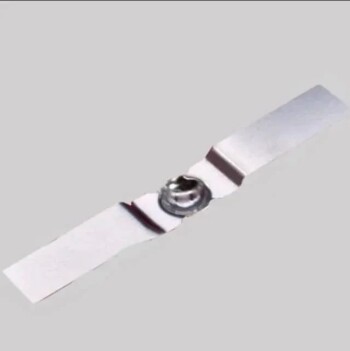
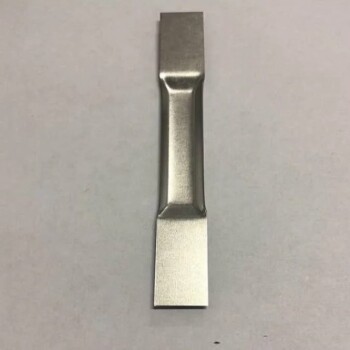
In the manufacturing of tungsten neutron source targets, the Chemical Vapor Deposition (CVD) system functions as a precision coating tool designed to encapsulate tungsten plates in a high-purity layer of metallic tantalum. By utilizing tantalum pentachloride powder as a chemical precursor, the system creates a dense, uniform barrier on the side surfaces of the plates to shield them from harsh operational environments.
Core Takeaway The CVD system is critical for extending the lifespan of tungsten targets by chemically depositing a tantalum shield. This process solves two primary failure modes: it prevents corrosion caused by direct contact with cooling water and significantly reduces the risk of radiation-induced embrittlement.
The Critical Protective Role
Combating Cooling Media Corrosion
The primary engineering challenge in this context is the interaction between the tungsten target and the cooling water media.
Without protection, the tungsten substrate is vulnerable to rapid degradation. The CVD system applies a tantalum coating specifically because of tantalum's superior corrosion resistance, effectively sealing the tungsten off from the liquid cooling environment.
Reducing Radiation Embrittlement
Beyond chemical corrosion, neutron source targets face intense radiation.
The tantalum layer deposited by the CVD system serves a structural integrity function. It acts as a protective cladding that mitigates the risk of radiation embrittlement, ensuring the tungsten plates maintain mechanical stability under bombardment.
The Deposition Mechanism
Utilizing Specific Precursors
Unlike physical coating methods (like spraying), CVD is a chemical process.
In this specific application, the system uses tantalum pentachloride powder as the source material. This volatile compound serves as the vehicle to transport tantalum atoms to the target surface.
Surface-Mediated Reaction
The process acts as a "bottom-up" technology.
The CVD system creates conditions (often involving heat or vacuum) where the vaporized precursor decomposes upon contact with the heated tungsten substrate. This chemical reaction leaves behind a solid, high-purity metallic film that bonds at a molecular level.
Achieving Uniformity and Density
The CVD method is selected over others for its ability to produce a dense and uniform layer.
Because the reaction occurs at the surface, the coating can conform perfectly to the side surfaces of the tungsten plates. This eliminates microscopic pinholes or weak points that could compromise the protective barrier.
Understanding the Trade-offs
Process Complexity
CVD is not a simple "line-of-sight" application; it is a complex chemical reactor environment.
It generally requires vacuum conditions and precise thermal control to initiate the chemical transformation. This adds variables to the manufacturing process that must be strictly monitored to ensure the film's purity.
Precursor Handling
The reliance on specific chemical precursors, such as tantalum pentachloride, introduces material handling requirements.
These precursors must be maintained at high purity levels before use. Any contamination in the precursor powder will be directly incorporated into the final protective film, potentially ruining the target.
Making the Right Choice for Your Goal
To maximize the effectiveness of a CVD system in this manufacturing context, consider your specific operational priorities:
- If your primary focus is longevity in active cooling systems: Prioritize process parameters that maximize the density of the tantalum layer to prevent even microscopic water intrusion.
- If your primary focus is mechanical reliability: Ensure the CVD process controls are tuned to achieve high-purity tantalum deposition to best mitigate radiation embrittlement effects.
The CVD system is not merely a coating device; it is the fundamental enabler that allows tungsten targets to survive the extreme hostility of a neutron source environment.
Summary Table:
| Feature | Role of CVD in Target Manufacturing |
|---|---|
| Precursor Material | Tantalum pentachloride powder |
| Coating Material | High-purity metallic tantalum |
| Primary Function | Encapsulating tungsten plates for protection |
| Failure Prevention | Inhibits cooling water corrosion & radiation embrittlement |
| Key Benefit | Produces a dense, uniform, and molecularly bonded barrier |
Elevate Your Research with KINTEK’s Advanced CVD Solutions
Precision is paramount when manufacturing neutron source targets. KINTEK specializes in high-performance laboratory equipment, offering state-of-the-art CVD and PECVD systems specifically designed for high-purity thin-film deposition. Our technology ensures your materials achieve the density and uniformity required to withstand the harshest environments.
Beyond CVD, KINTEK provides a comprehensive range of solutions for advanced material science, including:
- High-Temperature Furnaces: Muffle, tube, and vacuum furnaces for precise thermal processing.
- Material Synthesis: High-pressure reactors, autoclaves, and induction melting systems.
- Sample Preparation: Crushing, milling, and hydraulic presses for pellet and isostatic pressing.
- Lab Essentials: Specialized ceramics, crucibles, and cooling solutions like ULT freezers.
Don't compromise on the integrity of your targets. Partner with KINTEK to access the tools and expertise needed for superior protective cladding and structural stability. Contact our experts today to find the perfect solution for your lab!
References
- Б.В. Борц, В. И. Ткаченко. NANO-MECHANISMS OF CONNECTION IN THE SOLID PHASE OF TUNGSTEN AND TANTALUM IN THE MANUFACTURE OF A NEUTRON SOURCE TARGET. DOI: 10.46813/2023-144-058
This article is also based on technical information from Kintek Solution Knowledge Base .
Related Products
- Chemical Vapor Deposition CVD Equipment System Chamber Slide PECVD Tube Furnace with Liquid Gasifier PECVD Machine
- Microwave Plasma Chemical Vapor Deposition MPCVD Machine System Reactor for Lab and Diamond Growth
- 915MHz MPCVD Diamond Machine Microwave Plasma Chemical Vapor Deposition System Reactor
- Customer Made Versatile CVD Tube Furnace Chemical Vapor Deposition Chamber System Equipment
- Split Chamber CVD Tube Furnace with Vacuum Station Chemical Vapor Deposition System Equipment Machine
People Also Ask
- What are the advantages of chemical vapor deposition? Achieve Superior Thin Films for Your Lab
- What types of substrates are used in CVD to facilitate graphene films? Optimize Graphene Growth with the Right Catalyst
- What is the chemical vapor deposition growth process? Build Superior Thin Films from the Atom Up
- How expensive is chemical vapor deposition? Understanding the True Cost of High-Performance Coating
- Why is Chemical Vapor Deposition (CVD) equipment uniquely suited for constructing hierarchical superhydrophobic structures?