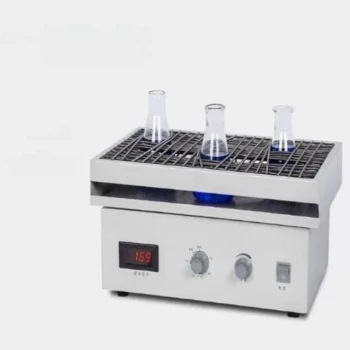
A constant temperature orbital shaker functions as the primary driver of environmental consistency during the biosynthesis of zirconium dioxide nanoparticles. By maintaining high-frequency rotation, typically at 200 rpm, the device provides continuous mechanical power to the liquid medium. This mechanical agitation is essential for ensuring the Streptomyces sp. strain receives sufficient dissolved oxygen while facilitating the uniform mixing of the potassium hexafluorozirconate precursor with bacterial metabolites.
By simultaneously optimizing biological growth and chemical reaction kinetics, the orbital shaker ensures efficient nucleation and the production of uniform, high-quality nanoparticles.
Optimizing the Biological Environment
The first critical function of the orbital shaker is to support the living biological agent—the Streptomyces sp. strain—required for synthesis.
Ensuring Dissolved Oxygen Availability
Streptomyces sp. is an aerobic organism that requires oxygen to thrive and produce the necessary metabolites for reduction.
The high-frequency rotation (200 rpm) creates a dynamic liquid surface area. This maximizes the transfer of oxygen from the air into the liquid medium, ensuring the strain does not suffer from oxygen deprivation during the cultivation phase.
Maintaining Homogeneity
Without constant agitation, bacterial cells tend to settle or clump, creating micro-environments with varying nutrient levels.
The orbital motion provides continuous mechanical power to keep the strain suspended. This ensures that every cell has equal access to nutrients in the medium, leading to consistent growth and metabolite production across the entire culture.
Facilitating Chemical Synthesis
Once the biological environment is established, the shaker plays a pivotal role in the bioreduction phase where the actual nanoparticles are formed.
Promoting Precursor Interaction
The synthesis relies on the interaction between the potassium hexafluorozirconate precursor solution and the metabolites produced by the strain.
The shaker ensures uniform mixing of these two components. By creating a dynamic mixing environment, the device increases the contact frequency between the precursor molecules and the biological reducing agents.
Controlling Nucleation and Uniformity
The quality of a nanoparticle is defined by its size and shape consistency.
Agitation enhances the efficiency of the nucleation reaction, which is the initial step of crystal formation. By preventing local concentration gradients (hotspots), the shaker ensures that nucleation occurs evenly throughout the vessel, resulting in the uniformity of the final zirconium dioxide nanoparticles.
Understanding the Trade-offs
While agitation is critical, the parameters must be calibrated correctly to balance biological health with chemical efficiency.
The Balance of Shear Force
The mechanical power provided by the rotation introduces shear forces to the fluid.
While necessary for mixing, these forces must be controlled. The goal is to provide enough energy to disperse nutrients and precursors without creating excessive turbulence that could physically damage the Streptomyces cells or disrupt the delicate self-assembly of the nanoparticles.
Temperature Stability
The "constant temperature" aspect of the device is as vital as the orbital motion.
Fluctuations in temperature can alter the metabolic rate of the bacteria and the kinetics of the chemical reaction. The shaker maintains a stable thermal environment to ensure the bioreduction process proceeds at a predictable and optimal rate.
Making the Right Choice for Your Goal
To maximize the success of your biosynthesis project, align your equipment settings with your specific objectives.
- If your primary focus is Bacterial Viability: Prioritize maintaining the 200 rpm rotation speed to ensure the dissolved oxygen levels remain high enough to support vigorous Streptomyces growth.
- If your primary focus is Nanoparticle Consistency: Focus on the continuity of the agitation to prevent stagnation, ensuring the precursor solution mixes evenly for uniform particle size.
Success in biosynthesis relies on treating the orbital shaker not just as a mixer, but as a precise instrument for controlling reaction kinetics.
Summary Table:
| Feature | Function in Biosynthesis | Impact on Result |
|---|---|---|
| High-Frequency Rotation (200 rpm) | Enhances dissolved oxygen transfer | Supports vigorous Streptomyces sp. growth |
| Continuous Agitation | Maintains medium homogeneity | Prevents cell clumping and nutrient gradients |
| Uniform Mixing | Increases precursor-metabolite contact | Ensures efficient nucleation and reaction kinetics |
| Thermal Stability | Controls metabolic and chemical rates | Produces uniform, high-quality nanoparticles |
Precision Biosynthesis Starts with KINTEK
Unlock the full potential of your nanomaterial research with KINTEK’s advanced laboratory solutions. Whether you are optimizing Streptomyces sp. growth or controlling complex nucleation reactions, our high-performance constant temperature orbital shakers and shakers provide the mechanical power and thermal stability your synthesis demands.
From high-temperature furnaces and crushing systems to precision hydraulic presses and high-temperature high-pressure reactors, KINTEK specializes in the equipment and consumables that drive scientific breakthroughs. Don’t let inconsistent agitation compromise your nanoparticle uniformity.
Ready to elevate your lab’s efficiency? Contact us today to find the perfect equipment for your research!
References
- Gözde Koşarsoy Ağçeli, Zümriye Aksu. Biosynthesis of Zirconium dioxide nanoparticles by Streptomyces sp. HC1: Characterization and Bioactivity. DOI: 10.18185/erzifbed.1174027
This article is also based on technical information from Kintek Solution Knowledge Base .
Related Products
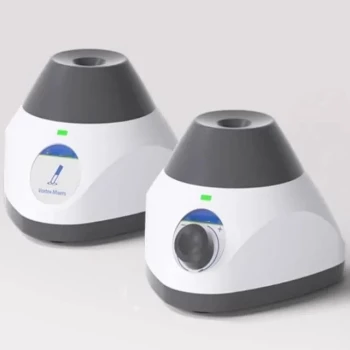
- Laboratory Vortex Mixer Orbital Shaker Multifunctional Rotation Oscillation Mixer
- Laboratory Small Constant Temperature Heated Magnetic Stirrer Heater and Stirrer
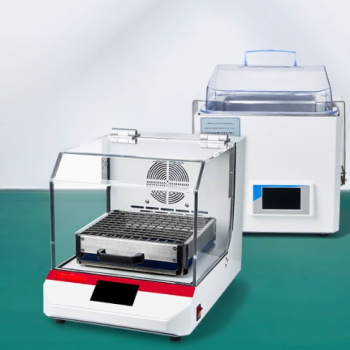
- Shaking Incubators for Diverse Laboratory Applications
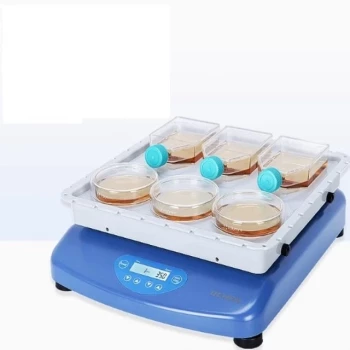
- Laboratory Oscillating Orbital Shaker
- High Temperature Constant Temperature Heating Circulator Water Bath Chiller Circulator for Reaction Bath
People Also Ask
- What is the role of a laboratory orbital shaker in copper recovery? Optimize Industrial Waste Liquid Processing
- What is the role of a laboratory orbital shaker in activated carbon synthesis? Maximize Pore Depth & Surface Area
- What is a laboratory mixer used for? Choose the Right Tool for Liquids or Solids
- What is a laboratory mixer? A Guide to Achieving Perfect Sample Homogeneity
- What are laboratory mixers used for? Achieve Perfect Sample Homogeneity and Reliable Results