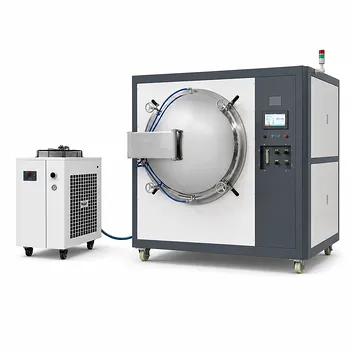
A high-precision controlled atmosphere furnace functions as a rigorous environmental simulator designed to replicate the extreme conditions found within Very High Temperature Reactors (VHTR). Specifically, it maintains a stable temperature ceiling of 950°C while exerting exact control over the concentration of critical gas impurities—Hydrogen (H2), Water Vapor (H2O), Methane (CH4), and Carbon Monoxide (CO).
The core value of this equipment lies in its ability to decouple thermal stress from chemical reactivity. By stabilizing the environment, it transforms theoretical variables into observable data, ensuring that studies on oxidation, decarburization, and carburization in Alloy 617 remain accurate and reproducible.
Simulating the VHTR Helium Environment
To understand the degradation of Alloy 617, one must move beyond simple heating and look at the chemical context. This furnace creates a specific micro-environment that mirrors the VHTR coolant system.
Thermal Stability at Extremes
The furnace is engineered to reach and sustain temperatures up to 950°C.
This stability is non-negotiable. Even minor fluctuations at this thermal range can alter reaction kinetics, rendering long-term degradation data unreliable.
Precise Impurity Regulation
The defining feature of this equipment is its ability to manage specific impurities found in helium coolants.
Operators can finely tune the presence of H2, H2O, CH4, and CO. This control allows researchers to recreate the exact chemical potential that Alloy 617 will face during actual reactor operation.
Analyzing Material Degradation Mechanisms
The purpose of controlling the atmosphere is to induce and observe specific chemical failures in the alloy. The furnace enables the study of three primary degradation modes.
Oxidation Research
High temperatures often lead to surface oxidation.
By controlling the water vapor and oxygen potential, the furnace allows researchers to measure how oxide layers form or break down on Alloy 617 over time.
Carburization and Decarburization
The balance of carbon within the alloy is critical for its structural integrity.
The furnace regulates methane and carbon monoxide levels to simulate environments that either strip carbon from the alloy (decarburization) or force excess carbon into it (carburization). Both reactions can drastically reduce the material's lifespan.
Common Pitfalls and Trade-offs
While high-precision furnaces are essential, they introduce specific challenges that must be managed to ensure data integrity.
Complexity of Gas Equilibrium
Achieving the correct ratio of impurities (e.g., the ratio of H2 to H2O) is difficult but critical.
If the gas mixture is even slightly off, the furnace may simulate a reducing environment when an oxidizing one was intended. This invalidates the resulting corrosion data.
The Limits of Simulation
This equipment provides a "clean" simulation of a messy reality.
While it ensures reproducibility—a key requirement for scientific validation—it may not capture undefined variables or synergistic effects present in a live reactor core that are not strictly defined by the four controlled gases.
Making the Right Choice for Your Research
To maximize the utility of a controlled atmosphere furnace in Alloy 617 studies, align your experimental setup with your specific data requirements.
- If your primary focus is Validation: Ensure the furnace's thermal controllers are calibrated to maintain 950°C with negligible variance to guarantee the reproducibility of experimental data.
- If your primary focus is Chemical Resilience: prioritize the precision of the gas flow controllers for H2, H2O, CH4, and CO to accurately stress-test the alloy against decarburization or oxidation.
Success in studying high-temperature degradation depends entirely on the fidelity of the environment you create.
Summary Table:
| Feature | Specification/Function |
|---|---|
| Temperature Ceiling | Up to 950°C with high thermal stability |
| Controlled Impurities | H2, H2O, CH4, and CO |
| Target Material | Alloy 617 (Inconel 617) |
| Core Mechanisms | Oxidation, Carburization, Decarburization |
| Primary Goal | Decoupling thermal stress from chemical reactivity |
Advance Your Material Science Research with KINTEK
Precise control over high-temperature environments is non-negotiable for validating material integrity. KINTEK specializes in advanced laboratory solutions, offering high-performance controlled atmosphere and vacuum furnaces specifically designed for rigorous research like Alloy 617 degradation studies.
Our extensive portfolio—ranging from CVD systems and rotary furnaces to high-pressure reactors and specialized consumables like ceramics and crucibles—ensures your lab is equipped for accuracy and reproducibility. Partner with KINTEK to achieve the fidelity your scientific validation demands.
Contact Our Technical Experts Today
References
- Dong-Jin Kim, Ji-Yeon Park. INVESTIGATION ON MATERIAL DEGRADATION OF ALLOY 617 IN HIGH TEMPERATURE IMPURE HELIUM COOLANT. DOI: 10.5516/net.2011.43.5.429
This article is also based on technical information from Kintek Solution Knowledge Base .
Related Products
- 1200℃ Controlled Atmosphere Furnace Nitrogen Inert Atmosphere Furnace
- 1700℃ Controlled Atmosphere Furnace Nitrogen Inert Atmosphere Furnace
- 1400℃ Controlled Atmosphere Furnace with Nitrogen and Inert Atmosphere
- Controlled Nitrogen Inert Hydrogen Atmosphere Furnace
- Mesh belt controlled atmosphere furnace
People Also Ask
- What is controlled atmosphere furnace? Precision Heating Without Oxidation for Superior Materials
- What are the two primary purposes of using a controlled atmosphere? Master Protection vs. Material Modification
- Can you braze copper to brass without flux? Yes, but only under these specific conditions.
- What is a controlled atmosphere furnace? Achieve Purity and Precision in High-Temp Processing
- What is the role of the furnace atmosphere? Master Precise Metallurgical Control for Your Heat Treatment