The primary function of a magnetic stirrer during the alkaline etching of nano-silicon carbide is to maintain the powder in a highly dispersed, dynamic state within the sodium hydroxide solution. By providing continuous power through an auxiliary magnetic bead, the stirrer prevents particle settlement and ensures that the chemical etching reaction proceeds synchronously. This mechanical intervention is essential for producing an active substrate with a high specific surface area.
Core Insight: The magnetic stirrer is not merely mixing fluids; it is fighting the natural tendency of nano-particles to agglomerate. Its continuous agitation is the defining factor that ensures every particle is etched equally, directly determining the surface area quality of the final material.
The Mechanics of Particle Dispersion
Combating Sedimentation
Nano-silicon carbide particles have a natural tendency to settle and clump together when placed in a liquid medium.
Without active intervention, these particles would form a dense layer at the bottom of the vessel.
The magnetic stirrer provides continuous kinetic energy to the solution, forcing the particles to remain suspended in a dynamic circulation state throughout the process.
Ensuring Chemical Access
For alkaline etching to work, the sodium hydroxide must make contact with the surface of the silicon carbide.
If the particles agglomerate, the etchant cannot reach the inner surfaces of the clumps.
By keeping the powder highly dispersed, the stirrer ensures that the sodium hydroxide solution surrounds each individual particle, maximizing the solid-liquid contact interface.
Synchronicity of the Reaction
Uniform Etching Rates
The ultimate goal of this process is to create a substrate with high specific surface area.
To achieve this, the etching reaction must happen at the same rate for all particles simultaneously.
The stirrer promotes this "reaction synchronicity" by ensuring no single group of particles is starved of reactants while others are over-exposed.
Thermal Homogeneity
The etching process occurs within a high-temperature water bath.
While the primary function is particle dispersion, the stirrer also ensures even heat distribution throughout the container.
This prevents localized hot spots or cold zones, which could otherwise lead to inconsistent reaction rates and unpredictable material properties.
Common Pitfalls to Avoid
The Risk of Inadequate Agitation
If the stirring speed is too low, the "dynamic circulation state" collapses.
This leads to partial sedimentation, resulting in a batch of material where some particles are over-etched and others remain untreated.
The Problem of Agglomeration
Once nano-particles agglomerate during a heated reaction, they are difficult to re-separate.
The stirrer must be active before and during the heating phase to prevent these clusters from forming permanently.
Agglomerated products inevitably have a lower specific surface area, rendering the etching process less effective.
Making the Right Choice for Your Goal
To maximize the efficacy of your alkaline etching process, consider the following technical focus points:
- If your primary focus is Maximizing Surface Area: Ensure the stirring speed is sufficient to maintain full suspension without creating a vortex that separates the solids from the liquid.
- If your primary focus is Reproducibility: Standardize the size of the magnetic bead and the rotational speed, as these directly dictate the kinetic energy imparted to the particles.
The success of nano-silicon carbide etching relies less on the chemistry of the solution and more on the mechanical consistency of the suspension.
Summary Table:
| Function Category | Key Mechanism | Benefit to Nano-SiC Process |
|---|---|---|
| Particle Dispersion | Combats sedimentation via kinetic energy | Prevents clumping and maintains dynamic suspension |
| Chemical Access | Maximizes solid-liquid contact interface | Ensures etchant reaches all individual particle surfaces |
| Reaction Sync | Uniform distribution of reactants | Achieves consistent etching rates across the entire batch |
| Thermal Control | Even heat distribution in water bath | Prevents localized hotspots for predictable material properties |
Elevate Your Nano-Material Synthesis with KINTEK
Precision in alkaline etching requires the perfect balance of chemical exposure and mechanical consistency. At KINTEK, we specialize in providing high-performance laboratory equipment designed for rigorous research environments. From advanced magnetic stirrers and shakers that ensure perfect particle dispersion to high-temperature high-pressure reactors and cooling solutions for precise thermal management, we empower your lab to achieve superior material properties and high specific surface areas.
Ready to optimize your silicon carbide processing? Contact our technical experts today to discover how our comprehensive range of equipment and consumables can streamline your workflow and guarantee reproducible results.
References
- Zhiqi Zhu, Yanqiu Zhu. SiC@FeZnZiF as a Bifunctional Catalyst with Catalytic Activating PMS and Photoreducing Carbon Dioxide. DOI: 10.3390/nano13101664
This article is also based on technical information from Kintek Solution Knowledge Base .
Related Products
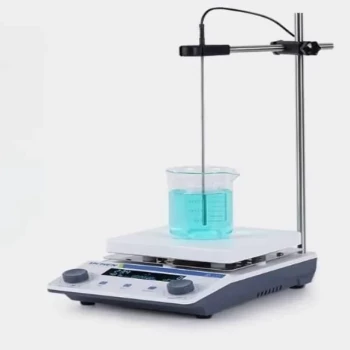
- Laboratory Small Constant Temperature Heated Magnetic Stirrer Heater and Stirrer
- Custom PTFE Teflon Parts Manufacturer for Magnetic Stirring Bar
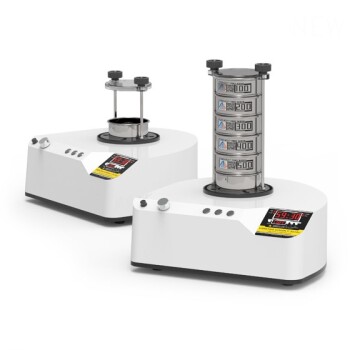
- Three-dimensional electromagnetic sieving instrument
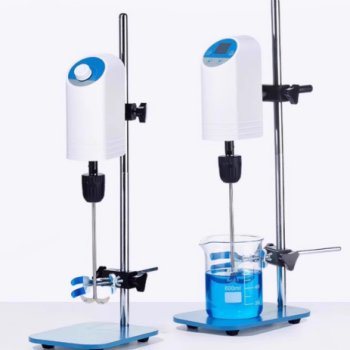
- High Performance Laboratory Stirrers for Diverse Applications
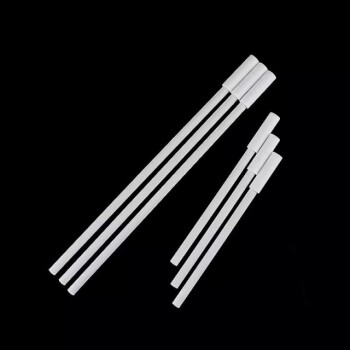
- Custom PTFE Teflon Parts Manufacturer for PTFE Stirring Bar Recovery Rod
People Also Ask
- What role does a magnetic stirrer with heating play in ZnO nanoparticle synthesis? Precision Control for Quality Results
- What role does a constant temperature heating magnetic stirrer play in MFC-HAp synthesis? Achieve Material Homogeneity
- What is the function of a laboratory magnetic stirrer in Ni–Cr–P electrodeposition? Optimize Ion Transport & Coating
- Why is a laboratory magnetic stirrer required for benzoic acid esters? Boost Reaction Speed & Yield with High RPM
- What role does a laboratory magnetic stirrer play in TiO2 and TiO2-Ag sol preparation? Master Chemical Kinetics