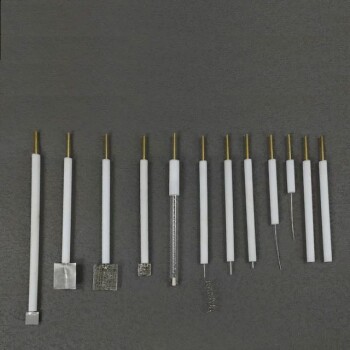
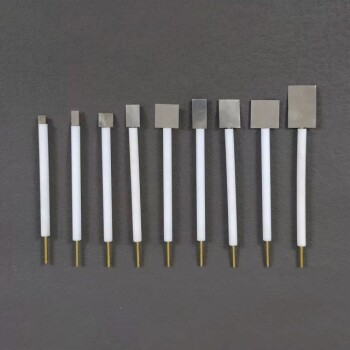
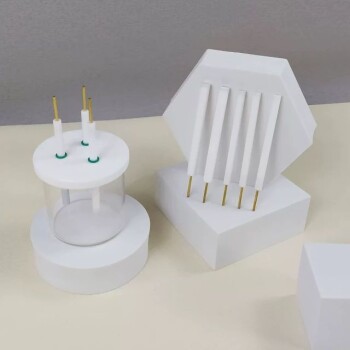
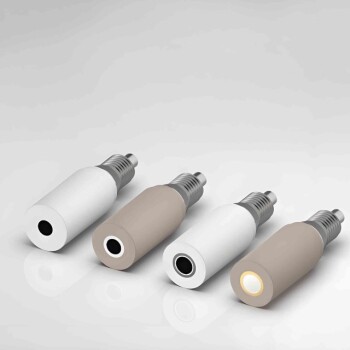
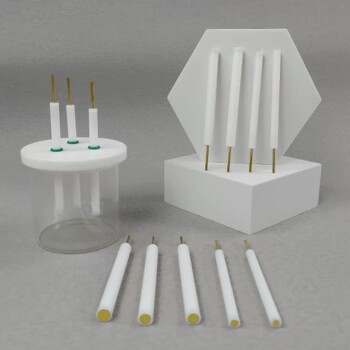
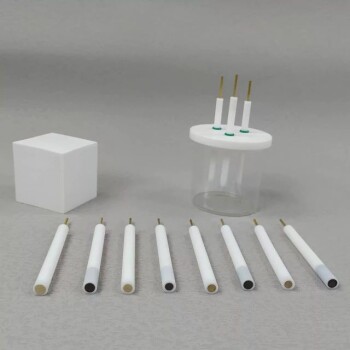
A platinum counter electrode serves as the stable, chemically inert conduit for current flow within a three-electrode system. It completes the electrical circuit, allowing polarization current to pass uniformly through the working electrode without participating in the reaction itself. By resisting dissolution and side reactions even under high-temperature and high-pressure conditions, it ensures that the measured data reflects only the behavior of the material being tested.
Core Takeaway In high-stress electrochemical environments, the counter electrode must carry charge without altering the electrolyte chemistry. A platinum electrode acts as a non-reactive auxiliary component that facilitates uniform current distribution, preventing electrical interference or impurity introduction from distorting the polarization curves of the test sample.
The Mechanics of the Counter Electrode
Completing the Electrical Circuit
In a three-electrode setup, the functions of current carrying and potential measurement are separated. The platinum counter electrode (also known as the auxiliary electrode) is solely responsible for carrying the current required to polarize the working electrode.
Without this distinct path for charge exchange, the reference electrode would become overloaded, compromising the accuracy of voltage measurements.
Chemical Inertness at High Temperatures
High-temperature and high-pressure environments, such as those used to test oil well casings or zinc alloys, aggressively accelerate chemical reactions. A standard metal electrode might dissolve or corrode under these conditions.
High-purity platinum is used specifically because it remains chemically stable in these harsh environments. It does not undergo anodic dissolution, meaning it will not degrade and release impurity ions into the electrolyte that could skew test results.
Preventing Electrical Interference
The goal of the experiment is to capture the dynamic potential polarization curves of the working electrode (the sample). If the counter electrode reacts, it generates its own electrochemical signals.
Platinum prevents this "noise" by supporting charge transfer without supporting significant side reactions. This ensures the current flowing through the system creates a signal that originates strictly from the interface of the sample, not the counter electrode.
Optimizing Data Accuracy
Uniform Current Distribution
For accurate corrosion testing, the current must enter the working electrode evenly. The geometry of the platinum electrode—often a plate, sheet, or mesh—is critical here.
A platinum mesh or sheet provides a large effective surface area. This ensures the polarization current is distributed uniformly across the working electrode, preventing localized variances that could lead to erroneous readings.
Withstanding Current Loads
During aggressive polarization, the system may demand high current densities. A counter electrode with insufficient surface area or conductivity becomes a bottleneck.
Platinum's exceptional electrical conductivity combined with a large surface area allows it to withstand significant current loads. It facilitates the necessary electron transfer without acting as a limiting factor in the circuit.
Common Pitfalls and Limitations
The Surface Area Ratio
A critical trade-off in experimental design is the size ratio between the counter and working electrodes. The platinum counter electrode generally must have a surface area larger than that of the working electrode.
If the platinum electrode is too small, it may limit the current flow, preventing the working electrode from reaching the desired polarization levels. This leads to incomplete data regarding the sample's corrosion behavior.
Cost vs. Necessity
Platinum is expensive, which can be a limiting factor for large-scale setups. However, using cheaper alternatives in high-temperature, high-pressure systems is a false economy.
Lower-grade metals may oxidize or react with the electrolyte (especially in acidic or chloride-rich solutions), permanently altering the solution chemistry and rendering the data invalid.
Making the Right Choice for Your Goal
When designing a high-temperature, high-pressure electrochemical test, your electrode configuration determines the validity of your data.
- If your primary focus is corrosion accuracy: Ensure the platinum electrode is of high purity to prevent the release of impurity ions that could artificially accelerate or inhibit corrosion on your sample.
- If your primary focus is high-current polarization: Select a platinum mesh or large plate to maximize surface area, ensuring the counter electrode does not throttle the current required for the test.
By selecting a high-purity platinum counter electrode with adequate surface area, you eliminate experimental variables and ensure your data represents the true performance of your material.
Summary Table:
| Feature | Platinum Counter Electrode Role | Benefit in Testing |
|---|---|---|
| Chemical Stability | Resists dissolution in harsh environments | Prevents electrolyte contamination and noise |
| Current Flow | Completes the circuit with the working electrode | Enables accurate polarization of the sample |
| Surface Area | Large effective area (mesh, plate, sheet) | Ensures uniform current distribution |
| Conductivity | High electrical conductivity | Withstands significant current loads without bottlenecks |
Elevate Your Electrochemical Research with KINTEK
Precise data starts with superior components. KINTEK specializes in providing high-performance laboratory equipment designed for the most demanding environments. Whether you are conducting corrosion studies or battery research, our high-purity platinum counter electrodes, electrolytic cells, and electrodes ensure your results are accurate and repeatable.
From high-temperature high-pressure reactors to precision crushing, milling, and hydraulic presses, KINTEK delivers the durability and precision that leading researchers trust. Don't let inferior materials compromise your data—partner with a specialist who understands the rigors of high-stress testing.
Ready to optimize your lab setup? Contact us today to explore our comprehensive range of electrochemical tools and high-temperature solutions tailored to your specific application.
References
- Mifeng Zhao, Zihan Chen. Corrosion Studies of Temperature-Resistant Zinc Alloy Sacrificial Anodes and Casing Pipe at Different Temperatures. DOI: 10.3390/ma16227120
This article is also based on technical information from Kintek Solution Knowledge Base .
Related Products
- Platinum Auxiliary Electrode for Laboratory Use
- Platinum Sheet Electrode for Laboratory and Industrial Applications
- Rotating Platinum Disk Electrode for Electrochemical Applications
- Platinum Sheet Electrode for Battery Lab Applications
- RRDE rotating disk (ring disk) electrode / compatible with PINE, Japanese ALS, Swiss Metrohm glassy carbon platinum
People Also Ask
- What is the function of a platinum electrode as an auxiliary electrode? Ensure Precise Nickel Coating Corrosion Testing
- Why is platinum typically selected as the auxiliary electrode for electrochemical testing of oxazoline inhibitors?
- What does the auxiliary electrode do? Ensuring Accurate Electrochemical Measurements
- What are the roles of Pt counter and reference electrodes in nitrided steel testing? Optimize Your Electrochemical Data
- What are the advantages of using a platinum counter electrode? Ensure Purity in Photocatalytic Coating Deposition