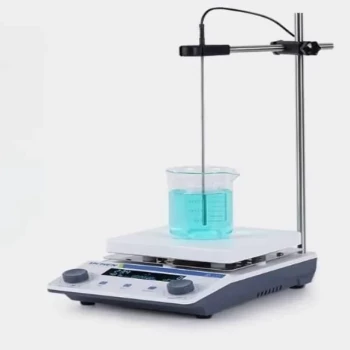
Magnetic stirring serves as the primary stabilization mechanism during the preparation of TiAl composite slurries. Its fundamental function is to continuously agitate the mixture of Titanium (Ti) powder, Aluminum (Al) powder, and organic solvents to maintain a homogeneous suspension.
By providing mechanical stirring for extended periods, this equipment counteracts the natural tendency of high-density metal powders to settle. This process is the prerequisite for achieving a slurry with the uniform composition and viscosity needed for high-quality material preforms.
The Mechanics of Slurry Stabilization
Preventing Powder Precipitation
The most critical function of the magnetic stirrer is preventing sedimentation.
Titanium and Aluminum powders have high densities relative to organic solvents. Without constant mechanical intervention, these powders would rapidly precipitate (settle) to the bottom of the container.
Ensuring Component Homogeneity
Magnetic stirring ensures the thorough integration of all slurry components.
It actively mixes the metal powders with the organic solvents and dissolved PMMA (polymethyl methacrylate). This continuous motion guarantees that the binder and the metal particles are evenly dispersed throughout the liquid volume.
Establishing Appropriate Viscosity
The equipment facilitates the formation of a suspended slurry with a consistent texture.
By maintaining a constant state of flow, the stirrer helps achieve an appropriate viscosity. This rheological state is vital for the handling and processing steps that follow slurry preparation.
Impact on Final Material Structure
Uniform Matrix Distribution
The quality of the slurry directly dictates the quality of the final composite.
A well-stirred slurry results in a uniform matrix distribution in the subsequent preforms. Any inconsistency during this stirring stage would lead to uneven material properties in the final TiAl composite.
Understanding Process Constraints
The Necessity of Duration
Magnetic stirring is not an instantaneous process.
To ensure total uniformity and stability, the process typically requires extended periods exceeding 4 hours. Rushing this step risks incomplete mixing and unstable suspensions.
Suspension vs. Dispersion
It is important to distinguish the role of magnetic stirring from other techniques.
While magnetic stirring is excellent for maintaining suspension and preventing settling, it is distinct from techniques like ultrasonic dispersion (often used for breaking down agglomerated ceramic particles). Magnetic stirring focuses on macroscopic homogeneity and preventing precipitation of the heavy metal powders.
Making the Right Choice for Your Goal
To optimize your TiAl slurry preparation, consider the following based on your specific objectives:
- If your primary focus is Compositional Uniformity: Ensure the magnetic stirring operation runs continuously for at least 4 hours to prevent any density-driven separation of Ti and Al powders.
- If your primary focus is Processability: Monitor the slurry to confirm it reaches a stable, suspended state with the appropriate viscosity before attempting to cast or form preforms.
The effectiveness of your final TiAl composite relies entirely on the magnetic stirrer’s ability to keep heavy metal powders essentially "defying gravity" during the mixing phase.
Summary Table:
| Feature | Function in TiAl Slurry Preparation | Benefit |
|---|---|---|
| Sedimentation Control | Counteracts gravity for high-density Ti/Al powders | Prevents powder precipitation and waste |
| Homogeneity | Uniformly disperses metal powders and PMMA binders | Ensures consistent material matrix properties |
| Rheology Control | Maintains constant flow and state of suspension | Achieves ideal viscosity for casting and forming |
| Process Duration | Continuous agitation for 4+ hours | Guarantees complete stabilization of the mixture |
Elevate Your Composite Material Research with KINTEK
Precision in TiAl slurry preparation is the foundation of high-performance composite manufacturing. At KINTEK, we specialize in the high-end laboratory equipment necessary for advanced material science, including specialized magnetic stirring systems, crushing and milling systems, and high-temperature furnaces for sintering your final preforms.
Whether you are refining battery research, optimizing dental materials, or developing aerospace composites, our comprehensive portfolio—from hydraulic presses to ceramic crucibles—is designed to meet the most rigorous lab standards.
Ready to optimize your lab’s efficiency and material uniformity? Contact our technical experts today to find the perfect equipment solution for your specific application.
Related Products
- Laboratory Small Constant Temperature Heated Magnetic Stirrer Heater and Stirrer
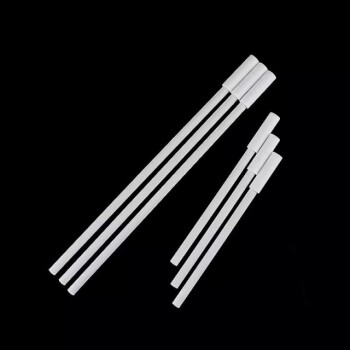
- Custom PTFE Teflon Parts Manufacturer for Magnetic Stirring Bar
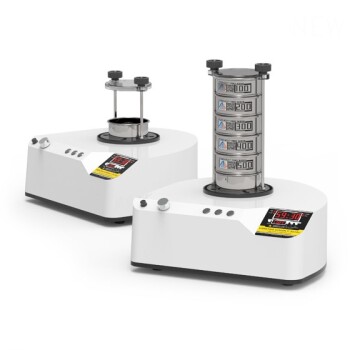
- Three-dimensional electromagnetic sieving instrument
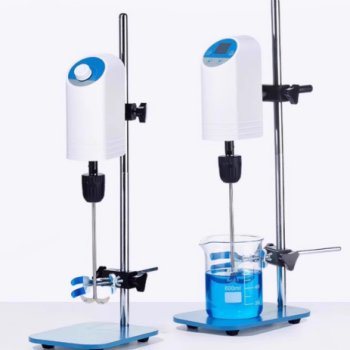
- High Performance Laboratory Stirrers for Diverse Applications
- Custom PTFE Teflon Parts Manufacturer for PTFE Stirring Bar Recovery Rod
People Also Ask
- What role does a magnetic stirrer with heating play in ZnO nanoparticle synthesis? Precision Control for Quality Results
- What role does a constant temperature heating magnetic stirrer play in MFC-HAp synthesis? Achieve Material Homogeneity
- What is the function of a laboratory magnetic stirrer in Ni–Cr–P electrodeposition? Optimize Ion Transport & Coating
- Why is a laboratory magnetic stirrer required for benzoic acid esters? Boost Reaction Speed & Yield with High RPM
- What role does a laboratory magnetic stirrer play in TiO2 and TiO2-Ag sol preparation? Master Chemical Kinetics