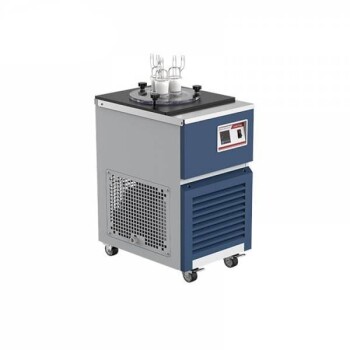
Oxygen and moisture traps serve as a critical purification system integrated into the gas line of an alumina tube furnace. Their primary function is to deeply scrub the inert argon gas flow, removing trace amounts of water vapor and oxygen before the gas enters the reaction chamber. This purification is essential to prevent chemical degradation during the high-temperature synthesis of air-sensitive sulfide electrolytes.
The presence of even microscopic impurities in the gas stream can lead to the oxidation or hydrolysis of sulfide raw materials. Therefore, these traps are the primary safeguard for ensuring the phase purity of the final solid-state electrolyte product.
The Critical Need for Purification
Vulnerability of Sulfide Materials
Sulfide solid-state electrolytes are chemically fragile. They are distinct from oxide-based materials because they possess extreme sensitivity to moisture and oxygen.
The Risk of Hydrolysis and Oxidation
When sulfide raw materials encounter water vapor, they undergo hydrolysis. Similarly, exposure to oxygen leads to unwanted oxidation.
Impact on Phase Purity
If these chemical reactions occur, the material degrades, leading to the formation of impurities. These impurities compromise the structural integrity and ionic conductivity of the electrolyte, resulting in a failed synthesis.
Operational Mechanism in the Furnace Setup
Deep Purification of Argon
Standard argon gas cylinders may still contain trace levels of contaminants. The traps are connected in series with the gas line to act as a rigorous filtration stage.
Ensuring Purity Over Time
Synthesis processes often require long-duration high-temperature sintering, sometimes lasting up to 17 hours. Over such extended periods, the cumulative effect of trace impurities would be significant without active trapping.
Protecting the Alumina Tube Environment
By scrubbing the gas before it enters the furnace, the traps ensure that the environment inside the alumina tube remains strictly inert. This allows the synthesis to proceed solely based on the intended thermal reactions.
Operational Considerations and Trade-offs
Trap Saturation
Traps act like sponges for contaminants; they have a finite capacity. Once saturated with oxygen or moisture, they cease to function and can even release contaminants back into the stream if not monitored.
System Complexity
Adding traps increases the complexity of the gas delivery system. It introduces additional connection points, which, if not sealed correctly, can ironically become sources of leaks.
Ensuring Successful Synthesis
To maximize the effectiveness of your furnace setup, consider the following strategic priorities:
- If your primary focus is phase purity: Verify that your traps are rated for deep purification and are replaced or regenerated well before they reach saturation.
- If your primary focus is process consistency: Implement a strict leak-checking protocol for the series connections between the traps and the furnace inlet.
The success of sulfide electrolyte synthesis relies less on the heat itself and more on the absolute purity of the inert atmosphere surrounding the reaction.
Summary Table:
| Feature | Function in Synthesis | Impact on Material Quality |
|---|---|---|
| Oxygen Removal | Prevents oxidation of sulfide raw materials | Maintains ionic conductivity & structural integrity |
| Moisture Scrubbing | Inhibits hydrolysis reactions | Prevents formation of harmful byproduct gases and impurities |
| Inert Gas Purification | Deep cleans Argon/Nitrogen gas lines | Ensures a strictly controlled atmosphere for 17+ hour sintering |
| Series Connection | Rigorous multi-stage filtration | Provides a primary safeguard for air-sensitive phase purity |
Elevate Your Material Research with KINTEK Precision
Don't let trace contaminants compromise your sulfide solid-state electrolyte research. KINTEK specializes in advanced laboratory solutions, providing the high-performance alumina tube furnaces and gas purification systems essential for air-sensitive synthesis.
Our comprehensive portfolio supports your entire workflow—from crushing and milling systems for precursor preparation to high-temperature furnaces and hydraulic presses for final pellet production. Whether you need reliable PTFE products, ceramics, or crucibles, we deliver the quality your lab demands.
Ready to achieve superior phase purity and process consistency? Contact KINTEK today to consult with our experts on the perfect furnace and purification setup for your specific research goals!
Related Products
- Vacuum Cold Trap Chiller Indirect Cold Trap Chiller
- Oxygen Probe to Measure Temperature and Active Oxygen Content in Molten Steel
People Also Ask
- Why are precision Condensers and Cold Traps necessary at the collection end of a pyrolysis system? Maximize Yield & Purity
- Why is it necessary to configure efficient cold traps in membrane distillation? Ensure Flux Stability & Data Accuracy
- What is the purpose of connecting a cold trap at the reactor outlet? Protect Equipment and Analyze Liquid Products
- What is the role of glass condensation components in arsenic collection? Optimize Niccolite Roasting & Kinetics
- What is the function of a cold trap in bio-ethanol and methane reforming experiments? Optimize Purity & Protect Systems