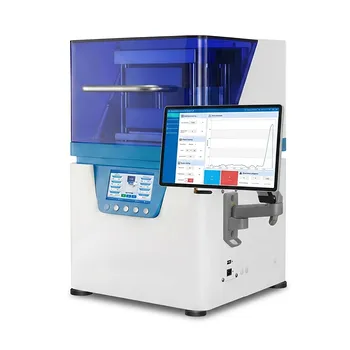
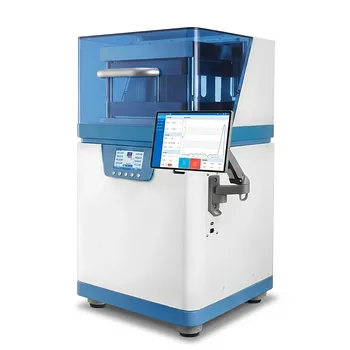
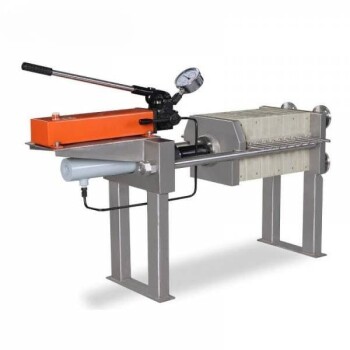
Precision in battery testing starts with mechanical control. Laboratory hydraulic presses and battery sealing machines are indispensable for neutralizing mechanical variables that would otherwise skew electrochemical data. By providing uniform compaction and hermetic sealing, these tools allow researchers to isolate the true performance of Ni-rich cathode materials—such as capacity and cycling stability—within a standardized environment.
The core value of these tools lies in their ability to transform raw powders and components into a repeatable, standardized electrochemical system. Without precise pressure and sealing, internal resistance and atmospheric contamination become the dominant factors in test results rather than the cathode chemistry itself.
Enhancing Electrode Structural Integrity
The performance of Ni-rich cathodes is highly dependent on the quality of the interface between the active material and the current collector.
Optimizing Contact Resistance
A laboratory hydraulic press applies stable linear pressure to compact active materials, conductive agents, and binders onto the current collector. This physical compaction process enhances the electronic contact paths between particles, significantly reducing ohmic resistance across the electrode.
Achieving Higher Compaction Density
High-pressure molding is vital for reaching the ideal compaction density required for high-performance testing. Increasing this density not only improves the mechanical stability of the electrode structure but also directly elevates the volumetric energy density of the resulting battery.
Facilitating Microstructural Analysis
Standardized compaction provides a consistent baseline for post-cycle analysis, such as scanning electron microscopy (SEM). Researchers can accurately observe particle fragmentation and micro-crack evolution because they have eliminated initial mechanical voids that would confound the results.
Accelerating Material Synthesis
Before a battery is even assembled, hydraulic presses play a critical role in the chemical formation of the Ni-rich material.
Shortening Diffusion Distances
During solid-state synthesis, a press is used to compress transition metal precursors and lithium salts into cylindrical green pellets. This "contact intimacy" between powder particles shortens the diffusion distance during high-temperature heating.
Improving Phase Purity
By shortening diffusion paths, the press facilitates the formation of a structurally complete hexagonal layered phase. This ensure the material being tested is chemically homogenous and representative of the intended cathode structure.
Ensuring Hermetic Sealing for Long-Term Testing
Ni-rich materials are notoriously sensitive to environmental factors, making the sealing process a critical fail-point in laboratory research.
Protecting Against Atmospheric Ingress
Precision hydraulic sealers ensure the battery casing is hermetically sealed, preventing air and moisture from entering the cell. This is vital for Ni-rich cathodes, which can react with ambient moisture to form surface impurities that degrade electrochemical performance.
Preventing Electrolyte Leakage
Stable, uniform sealing pressure ensures that the internal electrolyte remains contained within the coin cell throughout the testing period. Any leakage would lead to rapid capacity decay and safety risks, masking the true cycling stability of the material.
Understanding Technical Trade-offs and Pitfalls
While high pressure is beneficial, it must be managed with extreme precision to avoid damaging the very materials being studied.
The Risk of Over-Compaction
Applying excessive pressure during the electrode fabrication stage can lead to particle cracking or the deformation of the current collector. This mechanical damage can create artificial pathways for electrolyte penetration or cause premature structural failure during cycling.
Inconsistent Sealing Pressure
If the sealing machine is not calibrated for stable linear pressure, the seal may be uneven. This often results in "micro-leaks" that cause intermittent failures, leading to inconsistent data sets that are difficult to replicate across different batches of Ni-rich materials.
Strategic Recommendations for Laboratory Setup
To maximize the reliability of your Ni-rich cathode testing, your choice of equipment should align with your specific research objectives.
- If your primary focus is material synthesis and phase purity: Invest in a hydraulic press capable of producing highly uniform pellets to ensure optimal lithium diffusion during solid-state reactions.
- If your primary focus is high-rate performance and power density: Prioritize a press with fine-tuned pressure control to achieve maximum compaction density without inducing mechanical fracture in the cathode particles.
- If your primary focus is long-term cycling and shelf life: Ensure your battery sealing machine provides a verified hermetic seal to eliminate the variables of moisture ingress and electrolyte evaporation.
By standardizing these mechanical processes, researchers can confidently attribute performance gains to chemical innovations rather than assembly variations.
Summary Table:
| Equipment Type | Role in Ni-rich Research | Primary Benefit to Data Accuracy |
|---|---|---|
| Hydraulic Press | Material compaction & pelletizing | Reduces contact resistance; optimizes energy density |
| Sealing Machine | Hermetic cell encapsulation | Prevents moisture ingress and electrolyte leakage |
| Pressure Control | Linear pressure application | Eliminates particle cracking and structural damage |
Elevate Your Battery Research with KINTEK Precision
In the world of Ni-rich cathode research, mechanical consistency is the foundation of reliable data. KINTEK specializes in providing laboratory equipment designed to eliminate assembly variables and isolate true material performance.
Our specialized portfolio for battery researchers includes:
- Precision Hydraulic Presses: Pellet, hot, and isostatic presses for optimized electrode density.
- Battery Assembly Tools: High-performance sealing machines and specialized consumables for hermetic cell protection.
- Comprehensive Lab Solutions: High-temperature furnaces (CVD, PECVD, vacuum), cooling solutions, and crushing/milling systems.
Don't let mechanical inconsistencies skew your electrochemical results. Partner with KINTEK to achieve the structural integrity and repeatable precision your research demands.
Contact KINTEK Today for a Specialized Consultation
References
- Hechen Li, Quanqi Chen. Outstanding Electrochemical Performance of Ni-Rich Concentration-Gradient Cathode Material LiNi0.9Co0.083Mn0.017O2 for Lithium-Ion Batteries. DOI: 10.3390/molecules28083347
This article is also based on technical information from Kintek Solution Knowledge Base .
Related Products
- Laboratory Hydraulic Press Split Electric Lab Pellet Press
- Laboratory Hydraulic Press Lab Pellet Press Machine for Glove Box
- Laboratory Hydraulic Press Lab Pellet Press for Button Battery
- Automatic Laboratory Hydraulic Pellet Press Machine for Lab Use
- Fully Automatic Heated Hydraulic Lab Press for Materials Sintering and Sample Preparation
People Also Ask
- What role does a laboratory hydraulic press play in platinum recovery research? Enhancing Sample Precision
- What are the specific applications of a lab hydraulic press in biochar evaluation? Optimize density and data accuracy.
- What are the roles of a laboratory hydraulic press and stainless steel molds in the preparation of graphite samples?
- What is the role of a laboratory hydraulic press in electrode prep? Maximize Energy Density & Sealing Precision
- Why must a laboratory hydraulic press equipped with cylindrical molds be used when preparing BZY green bodies? High Density