The critical importance of using alumina-coated stainless steel stirring rods lies in preventing chemical contamination during the processing of molten aluminum. At high processing temperatures, the coating serves as an essential physical barrier that stops iron from the rod from dissolving into the alloy.
At temperatures reaching 900 °C, molten aluminum becomes chemically aggressive. The alumina coating is the only defense against iron leaching, ensuring that the alloy's composition remains pure and that any iron present is there by design, not by accident.
The Chemistry of Contamination
The Aggressive Nature of Molten Aluminum
When heated to approximately 900 °C, molten aluminum becomes highly reactive. It acts as a solvent capable of eroding materials it comes into contact with.
The Vulnerability of Stainless Steel
Standard stainless steel stirring rods contain significant amounts of iron (Fe). Without protection, the aggressive aluminum melt will attack the steel surface, causing iron to leach directly into the solution.
Preserving Scientific Integrity
Isolating the Variables
In research involving Al-Ni-Fe alloys, scientists often introduce controlled amounts of iron to observe specific changes. To validate these experiments, the baseline chemical composition must be exact.
The Role of the Barrier
The alumina coating effectively isolates the stainless steel core from the melt. This physical separation ensures that the iron content in the final product is solely the result of controlled additions.
Accurate Microstructural Analysis
The goal of these alloys is often to study how iron influences the resulting microstructure. If the stirring rod introduces uncontrolled iron, it becomes impossible to accurately correlate the iron content with the observed microstructural changes.
The Risks of Uncoated Equipment
Unpredictable Alloy Composition
Using uncoated rods introduces a variable rate of contamination. The amount of iron leached can fluctuate based on temperature and stirring time, making reproducibility impossible.
Invalidated Research Data
If the source of iron cannot be distinguished between the intended addition and the equipment degradation, the resulting data on material properties is scientifically compromised.
Ensuring Process Reliability
If your primary focus is alloy purity:
- You must use alumina-coated rods to eliminate the risk of iron leaching from the stainless steel substrate.
If your primary focus is experimental validity:
- You need the coating to guarantee that microstructural changes are caused exclusively by your controlled chemical additions.
If your primary focus is mechanical mixing:
- The stainless steel core provides the necessary strength for homogenization, while the alumina coating provides the necessary chemical inertness.
Using the correct barrier material is not just a safety measure; it is a prerequisite for accurate metallurgical science.
Summary Table:
| Feature | Stainless Steel (Uncoated) | Alumina-Coated Stainless Steel |
|---|---|---|
| Iron Leaching Risk | High (at 900°C) | Negligible (Physical Barrier) |
| Chemical Stability | Reactive with Molten Aluminum | Inert and Non-Reactive |
| Mechanical Strength | High | High (Maintained by Steel Core) |
| Data Integrity | Compromised by Contamination | Guaranteed for Research |
| Primary Use | General Mixing | Precision Metallurgical Research |
Secure the Purity of Your Aluminum Research with KINTEK
Don't let equipment contamination compromise your metallurgical data. KINTEK specializes in advanced laboratory solutions designed for high-stakes thermal processing. From high-temperature furnaces and vacuum systems to precision-engineered stirring tools, our equipment ensures your results are defined by your science, not your tools.
Whether you are refining Al-Ni-Fe alloys or performing complex microstructural analysis, KINTEK provides the alumina-coated components, ceramics, and crucibles necessary for chemical inertness. Our extensive portfolio also includes hydraulic presses, milling systems, and cooling solutions tailored for the most demanding lab environments.
Ready to elevate your alloy purity and experimental precision? Contact KINTEK experts today to discuss our custom laboratory solutions!
References
- Jonas Dias Faria, Noé Cheung. Fe-Containing Al-Based Alloys: Relationship between Microstructural Evolution and Hardness in an Al-Ni-Fe Alloy. DOI: 10.3390/met13121980
This article is also based on technical information from Kintek Solution Knowledge Base .
Related Products
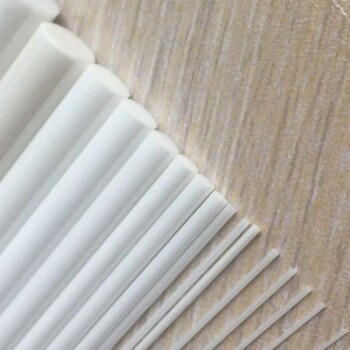
- Engineering Advanced Fine Alumina Al2O3 Ceramic Rod Insulated for Industrial Applications
- Custom PTFE Teflon Parts Manufacturer for PTFE Stirring Bar Recovery Rod
- Custom PTFE Teflon Parts Manufacturer for Magnetic Stirring Bar
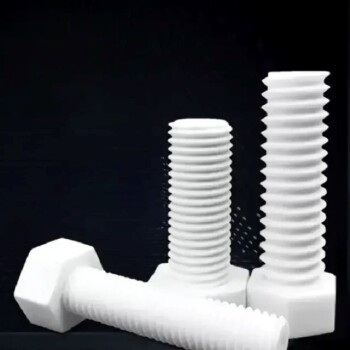
- High Quality Alumina Ceramic Screw for Engineering Advanced Fine Ceramics with High Temperature Resistance and Insulation
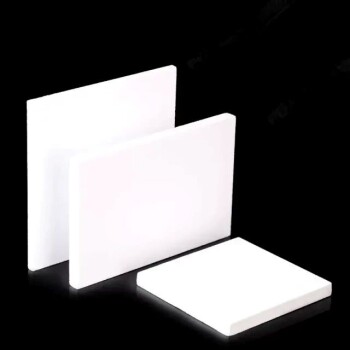
- High Temperature Wear-Resistant Alumina Al2O3 Plate for Engineering Advanced Fine Ceramics
People Also Ask
- Why are high-purity alumina rods used in LOCA experiments? Simulating Nuclear Fuel Gap and Steam Starvation
- How is alumina ceramic made? A Guide to Manufacturing Methods and Material Properties
- What ceramics are used for insulation? Choose the Right Material for Thermal or Electrical Needs
- Why are alumina insulation discs used as sample supports in CCPN? Ensure Arcing-Free, Uniform Plasma Nitriding
- How do alumina ceramic tubes address technical challenges in electrochemical devices? Ensure Peak Signal Integrity.