The precision of sample preparation directly determines the accuracy of thermophysical analysis. Using precision pressing molds and laboratory presses ensures that heating stage microscope (HSM) samples are created as standardized cylindrical pellets with uniform dimensions and density. This standardization is mandatory for HSM image analysis software to accurately detect specific transition points, such as the melting temperature, by tracking precise changes in sample height and area.
Achieving reproducible HSM results requires eliminating physical sample variation as a variable. Precision pressing guarantees that dimensional changes observed during heating reflect intrinsic material properties rather than preparation inconsistencies.
The Critical Role of Geometry in Image Analysis
Software Recognition and Automation
HSM software relies on predefined shapes to track height and area changes during the heating cycle. Standardized dimensions, such as 2mm in diameter and 3mm in height, allow the software to identify the "15% height reduction" threshold that often defines melting temperatures. Without consistent geometry, automated detection becomes unreliable, forcing researchers to rely on subjective manual interpretations.
Ensuring Reproducibility Across Batches
Consistent molds ensure that every "micro-green body" starts with identical proportions. This allows researchers to compare different materials or batches with a high degree of scientific confidence. Standardization is the foundation for reliable, peer-reviewed data and industrial quality control.
The Influence of Compaction and Density
Eliminating Internal Porosity
High-pressure pressing via a laboratory press removes internal pores that could cause uneven collapse or "slumping" during heating. Increased material density ensures that physical changes observed are a result of thermal transition rather than structural settling. This is especially vital when working with wetted powders where air pockets can significantly distort image analysis.
Repeatable Pressure for Data Integrity
Laboratory presses provide constant and repeatable pressure control, which is essential for maintaining identical density across all samples. Even minor deviations in material density can lead to inaccurate evaluations of how a material behaves at high temperatures. Consistent pressure control provides a scientifically reliable foundation for comparing the performance of various experimental materials.
Understanding the Trade-offs and Pitfalls
The Risk of Inconsistent Sample Edges
Low-quality molds or improper stamping can cause micro-cracks or irregular edges during the extraction process. These irregularities can confuse image recognition software, leading to false readings of sample height or volume. Precise extraction ensures smooth edges, preventing premature deformation that is not related to the material's thermal properties.
Material-Specific Constraints
Different materials, such as thermoplastics or ceramics, may require specific guidelines like ASTM D4703 for sample preparation. Failure to match the pressing technique to the relevant international standard can lead to results that are technically precise but scientifically invalid for the specific industry.
Implementing Best Practices for Sample Preparation
To maximize the accuracy of your HSM analysis, consider these strategic approaches to sample preparation:
- If your primary focus is automated software detection: Invest in precision molds that produce cylindrical pellets with exact height-to-diameter ratios to ensure the software's algorithms trigger correctly.
- If your primary focus is comparative material research: Utilize a hydraulic press with digital pressure readouts to maintain identical compaction density across all test batches.
- If your primary focus is international standard compliance: Ensure your pressing tools and cutting dies align with specific ASTM or ISO guidelines for your particular material class.
High-precision preparation is not just a preliminary step; it is the fundamental guarantor of your analytical data's integrity.
Summary Table:
| Key Factor | Importance for HSM Preparation | Benefit to Data Accuracy |
|---|---|---|
| Geometric Precision | Standardizes dimensions (e.g., 2mm x 3mm) | Enables accurate software tracking of height/area |
| Density Control | Eliminates internal porosity and air pockets | Prevents structural settling from being mistaken for melting |
| Edge Integrity | Ensures smooth, crack-free sample extraction | Prevents false readings caused by irregular sample shapes |
| Repeatable Pressure | Maintains identical compaction across batches | Ensures results reflect material properties, not preparation |
Elevate Your Material Analysis with KINTEK Precision
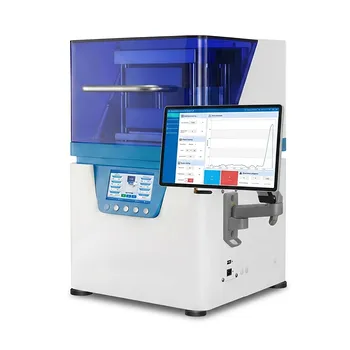
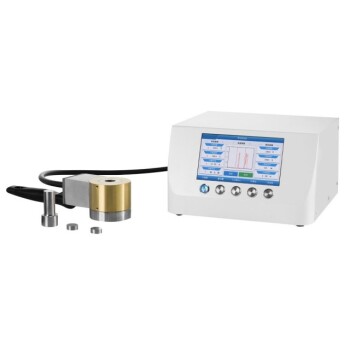
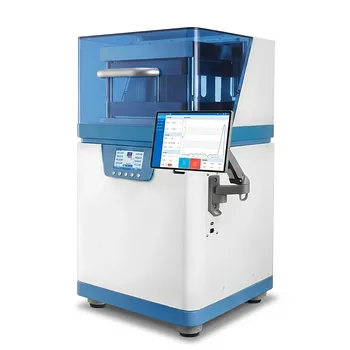
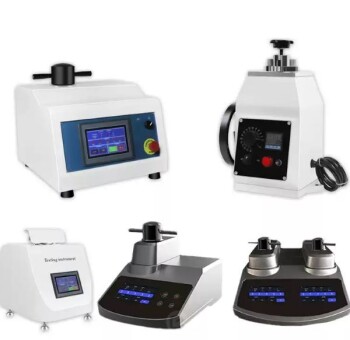
At KINTEK, we understand that the integrity of your Heating Stage Microscope (HSM) data begins with the sample. Our high-performance hydraulic presses (pellet, hot, and isostatic) and precision-engineered molds deliver the exact geometry and uniform density required for automated image analysis and reproducible research.
Beyond sample preparation, KINTEK offers a comprehensive ecosystem for advanced material science, including high-temperature furnaces (muffle, vacuum, CVD), crushing and milling systems, and high-temperature high-pressure reactors. Whether you are a researcher or a quality control professional, we provide the tools to eliminate variables and ensure scientific confidence.
Contact our laboratory experts today to find the perfect solution for your lab!
References
- Mustafa Seyrek, Richard Thackray. Effect of CaO/Al2O3 Ratio on Physical Properties of Lime-Alumina-Based Mould Powders. DOI: 10.3390/met13040719
This article is also based on technical information from Kintek Solution Knowledge Base .
Related Products
- Fully Automatic Heated Hydraulic Lab Press for Materials Sintering and Sample Preparation
- Manual Lab Heat Press
- Cylindrical Lab Electric Heating Press Mold for Laboratory Applications
- Automatic Laboratory Heat Press Machine
- Double Plate Heating Press Mold for Lab
People Also Ask
- How is a laboratory hydraulic press used in the preparation of modified biochar samples for FTIR analysis? Expert Guide
- How does a laboratory heating hydraulic press contribute to the preparation of recycled graphite green bodies? - Optimize Density.
- How does the laboratory hydraulic press contribute to the preparation of solid targets for laser ablation?
- What role does a laboratory hydraulic press play in perovskite-MOF glass fabrication? Master Material Densification
- Why use a laboratory hydraulic press for Fe2O3-CoP conductivity? Achieve Precise Material Characterization