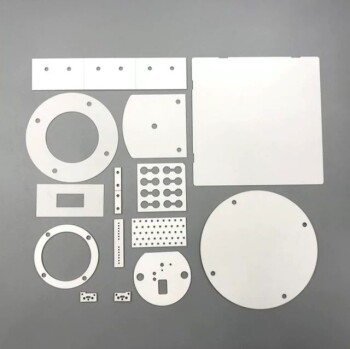
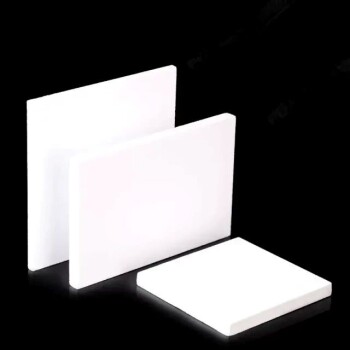
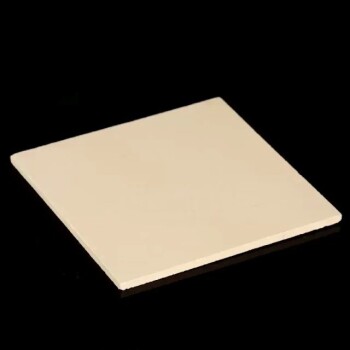
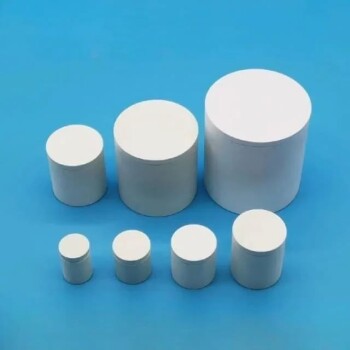
The use of ceramic plates acts as a critical stabilization mechanism. It is necessary to apply physical stacking pressure in a sandwich configuration to counteract the destructive forces of high-temperature sintering. This method prevents mechanical failure through warping and maintains chemical integrity by trapping volatile elements within the film structure.
Core Takeaway High-temperature sintering poses a dual threat to NASICON films: physical distortion and chemical depletion. The sandwich configuration solves both problems simultaneously by mechanically enforcing flatness and chemically sealing the environment to preserve the film's stoichiometric ratio and density.
Preserving Structural Integrity
Preventing Warping and Deformation
At high sintering temperatures, NASICON films are highly susceptible to physical distortion. Without external constraint, the thermal stress causes severe warping and deformation, rendering the film mechanically unusable.
Limiting Lateral Shrinkage
The physical restriction provided by the ceramic plates plays a crucial role in dimension control. By applying pressure, you effectively limit lateral shrinkage (movement in the X-Y plane) during the densification process.
Maintaining Film Flatness
The weight and rigidity of the ceramic plates enforce a strict geometry on the film. This ensures the final electrolyte retains the necessary surface flatness required for effective integration into battery assemblies.
Ensuring Chemical Stability
Suppressing Volatile Component Loss
High temperatures can cause specific elements within the NASICON structure to volatilize and evaporate. The sandwich configuration suppresses the loss of these volatile components, specifically sodium and phosphorus.
Protecting the Stoichiometric Ratio
The loss of elements like sodium or phosphorus alters the chemical formula of the material, degrading its performance. The ceramic plates act as a barrier, ensuring the stability of the chemical stoichiometric ratio throughout the heating process.
Maximizing Electrolyte Density
By combining physical containment with chemical retention, the sintering process becomes more efficient. This results in a final NASICON electrolyte that achieves higher density, which is essential for ionic conductivity.
Common Pitfalls to Avoid
The Risk of Unconstrained Sintering
It is a mistake to assume that temperature control alone is sufficient for successful sintering. Omitting the physical stacking pressure invariably leads to uncontrolled geometric changes, resulting in a warped, uneven product.
The Consequence of Chemical Depletion
Failing to "sandwich" the film exposes it to the open atmosphere of the furnace. This leads to the rapid evaporation of sodium and phosphorus, resulting in a porous, chemically degraded film that lacks the required ionic properties.
Making the Right Choice for Your Goal
To maximize the quality of your NASICON films, you must view the ceramic plate configuration as a mandatory processing step, not an optional one.
- If your primary focus is Mechanical Integration: Use the plates to strictly enforce flatness and dimensional tolerance, preventing warping that would inhibit stack assembly.
- If your primary focus is Electrochemical Performance: Rely on the sandwich configuration to seal in sodium and phosphorus, ensuring the high density and correct chemistry required for optimal conductivity.
The ceramic plate sandwich provides the essential containment needed to turn a fragile green film into a robust, high-performance solid electrolyte.
Summary Table:
| Feature | Impact of Sandwich Configuration | Result of Unconstrained Sintering |
|---|---|---|
| Physical Geometry | Enforces flatness and limits lateral shrinkage | Severe warping and thermal deformation |
| Chemical Stability | Suppresses loss of volatile sodium and phosphorus | Chemical depletion and altered stoichiometry |
| Film Density | Maximizes densification for ionic conductivity | Porous, low-performance electrolyte |
| Mechanical State | Maintains structural integrity for assembly | Mechanically fragile and unusable structure |
Elevate Your NASICON Research with Precision Thermal Solutions
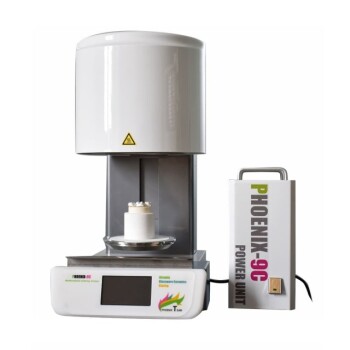
At KINTEK, we understand that the difference between a failed electrolyte and a high-performance solid-state battery lies in the details of the sintering process. Our industry-leading high-temperature muffle and vacuum furnaces provide the thermal stability required for delicate NASICON film processing, while our premium ceramic plates and crucibles ensure the perfect sandwich configuration for your materials.
Whether you are refining electrolyte density or scaling up battery research, KINTEK offers a comprehensive range of:
- High-Temperature Furnaces (Muffle, Tube, and Atmosphere models)
- Hydraulic Presses for pellet preparation and stacking
- Specialized Ceramics & Consumables to prevent warping and chemical loss
Ready to achieve superior density and stoichiometric stability? Contact our laboratory specialists today to find the ideal equipment for your advanced material synthesis!
Related Products
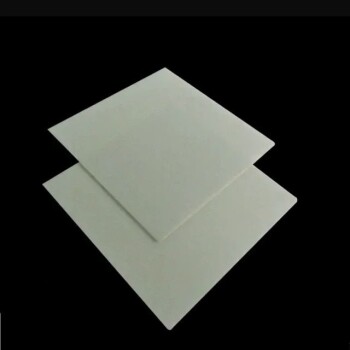
- Precision Machined Silicon Nitride (SiN) Ceramic Sheet for Engineering Advanced Fine Ceramics
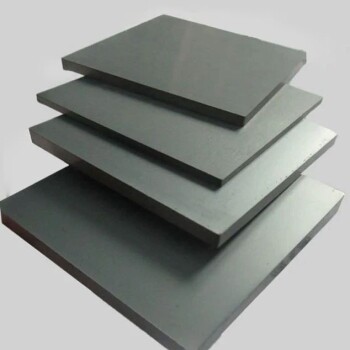
- Silicon Carbide (SIC) Ceramic Plate for Engineering Advanced Fine Ceramics
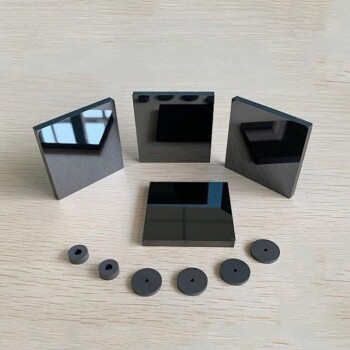
- Silicon Carbide (SIC) Ceramic Sheet Wear-Resistant Engineering Advanced Fine Ceramics
- Boron Nitride (BN) Ceramic Plate
- Custom-Made Alumina Zirconia Special-Shaped Ceramic Plates for Engineering Advanced Fine Ceramics Processing
People Also Ask
- What are the methods of high temperature ceramic? Master the 3-Stage Process for Durable Components
- What are pure silicon sputtering targets? Precision Source for High-Performance Thin Films
- Can silicon be sputtered? A Guide to RF & DC Methods for Thin Film Deposition
- What is the most commonly used in semiconductors? Discover Why Silicon Dominates Modern Electronics
- Which is the most preferred material for manufacturing of a semiconductor? Silicon's Dominance Explained