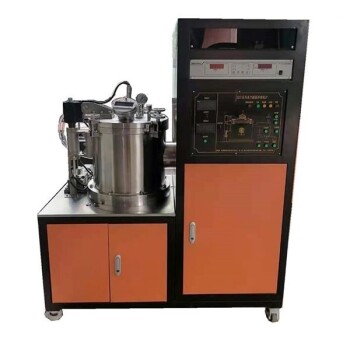
The primary function of a high-performance vacuum furnace is to generate a meticulously controlled heating environment that completely eliminates surface oxidation and decarburization. This protection is critical when processing complex tool steels, such as H11 or powder metallurgy cold work steel, during the austenitizing and tempering phases.
By precisely regulating heating rates and soaking times, vacuum furnaces ensure a uniform matrix microstructure. This uniformity is the absolute prerequisite for achieving the superior hardness and fracture toughness required for high-stress applications and subsequent surface coatings.
Achieving Microstructural Perfection
preventing Surface Degradation
The most immediate benefit of a vacuum environment is the prevention of surface oxidation. When tool steels are heated in standard atmospheres, oxygen reacts with the surface, compromising the part's integrity.
Simultaneously, the vacuum prevents decarburization, the loss of carbon from the steel's surface. Preserving the carbon content is essential for maintaining the steel's ability to harden correctly.
Precision in Heating and Soaking
High-performance furnaces utilize programmable controls to manage specific heating rates and soaking times. This automation allows for distinct thermal profiles tailored to the specific alloy being treated.
By controlling these variables, the furnace ensures that the material is heated evenly throughout its cross-section. This eliminates thermal gradients that could lead to distortion or cracking during heat treatment.
Ensuring Matrix Uniformity
The ultimate goal of this controlled environment is uniformity in the matrix microstructure. For steels like H11, a consistent internal structure is non-negotiable.
This structural homogeneity directly translates to high hardness and superior fracture toughness. Without this uniform foundation, the tool would be prone to premature failure under load.
Preparation for Surface Coating
Modern tools often require advanced coatings to extend their lifespan. The vacuum furnace prepares the substrate for these applications.
By delivering a clean, oxide-free surface with the correct hardness, the furnace ensures optimal adhesion for subsequent coating processes.
Critical Considerations for Operation
The Necessity of Process Control
While these furnaces offer high automation, the quality of the output depends entirely on the precision of the input parameters.
Simply placing steel in a vacuum is insufficient; the operator must program the correct heating rates and soak times. Failing to optimize these settings can negate the benefits of the vacuum environment, resulting in suboptimal mechanical properties.
Managing Thermal Inertia
Vacuum furnaces rely on radiation for heat transfer, which behaves differently than convection heating.
Operators must account for this difference when calculating cycle times. This ensures that the core of the tool steel reaches the necessary temperature for full solutionizing of alloying elements without overheating the surface.
Making the Right Choice for Your Goal
To maximize the performance of your tool steels, align your furnace operations with your specific engineering objectives:
- If your primary focus is Surface Integrity: Prioritize a high-vacuum environment to strictly eliminate oxidation and decarburization, ensuring a pristine surface ready for coating.
- If your primary focus is Mechanical Durability: Focus on optimizing heating rates and soaking times to achieve the uniform microstructure necessary for maximum fracture toughness.
True high-performance heat treatment is not just about temperature; it is about absolute control over the environment to engineer the perfect microstructure.
Summary Table:
| Feature | Benefit for Tool Steel (H11 / PM) |
|---|---|
| Vacuum Environment | Eliminates oxidation and prevents decarburization of the surface |
| Programmable Controls | Precision management of heating rates and soaking times for tailored profiles |
| Thermal Uniformity | Ensures a consistent matrix microstructure for high fracture toughness |
| Radiation Heating | Controlled heat transfer for full solutionizing of alloying elements |
| Surface Preparation | Provides a clean, oxide-free substrate for optimal coating adhesion |
Elevate Your Heat Treatment Precision with KINTEK
Achieving superior hardness and fracture toughness in complex tool steels requires more than just high temperatures—it demands absolute environmental control. KINTEK specializes in advanced laboratory and industrial heating solutions, offering a comprehensive range of high-performance vacuum, muffle, tube, and atmosphere furnaces designed to deliver the microstructural perfection your materials require.
Whether you are processing H11 tool steel or advanced powder metallurgy alloys, our precision equipment ensures zero surface degradation and optimal matrix uniformity. Beyond furnaces, KINTEK provides a full suite of crushing and milling systems, high-pressure reactors, and essential lab consumables to support your entire material engineering workflow.
Ready to optimize your material performance? Contact our technical experts today to find the perfect vacuum furnace for your specific application.
References
- Bojan Podgornik, Agnieszka Zuzanna Guštin. Properties of Tool Steels and Their Importance When Used in a Coated System. DOI: 10.3390/coatings10030265
This article is also based on technical information from Kintek Solution Knowledge Base .
Related Products
- Vacuum Hot Press Furnace Heated Vacuum Press Machine Tube Furnace
- 600T Vacuum Induction Hot Press Furnace for Heat Treat and Sintering
- Vacuum Hot Press Furnace Machine Heated Vacuum Press
- Vacuum Heat Treat Furnace and Levitation Induction Melting Furnace
- 2200 ℃ Tungsten Vacuum Heat Treat and Sintering Furnace
People Also Ask
- What advantages does a vacuum hot press furnace provide for LSLBO ceramic electrolytes? Achieve 94% Relative Density
- What role does a Vacuum Hot Press (VHP) furnace play in the densification of austenitic stainless steel 316 composites?
- What are the advantages of using a vacuum hot pressing furnace? Superior Densification for 2024Al/Gr/SiC Composites
- What are the advantages of a vacuum hot press furnace for LTPO solid electrolytes? Boost Density and Conductivity
- What core processing conditions does a vacuum hot press furnace provide? Achieve High-Density Cu-SiC/Diamond Composites