Knowledge What is the primary function of a high-vacuum drying oven in the preparation of polymer electrolyte membranes?
Author avatar

Tech Team · Kintek Solution

Updated 2 days ago

What is the primary function of a high-vacuum drying oven in the preparation of polymer electrolyte membranes?


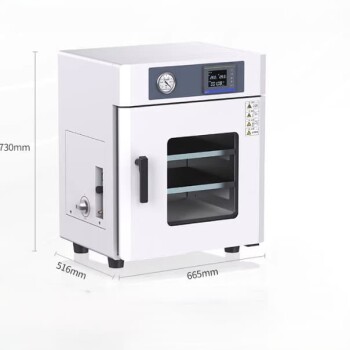
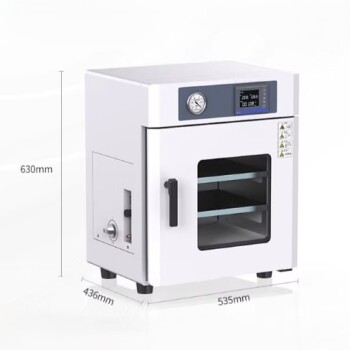
The primary function of a high-vacuum drying oven is to ensure the absolute removal of residual organic solvents, such as acetonitrile, and trace moisture from cast polymer electrolyte membranes. By subjecting the material to controlled heat (typically 60°C) and negative pressure for extended periods (approximately 48 hours), the process drives off volatiles that would otherwise compromise the membrane's performance. This step is non-negotiable for safety, as it prevents chemical contaminants from reacting with battery components.

While the physical mechanism is evaporation, the strategic purpose is safety and electrochemical stability. Even microscopic traces of moisture or solvent can trigger violent reactions with lithium metal or degrade the battery's cycling life, making vacuum drying the "gatekeeper" process for quality assurance.

The Critical Role of Chemical Purification

Eliminating Residual Solvents

During the casting process, polymers like PEO (polyethylene oxide) are dissolved in organic solvents like acetonitrile or DME. If these solvents remain in the final membrane, they compromise its electrochemical stability. The high-vacuum environment effectively lowers the boiling point of these solvents, ensuring they are thoroughly evacuated without requiring excessive heat that could damage the polymer.

Managing Hygroscopic Sensitivity

Many polymer electrolytes and their salts are hygroscopic, meaning they readily absorb water from the air. Moisture is a critical contaminant because it reacts violently with lithium metal anodes. The vacuum oven provides a controlled environment to strip this moisture away, preventing dangerous side reactions and ensuring the safety of the solid-state battery.

Widening the Electrochemical Window

Impurities act as catalysts for degradation. By removing trace solvents and moisture, the drying process maximizes the membrane's electrochemical window. This allows the battery to operate at higher voltages without the electrolyte breaking down, directly influencing the long-term cycling stability of the cell.

Enhancing Physical Integrity

Preventing Bubble Formation

If solvents are evaporated too quickly at atmospheric pressure, they can boil vigorously, trapping gas pockets inside the material. The vacuum environment allows for a gentle, steady rate of evaporation. This prevents the formation of air bubbles, which would otherwise create voids that impede ion transport.

Ensuring Uniform Density

A high-quality membrane must be self-supporting, with a smooth surface and uniform thickness. Vacuum drying ensures the material consolidates densely as the solvent leaves. This results in a solid electrolyte with high mechanical stability, capable of withstanding the physical stresses of battery operation.

Understanding the Trade-offs

Temperature vs. Polymer Degradation

One might assume that higher temperatures would dry the membrane faster, but this is a dangerous misconception. Excessive heat can thermally degrade the polymer matrix (especially PEO). The vacuum is essential because it allows drying at moderate temperatures (45°C–60°C), preserving the structural integrity of the polymer while still removing stubborn solvents.

The Necessity of Time

This is not a rapid process. References indicate that achieving complete dryness often requires approximately 48 hours. Rushing this step leaves residual contaminants deep within the membrane structure, leading to "silent" failures that only appear after the battery has been cycled multiple times.

Making the Right Choice for Your Goal

To optimize your preparation of polymer electrolyte membranes, consider your specific priorities:

  • If your primary focus is Safety: Prioritize a prolonged drying duration (48+ hours) to ensure zero moisture content, as water is the primary trigger for lithium metal reactions.
  • If your primary focus is Ionic Conductivity: Ensure the vacuum level is maximized to lower the boiling point, removing every trace of organic solvent that could block ion transport channels.
  • If your primary focus is Mechanical Strength: Strictly control the temperature (keeping it around 45°C–60°C) to prevent thermal degradation of the polymer matrix while the solvent evaporates.

Ultimately, the high-vacuum drying oven transforms a volatile chemical mixture into a stable, high-performance solid electrolyte ready for energy storage.

Summary Table:

Feature Function in Membrane Preparation Benefit to Final Product
High Vacuum Lowers solvent boiling points Thorough evacuation without thermal damage
Controlled Heat Drives off volatiles (45°C–60°C) Preserves polymer structural integrity
Moisture Removal Eliminates hygroscopic traces Prevents violent reactions with lithium
Steady Evaporation Prevents gas pocket formation High ionic conductivity & mechanical density

Elevate Your Battery Research with KINTEK Precision

Ensure the absolute purity and mechanical integrity of your solid-state electrolytes with KINTEK’s advanced laboratory solutions. From high-performance vacuum drying ovens specifically designed for sensitive polymer processing to our comprehensive range of high-temperature furnaces, hydraulic presses, and battery research tools, we provide the equipment necessary for cutting-edge energy storage development.

Don't let residual solvents compromise your safety and cycling life. Contact KINTEK today to discover how our high-precision equipment can optimize your lab's workflow and ensure superior material performance.

Related Products

People Also Ask

Related Products

Laboratory Scientific Electric Heating Blast Drying Oven

Laboratory Scientific Electric Heating Blast Drying Oven

The desktop fast autoclave sterilizer is a compact and reliable device used for rapid sterilization of medical, pharmaceutical, and research items.

Small Vacuum Heat Treat and Tungsten Wire Sintering Furnace

Small Vacuum Heat Treat and Tungsten Wire Sintering Furnace

The small vacuum tungsten wire sintering furnace is a compact experimental vacuum furnace specially designed for universities and scientific research institutes. The furnace features a CNC welded shell and vacuum piping to ensure leak-free operation. Quick-connect electrical connections facilitate relocation and debugging, and the standard electrical control cabinet is safe and convenient to operate.

1200℃ Muffle Furnace Oven for Laboratory

1200℃ Muffle Furnace Oven for Laboratory

Upgrade your lab with our 1200℃ Muffle Furnace. Achieve fast, precise heating with Japan alumina fibers and Molybdenum coils. Features TFT touch screen controller for easy programming and data analysis. Order now!

High Temperature Muffle Oven Furnace for Laboratory Debinding and Pre Sintering

High Temperature Muffle Oven Furnace for Laboratory Debinding and Pre Sintering

KT-MD High temperature debinding and pre-sintering furnace for ceramic materials with various molding processes. Ideal for electronic components such as MLCC and NFC.

Lab-Scale Vacuum Induction Melting Furnace

Lab-Scale Vacuum Induction Melting Furnace

Get precise alloy composition with our Vacuum Induction Melting Furnace. Ideal for aerospace, nuclear energy, and electronic industries. Order now for effective smelting and casting of metals and alloys.

Molybdenum Vacuum Heat Treat Furnace

Molybdenum Vacuum Heat Treat Furnace

Discover the benefits of a high-configuration molybdenum vacuum furnace with heat shield insulation. Ideal for high-purity, vacuum environments like sapphire crystal growth and heat treatment.

Vacuum Heat Treat and Pressure Sintering Furnace for High Temperature Applications

Vacuum Heat Treat and Pressure Sintering Furnace for High Temperature Applications

Vacuum pressure sintering furnaces are designed for high temperature hot pressing applications in metal and ceramic sintering. Its advanced features ensure precise temperature control, reliable pressure maintenance, and a robust design for seamless operation.

Vacuum Heat Treat Furnace with Ceramic Fiber Liner

Vacuum Heat Treat Furnace with Ceramic Fiber Liner

Vacuum furnace with polycrystalline ceramic fiber insulation liner for excellent heat insulation and uniform temperature field. Choose from 1200℃ or 1700℃ max. working temperature with high vacuum performance and precise temperature control.

Oil Free Diaphragm Vacuum Pump for Laboratory and Industrial Use

Oil Free Diaphragm Vacuum Pump for Laboratory and Industrial Use

Oil-free diaphragm vacuum pump for labs: clean, reliable, chemical-resistant. Ideal for filtration, SPE, and rotary evaporation. Maintenance-free operation.

Graphite Vacuum Furnace High Thermal Conductivity Film Graphitization Furnace

Graphite Vacuum Furnace High Thermal Conductivity Film Graphitization Furnace

The high thermal conductivity film graphitization furnace has uniform temperature, low energy consumption and can operate continuously.

Graphite Vacuum Furnace Bottom Discharge Graphitization Furnace for Carbon Materials

Graphite Vacuum Furnace Bottom Discharge Graphitization Furnace for Carbon Materials

Bottom-out graphitization furnace for carbon materials, ultra-high temperature furnace up to 3100°C, suitable for graphitization and sintering of carbon rods and carbon blocks. Vertical design, bottom discharging, convenient feeding and discharging, high temperature uniformity, low energy consumption, good stability, hydraulic lifting system, convenient loading and unloading.

2200 ℃ Graphite Vacuum Heat Treat Furnace

2200 ℃ Graphite Vacuum Heat Treat Furnace

Discover the power of the KT-VG Graphite Vacuum Furnace - with a maximum working temperature of 2200℃, it's perfect for vacuum sintering of various materials. Learn more now.

Vacuum Hot Press Furnace Machine for Lamination and Heating

Vacuum Hot Press Furnace Machine for Lamination and Heating

Experience clean and precise lamination with Vacuum Lamination Press. Perfect for wafer bonding, thin-film transformations, and LCP lamination. Order now!

Vertical Laboratory Tube Furnace

Vertical Laboratory Tube Furnace

Elevate your experiments with our Vertical Tube Furnace. Versatile design allows for operation under various environments and heat treatment applications. Order now for precise results!

Graphite Vacuum Continuous Graphitization Furnace

Graphite Vacuum Continuous Graphitization Furnace

High-temperature graphitization furnace is a professional equipment for graphitization treatment of carbon materials. It is a key equipment for the production of high-quality graphite products. It has high temperature, high efficiency and uniform heating. It is suitable for various high-temperature treatments and graphitization treatments. It is widely used in metallurgy, electronics, aerospace, etc. industry.

Large Vertical Graphite Vacuum Graphitization Furnace

Large Vertical Graphite Vacuum Graphitization Furnace

A large vertical high-temperature graphitization furnace is a type of industrial furnace used for the graphitization of carbon materials, such as carbon fiber and carbon black. It is a high-temperature furnace that can reach temperatures of up to 3100°C.

Dental Porcelain Zirconia Sintering Ceramic Vacuum Press Furnace

Dental Porcelain Zirconia Sintering Ceramic Vacuum Press Furnace

Get precise dental results with Dental Vacuum Press Furnace. Automatic temperature calibration, low noise tray, and touch screen operation. Order now!

Dental Porcelain Zirconia Sintering Ceramic Furnace Chairside with Transformer

Dental Porcelain Zirconia Sintering Ceramic Furnace Chairside with Transformer

Experience top-notch sintering with Chairside Sintering Furnace with Transformer. Easy to operate, noise-free pallet, and automatic temperature calibration. Order now!

Heated Hydraulic Press Machine with Heated Plates for Vacuum Box Laboratory Hot Press

Heated Hydraulic Press Machine with Heated Plates for Vacuum Box Laboratory Hot Press

Enhance your lab's precision with our lab press for vacuum box. Press pills and powders with ease and precision in a vacuum environment, reducing oxidation and improving consistency. Compact and easy to use with a digital pressure gauge.

Vacuum Bellows for Efficient Connection and Stable Vacuum in High-Performance Systems

Vacuum Bellows for Efficient Connection and Stable Vacuum in High-Performance Systems

Discover high-quality vacuum bellows for stable vacuum in high-performance systems. Made from 304 and 316 stainless steel, these bellows ensure efficient connections and excellent sealing. Ideal for


Leave Your Message