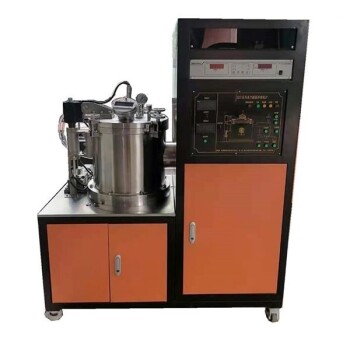
The primary function of a vacuum gasification furnace is to create a sealed, low-pressure environment that purifies non-ferrous metals by lowering their boiling points and separating them based on volatility. By operating at pressures below 0.1 MPa, the furnace allows metals to vaporize at reduced temperatures while simultaneously isolating them from oxygen to prevent contamination.
By manipulating pressure rather than relying solely on heat, this technology enables the precise separation of metals from impurities using their saturated vapor pressure differences, ensuring high purity without oxidation.
The Mechanics of Vacuum Separation
Reducing Thermal Requirements
The core mechanism of the furnace is the maintenance of a pressure environment lower than 0.1 MPa. By creating this vacuum, the system significantly alters the physical behavior of the metals inside.
This reduction in pressure lowers the boiling points of the processed materials. Consequently, metals can volatilize (turn into gas) at temperatures far lower than their standard atmospheric boiling points, saving energy and protecting the material from excessive heat.
Exploiting Vapor Pressure Differences
The purification process is driven by the specific physical properties of the materials involved. It utilizes the differences in saturated vapor pressure among the various metals and impurities present.
Because different elements vaporize at different rates under the same pressure, the furnace effectively separates the primary metal from its impurities. This allows for the extraction of the desired metal while leaving contaminants behind.
Ensuring Metallurgical Integrity
Isolating Oxygen
Beyond separation, the vacuum environment serves a protective role. It acts as a barrier that isolates oxygen from the heating chamber.
This isolation is critical for preventing metal oxidation. Without this protection, high-temperature processing would lead to the formation of oxides, which degrade the quality and purity of the final non-ferrous product.
Critical Operational Constraints
Dependence on Vacuum Integrity
The entire efficiency of this process relies on the strict maintenance of the sealed environment. The pressure must remain consistently below the 0.1 MPa threshold.
If the seal is compromised, the boiling points will rise unpredictably, and oxygen will re-enter the system. Therefore, the effectiveness of the purification is directly tied to the mechanical integrity of the furnace's vacuum system.
Optimizing the Purification Strategy
To maximize the benefits of a vacuum gasification furnace, align your operational goals with the furnace's physical capabilities.
- If your primary focus is energy efficiency: Leverage the pressure reduction to process metals at lower temperatures, minimizing the thermal load required for volatilization.
- If your primary focus is material purity: Prioritize the integrity of the vacuum seal to ensure total oxygen isolation, eliminating the risk of oxide contamination.
Mastering vacuum gasification allows you to turn the relationship between pressure and volatility into a precise tool for superior metallurgical refinement.
Summary Table:
| Feature | Function in Vacuum Gasification | Benefit to Metallurgy |
|---|---|---|
| Pressure Control | Operates below 0.1 MPa | Lowers boiling points, reducing energy consumption |
| Vapor Pressure Separation | Exploits saturated vapor differences | Precisely isolates target metals from impurities |
| Oxygen Isolation | Sealed, vacuum environment | Prevents oxidation and maintains material integrity |
| Thermal Management | Volatilization at lower temperatures | Protects heat-sensitive materials from degradation |
Elevate Your Metal Purification Standards with KINTEK
Precision and purity are the hallmarks of high-performance metallurgy. At KINTEK, we specialize in cutting-edge laboratory equipment and consumables designed to meet the rigorous demands of material science. From advanced high-temperature vacuum furnaces to essential crucibles and ceramics, our solutions ensure optimal thermal processing and contamination-free results.
Whether you are refining non-ferrous metals or conducting complex battery research, our comprehensive portfolio—including crushing and milling systems, isostatic presses, and high-pressure reactors—is engineered for excellence.
Ready to optimize your lab's efficiency and product purity? Contact our experts today to discover how KINTEK can empower your research and production goals.
Related Products
- Ultra-High Temperature Graphite Vacuum Graphitization Furnace
- Graphite Vacuum Furnace IGBT Experimental Graphitization Furnace
- Large Vertical Graphite Vacuum Graphitization Furnace
- Vacuum Hot Press Furnace Heated Vacuum Press Machine Tube Furnace
- 600T Vacuum Induction Hot Press Furnace for Heat Treat and Sintering
People Also Ask
- What is the disadvantage of graphite furnace? Managing Reactivity and Contamination Risks
- Is a graphite melting point high or low? Discover Its Extreme Thermal Resilience
- What are the advantages and disadvantages of graphite furnace? Unlock Extreme Heat Performance
- What are the disadvantages of graphite furnace? Key Limitations and Operational Costs
- What gas is used in graphite furnace? Maximize Accuracy with the Right Inert Gas