Knowledge cvd machine What is the primary function of CVD equipment in the growth of VACNTs? Precision Engineering for Nanotube Alignment
Author avatar

Tech Team · Kintek Solution

Updated 20 hours ago

What is the primary function of CVD equipment in the growth of VACNTs? Precision Engineering for Nanotube Alignment


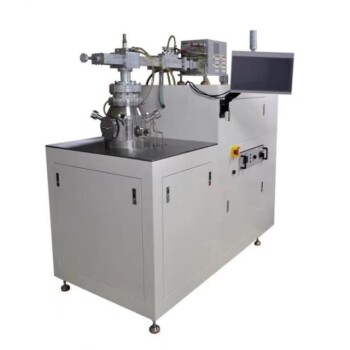
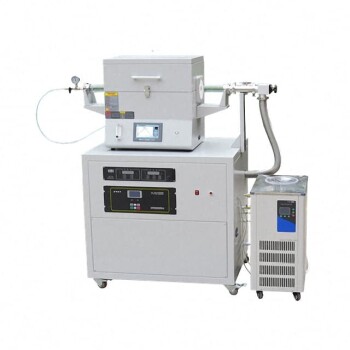
The primary function of Chemical Vapor Deposition (CVD) equipment is to generate a precisely controlled, high-temperature environment that facilitates the directional deposition of carbon onto catalyst particles. By rigorously managing precursor gas flows and thermal conditions, the equipment enables the catalytic decomposition required to grow Vertically Aligned Carbon Nanotubes (VACNTs) directly from a substrate.

Core Takeaway While CVD equipment facilitates the fundamental chemical reaction, its deeper value lies in parameter tuning. By adjusting process variables, you can engineer the specific diameter, length, and spacing of nanotubes to create multi-level micro-nano structures, which are critical for advanced surface properties like superhydrophobicity.

The Mechanics of Directional Growth

Thermal Activation and Decomposition

The CVD system must maintain a high-temperature zone precise enough to crack carbon-bearing precursor gases.

This thermal energy triggers the chemical breakdown of the carbon source solely at the site of the catalyst particles.

Controlled Precursor Flow

The equipment regulates the introduction of gases to ensure a steady, uniform supply of carbon.

This control allows the carbon atoms to deposit directionally, building the nanotube structure upward from the catalyst template.

Engineering Material Properties

Tuning Geometric Parameters

The utility of VACNTs depends entirely on their physical dimensions.

Through the adjustment of CVD parameters, researchers can dictate the diameter, length, and inter-tube spacing of the array.

Creating Multi-Level Structures

Precise control over spacing and height enables the construction of complex micro-nano structures.

According to the primary technical reference, optimizing these structures modifies surface roughness to trap air, a prerequisite for achieving superhydrophobicity (extreme water repellency).

Understanding the Trade-offs

Catalyst Aggregation vs. Distribution

A major challenge in any CVD process is ensuring the catalyst remains active and accessible.

If catalyst particles aggregate or clump together, the carbon source cannot distribute uniformly, leading to inconsistent growth or structural defects.

Complexity of Parameter Interaction

Adjusting one variable often impacts others; for example, increasing flow rates to boost growth speed may compromise the uniformity of the vertical alignment.

Achieving the perfect "micro-nano structure" requires balancing temperature and gas flow to maintain directional alignment without oversaturating the catalyst.

Making the Right Choice for Your Goal

To maximize the effectiveness of your CVD process for VACNTs, align your parameters with your specific end-application.

  • If your primary focus is Superhydrophobicity: Prioritize parameter adjustments that optimize surface roughness and spacing to maximize air trapping within the nanotube array.
  • If your primary focus is Structural Consistency: Focus on gas flow uniformity and catalyst preparation to prevent aggregation and ensure even growth across the entire substrate.

True mastery of VACNT growth comes not just from generating carbon, but from the architectural control of the deposition process.

Summary Table:

CVD Function Impact on VACNT Growth Key Outcome
Thermal Activation Cracks precursor gases at catalyst sites Initiates carbon deposition
Flow Regulation Ensures steady carbon supply Facilitates directional growth
Parameter Tuning Controls diameter, length, and spacing Enables micro-nano structures
Atmosphere Control Prevents catalyst aggregation Ensures structural consistency

Elevate Your Nanomaterial Research with KINTEK

Achieving the perfect micro-nano structure for superhydrophobicity or advanced thermal management requires more than just high temperatures—it requires absolute precision. KINTEK specializes in high-performance laboratory equipment, providing state-of-the-art CVD and PECVD systems, atmosphere furnaces, and high-precision gas control tools designed specifically for the rigorous demands of VACNT growth and battery research.

Whether you are engineering next-generation surfaces or developing advanced electrodes, our comprehensive portfolio of high-temperature furnaces, crushing systems, and cooling solutions provides the reliability your lab deserves. Partner with KINTEK to gain the architectural control needed for superior material deposition.

Ready to optimize your carbon nanotube synthesis? Contact our technical experts today!

References

  1. Viswanathan S. Saji. Carbon nanostructure-based superhydrophobic surfaces and coatings. DOI: 10.1515/ntrev-2021-0039

This article is also based on technical information from Kintek Solution Knowledge Base .

Related Products

People Also Ask

Related Products

Laboratory High Pressure Vacuum Tube Furnace

Laboratory High Pressure Vacuum Tube Furnace

KT-PTF High Pressure Tube Furnace: Compact split tube furnace with strong positive pressure resistance. Working temp up to 1100°C and pressure up to 15Mpa. Also works under controller atmosphere or high vacuum.

Multi Heating Zones CVD Tube Furnace Machine Chemical Vapor Deposition Chamber System Equipment

Multi Heating Zones CVD Tube Furnace Machine Chemical Vapor Deposition Chamber System Equipment

KT-CTF14 Multi Heating Zones CVD Furnace - Precise Temperature Control and Gas Flow for Advanced Applications. Max temp up to 1200℃, 4 channels MFC mass flow meter, and 7" TFT touch screen controller.

1200℃ Split Tube Furnace with Quartz Tube Laboratory Tubular Furnace

1200℃ Split Tube Furnace with Quartz Tube Laboratory Tubular Furnace

KT-TF12 split tube furnace: high-purity insulation, embedded heating wire coils, and max. 1200C. Widely used for new materials and chemical vapour deposition.

1700℃ Controlled Atmosphere Furnace Nitrogen Inert Atmosphere Furnace

1700℃ Controlled Atmosphere Furnace Nitrogen Inert Atmosphere Furnace

KT-17A Controlled atmosphere furnace: 1700℃ heating, vacuum sealing technology, PID temperature control, and versatile TFT smart touch screen controller for laboratory and industrial use.

Laboratory Rapid Thermal Processing (RTP) Quartz Tube Furnace

Laboratory Rapid Thermal Processing (RTP) Quartz Tube Furnace

Get lightning-fast heating with our RTP Rapid Heating Tube Furnace. Designed for precise, high-speed heating and cooling with convenient sliding rail and TFT touch screen controller. Order now for ideal thermal processing!

1700℃ Laboratory High Temperature Tube Furnace with Alumina Tube

1700℃ Laboratory High Temperature Tube Furnace with Alumina Tube

Looking for a high-temperature tube furnace? Check out our 1700℃ Tube Furnace with Alumina Tube. Perfect for research and industrial applications up to 1700C.

Mesh belt controlled atmosphere furnace

Mesh belt controlled atmosphere furnace

Discover our KT-MB mesh belt sintering furnace - perfect for high-temperature sintering of electronic components & glass insulators. Available for open air or controlled atmosphere environments.

1200℃ Controlled Atmosphere Furnace Nitrogen Inert Atmosphere Furnace

1200℃ Controlled Atmosphere Furnace Nitrogen Inert Atmosphere Furnace

Discover our KT-12A Pro Controlled atmosphere furnace - high precision, heavy duty vacuum chamber, versatile smart touch screen controller, and excellent temperature uniformity up to 1200C. Ideal for both laboratory and industrial application.

Vacuum Hot Press Furnace Heated Vacuum Press Machine Tube Furnace

Vacuum Hot Press Furnace Heated Vacuum Press Machine Tube Furnace

Reduce forming pressure & shorten sintering time with Vacuum Tube Hot Press Furnace for high-density, fine-grain materials. Ideal for refractory metals.

Controlled Nitrogen Inert Hydrogen Atmosphere Furnace

Controlled Nitrogen Inert Hydrogen Atmosphere Furnace

KT-AH Hydrogen atmosphere furnace - induction gas furnace for sintering/annealing with built-in safety features, dual housing design, and energy-saving efficiency. Ideal for lab and industrial use.

Graphite Vacuum Furnace High Thermal Conductivity Film Graphitization Furnace

Graphite Vacuum Furnace High Thermal Conductivity Film Graphitization Furnace

The high thermal conductivity film graphitization furnace has uniform temperature, low energy consumption and can operate continuously.

1800℃ Muffle Oven Furnace for Laboratory

1800℃ Muffle Oven Furnace for Laboratory

KT-18 muffle furnace with Japan Al2O3 polycrystalline fibe and Silicon Molybdenum heating element, up to 1900℃, PID temperature control and 7" smart touch screen. Compact design, low heat loss, and high energy efficiency. Safety interlock system and versatile functions.

Vacuum Heat Treat Furnace with Ceramic Fiber Liner

Vacuum Heat Treat Furnace with Ceramic Fiber Liner

Vacuum furnace with polycrystalline ceramic fiber insulation liner for excellent heat insulation and uniform temperature field. Choose from 1200℃ or 1700℃ max. working temperature with high vacuum performance and precise temperature control.

Laboratory Vacuum Tilt Rotary Tube Furnace Rotating Tube Furnace

Laboratory Vacuum Tilt Rotary Tube Furnace Rotating Tube Furnace

Discover the versatility of Laboratory Rotary Furnace: Ideal for calcination, drying, sintering, and high-temperature reactions. Adjustable rotating and tilting functions for optimal heating. Suitable for vacuum and controlled atmosphere environments. Learn more now!

Vacuum Heat Treat Sintering Brazing Furnace

Vacuum Heat Treat Sintering Brazing Furnace

A vacuum brazing furnace is a type of industrial furnace used for brazing, a metalworking process that joins two pieces of metal using a filler metal that melts at a lower temperature than the base metals. Vacuum brazing furnaces are typically used for high-quality applications where a strong, clean joint is required.

600T Vacuum Induction Hot Press Furnace for Heat Treat and Sintering

600T Vacuum Induction Hot Press Furnace for Heat Treat and Sintering

Discover the 600T Vacuum Induction Hot Press Furnace, designed for high-temperature sintering experiments in vacuum or protected atmospheres. Its precise temperature and pressure control, adjustable working pressure, and advanced safety features make it ideal for nonmetal materials, carbon composites, ceramics, and metal powders.

Vacuum Heat Treat and Molybdenum Wire Sintering Furnace for Vacuum Sintering

Vacuum Heat Treat and Molybdenum Wire Sintering Furnace for Vacuum Sintering

A vacuum molybdenum wire sintering furnace is a vertical or bedroom structure, which is suitable for withdrawal, brazing, sintering and degassing of metal materials under high vacuum and high temperature conditions. It is also suitable for dehydroxylation treatment of quartz materials.

Vacuum Heat Treat and Sintering Furnace with 9MPa Air Pressure

Vacuum Heat Treat and Sintering Furnace with 9MPa Air Pressure

The air pressure sintering furnace is a high-tech equipment commonly used for the sintering of advanced ceramic materials. It combines vacuum sintering and pressure sintering techniques to achieve high-density and high-strength ceramics.

Ultra-High Temperature Graphite Vacuum Graphitization Furnace

Ultra-High Temperature Graphite Vacuum Graphitization Furnace

The ultra-high temperature graphitization furnace utilizes medium frequency induction heating in a vacuum or inert gas environment. The induction coil generates an alternating magnetic field, inducing eddy currents in the graphite crucible, which heats up and radiates heat to the workpiece, bringing it to the desired temperature. This furnace is primarily used for graphitization and sintering of carbon materials, carbon fiber materials, and other composite materials.

2200 ℃ Graphite Vacuum Heat Treat Furnace

2200 ℃ Graphite Vacuum Heat Treat Furnace

Discover the power of the KT-VG Graphite Vacuum Furnace - with a maximum working temperature of 2200℃, it's perfect for vacuum sintering of various materials. Learn more now.


Leave Your Message