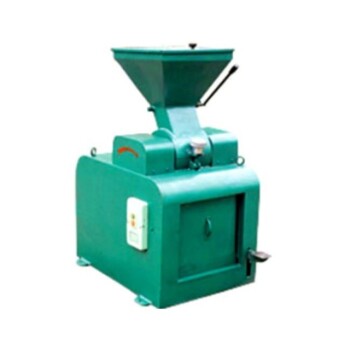
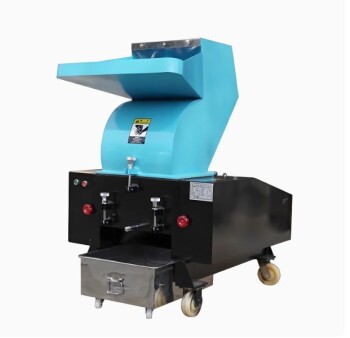
The primary function of these systems is to mechanically overcome the natural resistance of the plant structure. Industrial crushing and sieving systems significantly reduce the particle size of perennial grasses while simultaneously weakening their crystallinity. This disruption of the dense lignocellulosic structure increases the specific surface area, creating the necessary conditions for effective downstream processing.
Core Takeaway: Crushing and sieving are not merely about volume reduction; they are critical pretreatment steps that disrupt the biomass's internal architecture. By exposing more surface area and reducing crystallinity, these systems ensure that subsequent chemical reagents and enzymes can penetrate the material effectively.
Overcoming Biomass Recalcitrance
The central challenge in processing perennial grasses is "recalcitrance," or the plant's natural resistance to degradation. Mechanical pretreatment addresses this through two specific physical changes.
Reduction of Particle Size
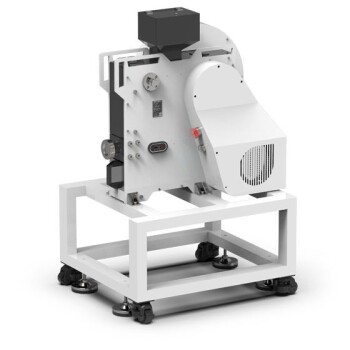
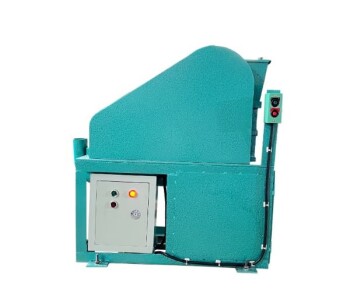
The most visible function of these systems is reducing raw biomass into smaller, manageable fractions. By breaking down large structures, the machinery exposes the interior of the plant material. This prepares the grass for the next stage of processing, whether that is chemical digestion or enzymatic breakdown.
Weakening of Crystallinity
Beyond simple sizing, industrial crushing impacts the microscopic structure of the grass. The mechanical force applied helps to weaken the crystallinity of the cellulose. Disrupting this crystalline structure is vital because it makes the cellulose chains more accessible to external agents.
Disruption of Lignocellulosic Structure
Perennial grasses possess a dense, rigid lignocellulosic matrix. Crushing systems physically disrupt this matrix. This structural alteration is a prerequisite for overcoming the physical barriers that protect the plant's sugars from extraction.
Enhancing Downstream Efficiency
Once the physical structure is altered, the benefits propagate through the rest of the processing pipeline.
Increasing Chemical Reagent Penetration
For chemical pretreatment to work, reagents must saturate the biomass. The increased specific surface area achieved through crushing allows chemicals to penetrate rapidly and thoroughly. This ensures that the entire mass of material reacts, rather than just the outer shell.
Improving Enzymatic Hydrolysis
Enzymatic hydrolysis depends on enzymes physically contacting cellulose chains. By reducing particle size and crystallinity, crushing systems significantly improve accessibility for these enzymes. This accessibility is the limiting factor in how effectively the biomass can be converted into fermentable sugars.
Ensuring Process Uniformity
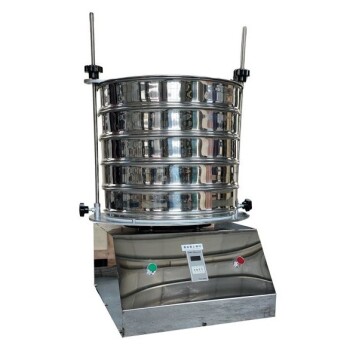
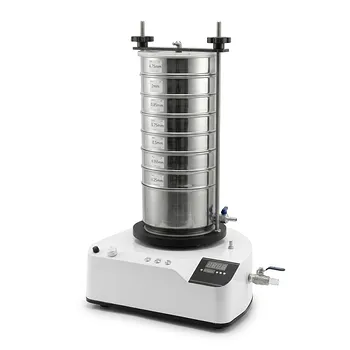
Sieving systems work in tandem with crushing to classify materials by size. This ensures that only particles within a specific range move forward. Uniform particle sizes lead to consistent reaction rates, preventing scenarios where some material is over-processed while other parts remain under-processed.
Understanding the Trade-offs
While size reduction is beneficial, it requires a careful balance to avoid processing inefficiencies.
The Necessity of Uniformity
Inconsistent particle sizes are a major pitfall in industrial processing. If the sieving process fails to produce a uniform output, heat and chemical transfer will be uneven. This leads to unpredictable product properties and incomplete reactions during subsequent stages.
Specificity of Size Requirements
Different end-goals require different particle specifications. For example, preparing material for thermal processes like torrefaction might require particles under 10mm to ensure heat penetration. Conversely, laboratory-scale chemical research might demand strictly controlled sizes between 0.43 mm and 1.02 mm. Using a "one size fits all" approach is a common error that degrades efficiency.
Making the Right Choice for Your Goal
To maximize the value of your crushing and sieving equipment, align the mechanical output with your specific biological or chemical objectives.
- If your primary focus is Enzymatic Hydrolysis: Prioritize systems that maximize surface area and disrupt crystallinity to expose cellulose to enzymes.
- If your primary focus is Thermochemical Processing (e.g., Torrefaction): Ensure your sieving system guarantees particles under 10mm for rapid, uniform heat transfer.
- If your primary focus is Chemical Pretreatment: Concentrate on strict particle size uniformity to ensure chemical reagents penetrate the biomass structure consistently.
Effective pretreatment turns resistant raw grass into a reactive feedstock, setting the baseline for the success of the entire conversion process.
Summary Table:
| Feature | Impact on Perennial Grasses | Benefit for Downstream Processing |
|---|---|---|
| Particle Size Reduction | Increases specific surface area | Enhances chemical reagent penetration |
| Crystallinity Weakening | Disrupts cellulose crystalline structure | Improves enzymatic hydrolysis efficiency |
| Structural Disruption | Breaks down the lignocellulosic matrix | Overcomes natural plant resistance |
| Sieving & Classification | Ensures uniform particle distribution | Prevents over/under-processing & ensures consistency |
Optimize Your Biomass Research with KINTEK Precision
Unlock the full potential of your raw materials by overcoming recalcitrance with high-performance pretreatment solutions. KINTEK specializes in advanced laboratory equipment designed to deliver the precision your research demands. From robust crushing and milling systems to precise sieving equipment and hydraulic presses, we provide the tools necessary to ensure uniform particle size and structural disruption for perennial grasses and other biomass.
Whether you are focusing on enzymatic hydrolysis, thermochemical processing, or chemical digestion, KINTEK’s comprehensive portfolio—including high-temperature furnaces, autoclaves, and PTFE consumables—is engineered to enhance your lab's efficiency and scientific accuracy.
Ready to elevate your material processing? Contact our experts today to find the perfect equipment tailored to your specific research goals.
References
- Lovisa Panduleni Johannes, Tran Dang Xuan. Comparative Analysis of Acidic and Alkaline Pretreatment Techniques for Bioethanol Production from Perennial Grasses. DOI: 10.3390/en17051048
This article is also based on technical information from Kintek Solution Knowledge Base .
Related Products
- Laboratory Test Sieves and Sieving Machines
- Laboratory Jaw Crusher
- Laboratory Vibratory Sieve Shaker Machine for Dry and Wet Three-Dimensional Sieving
- Three-dimensional electromagnetic sieving instrument
- Electric Rotary Kiln Small Rotary Furnace Biomass Pyrolysis Plant
People Also Ask
- What are laboratory test sieves used for? A Guide to Particle Size Analysis
- How do you calculate the sieve test? Master Particle Size Distribution for Quality Control
- How does a lab test sieve contribute to biomass charcoal powder preparation? Achieve Uniform Particle Size
- What are the specifications for test sieves? A Guide to ASTM & ISO Standards for Accurate Particle Analysis
- What materials are required for sieving? Achieve Accurate Particle Size Analysis