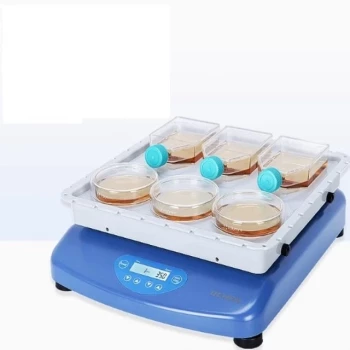
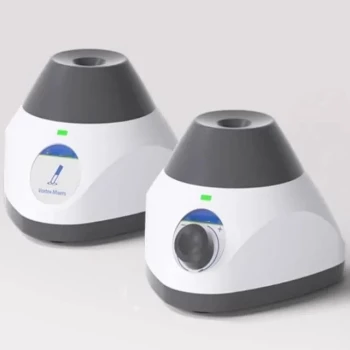
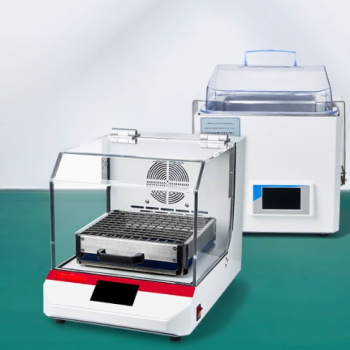
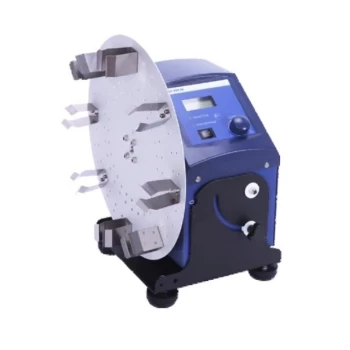
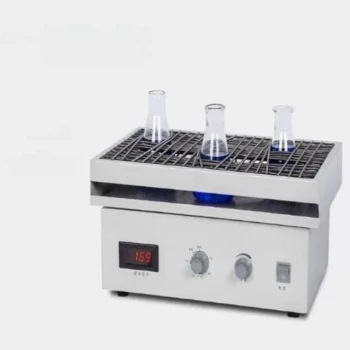
The primary function of laboratory stirring equipment in this context is nutrient extraction. By maintaining continuous motion between garden compost and distilled water—typically for 24 hours at room temperature—the equipment ensures the effective leaching of organic substances into the liquid phase.
Core Takeaway Stirring is not merely about blending; it is an extraction process used to transform raw compost into a nutrient-rich substrate. This specific leachate provides the essential fuel required for the growth and activity of electroactive bacteria in microbial fuel cells.
The Mechanism of Extraction
Facilitating Continuous Contact
The laboratory stirring equipment is essential for providing continuous mixing.
This constant motion prevents the compost solids from settling, ensuring maximum exposure to the distilled water.
Establishing the Substrate
The goal of this mechanical process is to facilitate effective leaching.
Through this continuous agitation, essential nutrients and organic substances are transferred from the solid compost into the water, creating a potent liquid mixture.
The Role in Microbial Fuel Cells
Creating Bacterial Food
The resulting liquid, known as leachate, serves a critical purpose downstream.
It acts as the primary substrate, or food source, for the biological component of the system.
Supporting Electroactive Bacteria
Microbial fuel cells rely on specific microorganisms to generate electricity.
The nutrient-rich leachate produced by the stirring process promotes the growth of electroactive bacteria, which are the engines of the fuel cell.
Critical Process Parameters
The Necessity of Duration
Effective extraction is rarely instantaneous.
The reference highlights that this process often requires a duration of 24 hours. Shortening this timeframe may result in a weak substrate that lacks the nutrient density required for optimal bacterial performance.
Temperature Constraints
This process is standardly conducted at room temperature.
Maintaining this ambient condition is part of the established protocol for preparing the compost leachate without introducing thermal variables.
Making the Right Choice for Your Goal
To ensure your microbial fuel cell operates effectively, consider the following regarding your leachate preparation:
- If your primary focus is Nutrient Yield: Ensure the stirring equipment runs continuously for the full 24-hour cycle to maximize the leaching of organic substances.
- If your primary focus is Bacterial Performance: Recognize that the quality of your stirring process directly dictates the quality of the substrate available for electroactive bacteria growth.
Consistent, prolonged stirring is the fundamental step in converting raw compost into usable bio-energy potential.
Summary Table:
| Feature | Specification/Requirement | Impact on Microbial Fuel Cell |
|---|---|---|
| Primary Function | Nutrient Extraction | Ensures organic fuel for electroactive bacteria |
| Stirring Duration | Typically 24 Hours | Maximizes leaching efficiency and nutrient density |
| Temperature | Room Temperature | Maintains protocol stability without thermal degradation |
| Mechanical Goal | Continuous Agitation | Prevents settling and maximizes solid-liquid contact |
Elevate Your Bio-Energy Research with KINTEK
Precision stirring is the foundation of high-performance microbial fuel cells. At KINTEK, we specialize in providing high-quality laboratory equipment designed to withstand rigorous 24-hour extraction cycles.
Whether you are focusing on nutrient yield or bacterial performance, our comprehensive range of equipment—including advanced shakers, homogenizers, and laboratory stirring solutions—ensures consistent results. Beyond extraction, we offer specialized tools for the entire research lifecycle, from electrolytic cells and electrodes to ULT freezers for sample preservation.
Ready to optimize your leachate preparation? Contact our laboratory specialists today to find the perfect equipment solution for your specific research goals!
References
- Youssef Naimi, İlhan Garip. Effects of Open Circuit Potential and Characterization of Electro-Active Biofilm for Microbial Fuel Cells using Compost Leachate. DOI: 10.20508/ijrer.v13i3.14059.g8795
This article is also based on technical information from Kintek Solution Knowledge Base .
Related Products
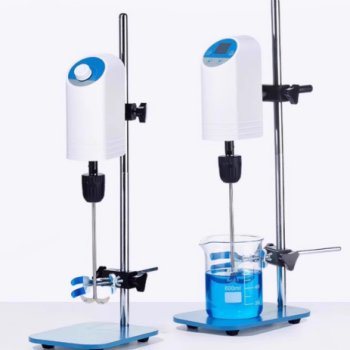
- High Performance Laboratory Stirrers for Diverse Applications
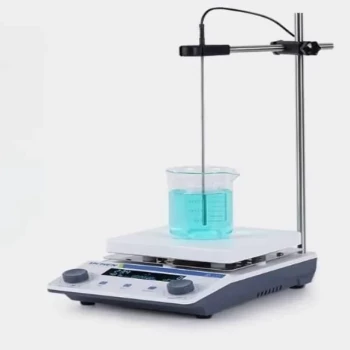
- Laboratory Small Constant Temperature Heated Magnetic Stirrer Heater and Stirrer
- Laboratory Vibratory Sieve Shaker Machine for Dry and Wet Three-Dimensional Sieving
- Laboratory Vibratory Sieve Shaker Machine Slap Vibrating Sieve
- Lab Vibration Mill
People Also Ask
- How does a laboratory stirrer influence MOF product quality? Master Precision in Non-Solvothermal Synthesis
- What critical role does a Laboratory Stirrer play during leaching? Enhance Titanium-Magnesium Waste Recovery
- What is a laboratory mixer? A Guide to Achieving Perfect Sample Homogeneity
- What is a laboratory mixer used for? Choose the Right Tool for Liquids or Solids
- What is the role of laboratory stirring equipment in nZVI preparation? Achieve Stable and Uniform Nano Slurries